Hey there, if you’ve landed here because you’re eyeing E10 bulbs for your next project or just replacing a few around the house, chances are you’ve wondered this: are E10 bulbs dimmable? As someone who’s been selling E10 bulbs for over 8 years now, I’ve answered this question more times than I can count—over the phone, at trade shows, even in random DMs from DIYers who’ve just fried a dimmer and a bulb set because they went in blind. Let me break this down straight, no stuffy jargon, just what I’ve actually learned from working with these tiny but mighty bulbs day in and day out. E10 Bulb
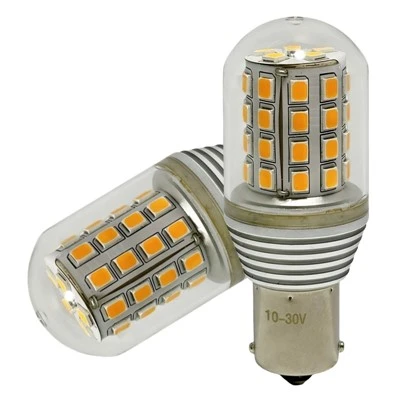
First off, let’s start with the basics so we’re all on the same page. E10 is that tiny Edison screw base—think of it like the little metal twist part that screws into your light fixture. It’s super common for small, low-wattage bulbs: you’ll see them in vintage string lights, under-cabinet accent fixtures, tiny table lamps, even some old-fashioned holiday light sets. A lot of people assume “if a bulb fits a dimmer, it should dim,” but that’s not how this works—especially not with E10s, because they come in three main types, and each one acts totally different when you hook it up to a dimmer.
Let’s go through them one by one, because that’s where the confusion starts. The most popular E10 bulbs we sell? Incandescent and halogen. Those old-school guys? 100% dimmable, no questions asked. Back in the day, every dimmer was built for incandescents, right? They work by cutting the flow of electricity to the bulb, and since incandescents just heat up a filament, turning down the power makes that filament glow less bright. Easy peasy, no weird tricks. I’ve had customers buy our E10 halogen bulbs for vintage string lights strung along patios, and they can run the dimmer all the way from bright for summer dinners to super low for late-night s’mores—no flickering, no fizzling, works like a charm.
But then there’s the other big category: LED E10 bulbs. That’s the one everyone asks about now, because LEDs are way more energy-efficient and last way longer. And this is where the answers get messy. A lot of cheap LEDs out there aren’t dimmable at all. If you buy a no-name E10 LED from a big box store and hook it up to a regular old incandescent dimmer? You’ll get that annoying buzzing, flickering, or it’ll just cut out entirely when you turn it down. Why? Because regular dimmers are built for incandescents, which use a ton of power. LEDs use way less, so they need a dimmer made specifically for low-wattage loads, and more importantly, an LED-rated dimmer.
Wait, but not all dimmable LEDs are equal, right? I’ve had customers come back saying, “I bought ‘dimmable’ E10 LEDs and they still flicker!” And 9 times out of 10, there’s a mismatch between the bulb and the dimmer, or even how many bulbs you’re running. A lot of “dimmable” LEDs only work with specific dimmer models, or they need a minimum load. Like, if you only have one E10 LED bulb hooked up to a dimmer that’s rated for 10 bulbs, it’ll glitch out. That’s a thing most people don’t read on the tiny packaging, and I get it—who checks the fine print when you’re in a hurry to fix a broken light?
Then there’s that third type: CFL E10 bulbs. We don’t sell many of these anymore, because LEDs are way better, but I still get questions about them. CFLs are dimmable, but they’re weirdly finicky. They take a second to warm up, and if you dim them too low, they might not even turn on at all. Plus, they buzz a lot more than LEDs, so unless you’re dead set on CFLs for some reason, I’d skip them entirely if you care about smooth dimming.
Now, here’s the part I wish more people knew: when we talk about E10 bulbs being dimmable, it’s not a yes or no answer—it’s a “what kind of bulb, what kind of dimmer, and how you set it up” answer. That’s why a lot of my job is walking customers through that. Let’s use a real example: last month, a guy emailed us saying he had a bunch of E10 bulbs in his vintage neon sign accents, and he wanted to dim them for a gallery show he was setting up. He’d bought cheap E10 LEDs online, hooked them up to his old kitchen dimmer, and they flickered so bad he had to take them out. I told him two things: first, he needed an LED-rated dimmer, not his old incandescent one, and second, he needed to check that the LEDs he bought actually said “compatible with trailing-edge dimmers” (that’s the kind most LEDs work with, for anyone curious). He went and grabbed a basic LED dimmer from the hardware store, swapped them in, and emailed me a week later saying it worked perfectly for his show. That’s the stuff I live for—fixing that frustration.
Another common myth I hear all the time: “if the bulb says ‘dimmable’, it’ll work with any dimmer.” Nope. I’ve seen so many people waste money buying bulbs that are labeled dimmable only to run into issues. It’s like buying a phone charger that says “works for smartphones”—it works for some, but not every single one. E10s are tiny, so their electronics are smaller too, which makes them more sensitive to dimmer mismatch than bigger bulbs like E26s or E27s.
Wait, but what if you’re on a budget, and you don’t want to replace your whole dimmer? Can you dim E10 incandescents without a fancy new dimmer? Oh yeah! Incandescents and halogens don’t care about the dimmer type—they’re built for old standard dimmers. We recommend our E10 halogen bulbs a lot for people who just want smooth dimming without upgrading their electrical setup, because they’re reliable and fit almost any existing dimmer. The only downside is they use a bit more energy, but if it’s for a small accent light, that’s not a big deal for most people.
Now, let’s talk about common mistakes we see all the time, because I want to save you from making them. First: don’t mix bulb types on the same dimmer. Like, don’t put one incandescent E10 and one LED E10 on the same dimmer. The incandescent uses way more power, so it’ll make the LED flicker like crazy. Second: don’t skimp on the dimmer. We’ve had customers grab a $5 dimmer from the dollar store for their E10 LEDs, and it dies in a month. Spend $10-$15 on a basic LED-rated dimmer from a reputable brand, and it’ll work way better. Third: check the load. If you’re running multiple E10 bulbs on one dimmer, make sure the dimmer’s minimum load rating matches how many bulbs you’re using. For example, a lot of small LED dimmers have a minimum load of 2 bulbs—so if you only have one, you’ll need a bulb that has built-in flicker reduction, or add a dummy load (like a tiny resistor, but most people don’t know that, so just add a second bulb if you can).
I should also mention that not all E10 bulbs are made the same. The E10 bulbs we sell are tested specifically for dimming compatibility, right? So when you buy from us, our dimmable E10 LEDs come with a little cheat sheet that tells you exactly which dimmers work best, and we list that right on the product page. A lot of no-name brands cut corners on the internal electronics, so their “dimmable” bulbs are just not built to handle being dimmed smoothly. That’s why a lot of people have bad experiences with dimmable E10s—they bought the wrong bulbs from the wrong seller.
Let me wrap this up so it’s not a wall of text. Here’s the quick, no-nonsense answer to “are E10 bulbs dimmable?”:
- E10 incandescents and halogens: 100% dimmable, works with standard dimmers, no issues.
- E10 LEDs: Only dimmable if they’re explicitly labeled “dimmable” and paired with an LED-rated dimmer (preferably trailing-edge, which is the most common type for residential use). Cheap, unlabeled E10 LEDs are almost never dimmable, or will cause flickering/buzzing.
- E10 CFLs: Dimmable but finicky, not recommended for consistent dimming.

At the end of the day, if you’re still confused about what’s right for your project, hit us up. We don’t just sell bulbs—we work with DIYers, small electricians, vintage decor shops, and even other suppliers to get the right E10 setup for their needs. Whether you’re putting in patio string lights for a backyard party, fixing up a vintage desk lamp, or setting up accent lighting for a retail space, we can walk you through exactly what bulbs and dimmers you need to avoid all that annoying flickering and wasted time. Don’t guess, don’t waste money on the wrong stuff—just reach out and ask. We’re here to help.
E27 Bulb References:
- U.S. Department of Energy. (2023). Lighting Dimmer Compatibility Guide.
- Illuminating Engineering Society (IES). (2022). Technical Note: Dimming Performance of Low-Voltage Small-Base Lamps.
- National Electrical Manufacturers Association (NEMA). (2021). Standard for Switching and Dimming Devices for Lighting.
BULBPLAN Co., Ltd.
As one of the most professional e10 bulb manufacturers and suppliers in China, our products have good reputation in the market. Please feel free to wholesale cheap e10 bulb for sale here and get pricelist from our factory. Quality products and reasonable price are available.
Address: No. 86 Zhongli Road, Nancheng Street, Dongguan City, Guangdong Province
E-mail: Alex@bulbplan.com
WebSite: https://www.nicebulbs.com/
