If you’ve ever stood in a warehouse at 2 a.m., watching a forklift navigate narrow aisles of stacked pallets without a human behind the wheel, or held a phone that maps your home in seconds as you lean it back and forth, you’ve witnessed SLAM at work. As the engineering lead at our SLAM provider, I’ve spent the last 8 years helping everything from indoor delivery robots to construction surveying drones pick the right SLAM stack—and I can tell you this isn’t a one-size-fits-all decision. I’ve seen teams waste six months building a robot that couldn’t navigate its own warehouse because they grabbed the first SLAM algorithm they found online, no questions asked. Today, I’m breaking down the questions I walk customers through every time they need to choose SLAM, straight from the trenches. SLAM

First, let’s get one thing straight: SLAM (Simultaneous Localization and Mapping) isn’t a single tool. It’s a framework that lets a device build a map of an unknown environment while tracking its own place on that map, all in real time. Some algorithms use lasers, some use cameras, some use a mix, and they all shine (or fall flat) depending on what you’re trying to build. I’ve watched a agriculture robot designed for dusty fields crash into fence posts because it used a standard visual SLAM that couldn’t handle glare and low light, while an indoor cleaning robot we equipped with a lidar SLAM got stuck on thin power lines it never even “saw.” The first step? Stop thinking about SLAM as a magic box. Start with the hard, specific details of your use case.
Let’s start with environment. This is non-negotiable, and I can’t tell you how many customers skip over this and pay for it later. Is your robot operating indoors? Outdoors? Both? Indoor environments are often controlled: static walls, consistent lighting, smooth floors. A lidar SLAM works great here because lasers bounce off hard surfaces with predictable accuracy, and they don’t care if the lights dim or the space is dark. But outdoor environments? They’re chaotic. Direct sunlight washes out cameras, rain fogs lidar, dust kicks up by farm vehicles can blur sensor data, and GPS might work for large vehicles but not for small delivery robots that need centimeter-level precision on a sidewalk. I had a customer last year building a last-mile delivery robot that would go from sidewalk to building lobby. They initially went with pure lidar SLAM for the outdoor part, but when it got inside, the glass walls of the lobby confused the lidar returns—lasers bounce right through glass instead of reflecting, so the map had gaps. We switched them to a visual-inertial SLAM (vSLAM) with a backup of 2D lidar for the lobby entry, and suddenly their localization jumped from 30cm error outdoors to 2cm indoors. That’s the difference between a robot that drops your package on the porch and one that sets it gently by your door.
Next, sensor payload. How much weight, power, and budget can you dedicate to your SLAM system? Lidar is the gold standard for accuracy, but solid-state lidars are expensive (we’re talking thousands of dollars per unit, not hundreds) and bulky. If you’re building a $500 personal robot vacuum, you can’t fit a high-end lidar that costs more than the whole vacuum. But you also can’t skimp so much that the SLAM glitches every time the vacuum crosses a rug edge. Our team has developed a low-cost visual SLAM stack optimized for standard phone cameras and inertial measurement units (IMUs) that’s cut the sensor cost for robot vacuums by 60% in the last two years, but only works for flat, static indoor spaces. If you’re building a construction robot that needs to map a site with moving cranes, uneven dirt, and 100kg payload capacity, you’re going to need the extra accuracy and range of a mechanical lidar SLAM, even if it adds a bit of weight. Power is another big one: small drones have 20-minute battery lives, so their SLAM can’t hog more than 10% of that power. Visual SLAM uses less power than lidar, which is why it’s the go-to for drones and AR headsets, but that comes with tradeoffs in low light.
Then there’s precision and update rate. How accurate do you need your robot to be, and how often does it need to update its position? For a factory forklift that has to lift a 2-ton pallet 10 feet in the air, you need centimeter-level precision. If its SLAM is off by 10cm, it could drop the pallet, damaging inventory or injuring someone. For an AR headset that overlays a hologram on a table, you need even tighter precision—millimeter-level—because if the hologram drifts even a little, it looks fake. Update rate matters too. A high-speed autonomous lawn mower moving at 5mph needs its SLAM to update its position 30 times per second, otherwise it’ll miss a patch of grass or mow over a sprinkler head. A security robot that moves at 1mph only needs a 10Hz update rate, because it has more time to adjust. I once worked with a robotics startup building a high-speed delivery robot that chose a SLAM algorithm with a 15Hz update rate. By the time we caught the mistake and switched to a 30Hz stack, they’d already crashed three test units and lost $120,000 in inventory. That’s the kind of cost that comes from not asking, “What’s my required update rate?”
Next, dynamic vs. static environments. Is your operating space full of moving things, or mostly static? Lidar SLAM is great in static spaces, but if you have people or forklifts moving through a warehouse, standard SLAM algorithms will mark those moving objects as part of the map, which makes localization drift over time. That’s why we developed dynamic SLAM (DSLAM) for our industrial customers—it uses sensor fusion to separate static walls and pallets from moving people and equipment, so it only uses static features to update the map. For a retail robot that restocks shelves at night, where the space is mostly empty but you might have a stocker moving a cart, dynamic SLAM is a must. If you’re doing indoor surveying where the environment doesn’t change between runs, a simpler lidar SLAM will work fine, and it’s cheaper to implement. The biggest mistake here is assuming all SLAM handles moving objects the same. I had a customer in the construction space that initially used a basic visual SLAM for their surveying drone. The drone would fly over a site with several construction workers, and the SLAM would link the drone’s position to a worker’s hard hat, so when the worker moved, the map would shift. We switched them to our dynamic vSLAM, and that drift dropped by 90%. That meant their survey data was accurate enough to sell to general contractors, which added $2M in new revenue for their business.
Then, integration and ease of use. How much engineering bandwidth do you have on your team? Some SLAM algorithms are open-source, like ORB-SLAM or LIO-SAM, which are free to use but require a team of PhDs to tweak, calibrate, and debug. Most startups don’t have that kind of time or talent. I’ve worked with a robotics team at a small food delivery company that tried to use open-source ORB-SLAM for their robot. They spent 18 months trying to fix bugs in dark, rainy weather, and never got it to work reliably. When they switched to our enterprise SLAM stack, which comes with pre-calibrated hardware drivers, real-time debugging tools, and a support team available 24/7, they had their first working prototype in 6 weeks. If you’re an enterprise with a big engineering team, open-source SLAM might work for you, as long as you have the resources to customize it. If you’re a startup or a small team launching a product in 12 months or less, a pre-built, enterprise SLAM solution is almost always worth the extra cost, because it lets you focus on your core product, not on writing and debugging SLAM code.
Let’s also talk about edge cases and failure tolerance. What happens if your SLAM loses its lock on the map? If you’re building a robot that delivers medical supplies in a hospital, you can’t have it stop dead in the middle of a hallway because the SLAM glitched. Our SLAM stack has built-in recovery modes that use IMU and wheel odometry to keep the robot moving temporarily until the camera or lidar re-acquires features. For a lawn mower robot that loses SLAM, it can pull back to its charging station safely, instead of getting stuck in the middle of a yard. Some algorithms are more robust to these failures than others. Open-source algorithms often have little to no built-in recovery, because they’re designed for research, not commercial deployment. If you’re operating in a safety-critical industry—medical devices, construction, industrial automation—you need SLAM with built-in fault tolerance, not just raw accuracy.
Wait, let’s circle back to a mistake I see all the time: chasing the “best” algorithm on paper. Last year, a customer came to us saying they needed the most accurate SLAM for their autonomous trucking fleet. They told us about a new lidar SLAM algorithm that had 1mm accuracy in lab tests. We asked them about their actual operating environment: rural highways with dust, snow, and overhead power lines, where GPS is only 1m accurate at best. That lab-grade SLAM, while amazing in a controlled space, required perfectly calibrated sensors and no atmospheric interference, which their operating environment would never deliver. We paired them with a sensor-fusion SLAM stack that combined lidar, GPS, and camera data, which gave them 10cm accuracy in real-world conditions, and their development timeline was cut by 4 months. The lesson here is: test any candidate SLAM algorithm in your actual environment, not just a lab test. I always tell customers to run a 2-week pilot with the exact hardware they’re planning to use, in the exact space their robot will operate. That’s the only way to catch the issues that papers don’t talk about—like how dust scatters lidar points, or how glare off a parking lot confuses the camera.
Now, let’s talk about a recent trend I’m seeing: multi-sensor fusion. A lot of customers ask me if they should pick lidar or visual SLAM, and the answer is almost always “both.” Lidar gives you great distance accuracy, but it’s bad at recognizing visual features like signs or door handles. Cameras are great at identifying those features, but they struggle with depth in dark or reflective spaces. Fusing both (plus IMU and GPS, when available) gives you a more robust system that works in more environments. Our flagship SLAM stack is a sensor-fusion system that combines solid-state lidar, a fisheye camera, and a high-precision IMU, and we’ve found that it works 99% of the time in indoor, outdoor, and mixed environments, compared to 82% for lidar-only and 75% for visual-only. That extra 17% reliability can be the difference between a product that’s commercially viable and one that’s a niche research project.
But multi-sensor fusion isn’t for everyone. If you’re building a very low-cost robot (like a $100 toy robot), adding lidar will double the cost, which makes the product unprofitable. In that case, a well-optimized visual-inertial SLAM might be the right call, even if it’s less robust, as long as it works for your use case. I had a toy company come to us last year, and their core requirement was that the SLAM work on wooden floors and tile, for a robot that’s sold for under $150. We customized our low-power vSLAM stack to optimize for flat, static indoor spaces, and it worked perfectly. They saved 40% on sensor costs and had a product that’s now one of their top sellers. The key is matching every part of the SLAM stack to your specific needs, not to what sounds cool or what a competitor is using.
Let’s summarize the checklist I give every customer, to make this concrete. Step 1: Map your operating environment. Write down every challenge: dust, glare, moving objects, outdoor/indoor transition, tight spaces. Step 2: Define your performance needs. Precision (cm vs. mm), update rate, safety requirements (medical vs. consumer). Step 3: Know your hardware and budget. How much can you spend on sensors, how much weight/power can you allocate? Step 4: Assess your team’s bandwidth. Do you have PhD-level engineers, or do you need a pre-integrated solution? Step 5: Test before you commit. Run a pilot in your real environment, not just a lab.
I’ve been in this industry long enough to know that choosing SLAM is rarely a linear decision. Every tradeoff is a compromise: accuracy vs. cost, robustness vs. complexity, power vs. speed. But if you skip the questions that matter—like “what’s our actual operating space?” or “do we have the team to support open-source code?”—you’ll end up with a robot that can’t do what you need it to do, no matter how fancy the algorithm is.
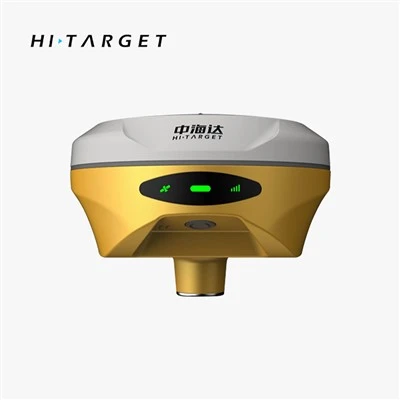
If you’re currently evaluating SLAM for your next project, or if you’re dealing with a prototype that’s glitching in the field, we can help. Our team has customized SLAM solutions for over 200 customers, from small toy startups to large industrial automation firms, and we offer flexible pilots to test our stacks in your exact environment. Don’t waste another month troubleshooting a SLAM system that’s the wrong fit for your needs. Reach out to our team today to discuss your project and find the right SLAM solution for you.
Nikon References
Cadena, C., Carlone, L., Carrillo, H., Latif, Y., Scaramuzza, D., Neira, J., Reid, I., & Leonard, J. J. (2016). Past, Present, and Future of Simultaneous Localization and Mapping: Toward the Robust-Perception Age. IEEE Transactions on Robotics.
Mur-Artal, R., & Tardós, J. D. (2017). ORB-SLAM2: An Open-Source SLAM System for Monocular, Stereo, and RGB-D Cameras. IEEE Transactions on Robotics.
Shan, T., Englot, B., Meyers, D., Wang, W., Rus, D., & Valada, A. (2020). LIO-SAM: Tightly-coupled Lidar Inertial Odometry via Smoothing and Mapping. IEEE/RSJ International Conference on Intelligent Robots and Systems.
Shandong Surveying Information Technology Co., Ltd.
As one of the most experienced slam manufacturers in China, we have world-leading production equipment and strong manufacturing capabilities. Please feel free to buy high quality slam for sale here from our factory. We also accept customized orders.
Address: No. 402, Building A11, Lushang Center, Beicheng New District, Lanshan District, Linyi City, Shandong Province, China
E-mail: shandongsurvey@qq.com
WebSite: https://www.nmpsurveying.com/
