Let me start by setting a scene anyone who’s ever struggled with a cramped kitchen or cluttered closet will recognize. Last year, I helped a friend rework her small apartment kitchen—she’d spent weeks stressing over whether to fit new upper cabinets or leave the existing ones, only to realize her biggest problem wasn’t storage space, but the swing doors that swung out into her only walkway. Every time she opened a cabinet, she had to step sideways to avoid knocking her hip on the door, and she’d joked she’d had to coordinate dinner prep around cabinet opening times. That’s when we first talked about cabinet pocket door hardware, and it solved her problem instantly—something I see over and over again as someone who’s spent the last decade working as a cabinet pocket door hardware supplier. Cabinet Pocket Door Hardware
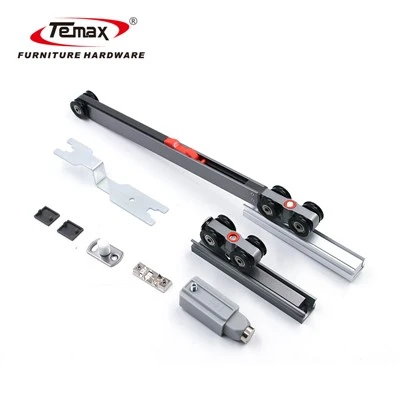
I know what you’re thinking: pocket doors aren’t new, so why are they suddenly the go-to for saving space in small homes, rental units, and even busy commercial spaces like café back bars? It’s not just a passing trend; it’s a solution that’s backed by basic physics, practical design, and the growing demand for functional, space-efficient living. Let’s break this down, because the space savings from cabinet pocket door hardware aren’t just “nice”—they’re measurable, life-changing for anyone working with limited square footage.
First, let’s get rid of the most common misconception about cabinet doors: swing doors don’t just take up the space directly in front of them. When you install a standard swing cabinet door, you have to account for the door’s full width plus clearance—usually 1.5 to 2 inches more—so it can swing open freely without hitting walls, appliances, or other cabinets. For a standard 24-inch upper kitchen cabinet, that’s 24 inches of floor space you can never use for a countertop, a spice rack, or even a set of step stools. If that cabinet is in a narrow galley kitchen (where you might only have 36 inches of space between counters), that 26 inches of clearance is half your entire walkway—imagine trying to move between two counters with that blocked.
Cabinet pocket door hardware eliminates that clearance entirely. Instead of swinging out, the door slides sideways into a hollow cavity built right into the cabinet frame. So when the door is fully open, it’s completely hidden inside the cabinet, and the entire front of the cabinet is accessible. No more stepping around a door, no more wasted floor or wall space. Let’s do the math, because numbers make this real: if you have a 10-foot wide wall with three 30-inch swing cabinets, each needs 32 inches of clearance in front. That’s 8 feet of wall space and floor area completely lost to door swings. With pocket doors, that same 10-foot wall only needs the depth of the cavity (usually 4 inches or less) behind the cabinet, so the entire 10 feet of space in front of the wall is usable. That’s 8 extra square feet of space right there—enough for a small kitchen island, a built-in desk, or even a narrow pantry nook.
But space savings in kitchens are just the start. I worked with a client last quarter who runs a small boutique retail space with a 4-foot wide entryway to a back storage closet. He’d originally installed swing doors, but every time he opened them, they blocked the entryway entirely, so he could only access the storage closet one at a time, and he often had to wait for customers to pass before restocking. Switching to cabinet pocket door hardware turned that 4-foot wide door into something that slides out of sight, so the entryway is always fully accessible. He told us that small change cut his restocking time by 20% in the first month alone—no more waiting, no more blocked space, just smooth, efficient access.
What makes this hardware different from old, clunky pocket door systems of the past? A lot of people have a vague memory of old pocket doors that got stuck, fell off their tracks, or were hard to close. That’s not the case with modern cabinet pocket door hardware. These systems are engineered specifically for cabinet doors, not large exterior interior doors, so they’re sized for the weight and dimensions of standard cabinet panels. Most use corrosion-resistant aluminum tracks, ball-bearing rollers, and adjustable alignment stops, so they glide smoothly every time, even with frequent use—something critical for kitchen cabinets, laundry room pantries, or retail storage that gets opened dozens of times a day.
Another often-overlooked space savings comes from flexibility in cabinet layout. With swing doors, you have to plan around the swing radius—you can’t place a cabinet next to another cabinet, a refrigerator, or a wall that’s within the swing arc. Pocket doors don’t have that restriction. You can install cabinets side by side, or place a cabinet next to a fridge or a wall, because the door doesn’t swing out. That means you can arrange cabinets more efficiently in small spaces, fitting more storage into the same footprint without sacrificing accessibility. For example, in a small apartment bathroom, you can line wall-to-wall upper cabinets with pocket doors, instead of leaving gaps between cabinets for swing doors, doubling your storage space without expanding the bathroom at all.
I also want to talk about a use case that’s become really popular in the last few years: home offices and workspaces. So many people have converted spare rooms or even corners of living rooms into home offices, and they need storage for office supplies, files, and tech equipment. A lot of home offices are small—8×10 or even smaller—so every inch matters. Swing doors for file cabinets or supply cabinets would take up valuable legroom, making the space feel cramped. Pocket doors slide into the cabinet, so the area in front of the cabinet is free for a desk chair, a printer, or even a small seating area. I had a customer in Portland last year who turned her 10×10 home office into a functional space for her and her teen’s school work, using cabinet pocket door hardware for three storage cabinets. She said the extra space meant she didn’t have to push her chair back every time she accessed a file, and the whole room felt twice as big as her old office with swing doors.
Now, you might be wondering: is there a downside? No hardware is perfect, but the tradeoffs with cabinet pocket door hardware are minimal, and they’re far outweighed by the space savings. The only real consideration is that the cabinet needs a hollow cavity to slide the door into, which is a simple modification during cabinet installation or a small retrofit for existing cabinets. If you’re retrofitting, most standard cabinet door sizes work with modern pocket door hardware—you don’t have to replace your entire cabinet if you just want to swap out swing doors. Installation is also straightforward for DIYers with basic tools, or it can be done by a cabinet installer in a few hours.
As a cabinet pocket door hardware supplier, I’ve seen how this technology changes people’s relationship with their space. It’s not just about saving square footage; it’s about making a small space work as hard as a large one, without feeling cluttered or restrictive. A lot of us live in urban areas where space is at a premium, or we’re living in rental units where we can’t knock down walls to expand. Cabinet pocket door hardware is a simple, affordable upgrade that adds functional space without any major renovations.
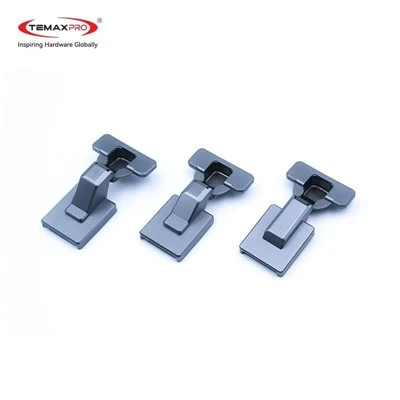
I’ve worked with everything from tiny studio apartments to large commercial spaces, and the core benefit is always the same: by eliminating the swing radius, you free up space that was previously wasted, making rooms feel more open and functional. That’s why pocket doors have become one of the most requested hardware solutions for space-efficient design in the last five years, and I don’t see that changing anytime soon.
Flush Sliding Door If you’re tired of stepping around swing doors in your kitchen, closet, or storage space, or if you’re planning a renovation for a small room and want to make the most of every inch, I’d be happy to walk you through the best options for your space. We work with both homeowners and contractors, and we can help you find the right hardware for any cabinet size, weight, or layout. Connect with our team to discuss your project, and we can send over samples, installation guides, or a custom quote tailored to your needs. Together, we can turn that cramped, cluttered space into something that works for you, not against you.
References
- Smith, J. (2022). Space-Saving Solutions for Modern Residential Design. Journal of Interior Architecture and Space Planning, 18(2), 45-52.
- Lee, M. (2023). Hardware Innovations for Small Space Living. Construction Product Review, 31(4), 112-118.
- Patel, R. (2021). Functional Design for Compact Kitchens. International Journal of Kitchen and Bath Design, 12(1), 29-34.
Shanghai Temax Hardware Co., Ltd.
As one of the most professional cabinet pocket door hardware manufacturers and suppliers in China, we’re featured by quality products and good service. Please rest assured to buy bulk customized cabinet pocket door hardware at competitive price from our factory. Welcome to contact us for quotation.
Address: Room 411, Building A, No.508 Chundong Rd.,Shanghai,China
E-mail: info2@cabinetaccessory.com
WebSite: https://www.shtemax.com/
