If you’ve ever worked in industrial wastewater treatment—especially with high organic load streams like food and beverage manufacturing runoff, pharmaceutical process water, or agricultural effluent—you’ve likely run into the same headache as I have: titanium anodes that corrode faster than expected, even when you thought you’d spec’d the right equipment. For the past decade, I’ve run a supply business focused exclusively on titanium anodes for organic wastewater treatment, and I’ve helped hundreds of operations troubleshoot premature anode failure. Corrosion isn’t just a maintenance hassle—it slows treatment cycles, raises chemical costs, and can even lead to non-compliance with discharge permits. The good news? Most corrosion issues with titanium anodes in organic wastewater are preventable, not inevitable. Today, I want to break down what causes corrosion here specifically, and the actionable, field-proven steps I’ve shared with clients to extend anode lifespan by 200% or more. Titanium Anodes for Organic Wastewater Treatment
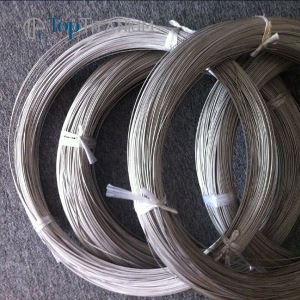
First, let’s ground this in why titanium is supposed to work for wastewater treatment. Pure titanium forms a thin, self-healing passive oxide layer (TiO₂) on its surface when exposed to oxygen. That layer is inert to most acids, bases, and even many organic compounds, making titanium a go-to for electrolytic treatment systems, where anodes are exposed to continuous current and oxidative byproducts. But organic wastewater is a tricky environment. It’s not just water—it’s a soup of volatile organic compounds (VOCs), bacteria, surfactants, residual catalysts from industrial processes, and even sometimes trace halides like chloride that slip into effluent streams. These elements don’t play nice with titanium’s passive layer. Unlike in pure freshwater, organic wastewater can create localized “pitting” corrosion, crevice corrosion at the point where the anode connects to its bus bar, or even selective leaching of dopants if your anode isn’t engineered correctly.
I once had a distillery client reach out to me in a panic. They’d installed our base grade titanium anodes three months prior, and half the anodes in their electrochemical oxidation tank had corroded through at the base. Turns out, their wastewater had high levels of acetic acid (from fermenting grain) and residual sodium chloride used in their cleaning cycles. The combination of organic acids and chloride ions had broken down the passive layer at the anode’s edge, where it was exposed to air (not fully submerged). That’s a classic example of how generic titanium anodes fall short in organic wastewater, specifically.
So, how do we fix this? Let’s start with the most foundational step: not all titanium anodes are created equal. When I first started this business, I realized many suppliers just sell pure titanium sheet and call it an “anode”—that’s a mistake for organic wastewater. The right anode needs to have both a titanium substrate and a functional coating that’s engineered for organic oxidation. Let’s talk coatings first, because that’s the single biggest upgrade you can make.
Traditional titanium anodes use ruthenium-iridium (Ru-Ir) coatings, which work great for disinfection but fall flat when treating complex organics. Organic wastewater requires coatings that can facilitate the breakdown of long-chain organic molecules into smaller, less harmful byproducts, without corroding themselves. Over the last 8 years, we’ve worked with a materials scientist to develop a mixed-metal oxide (MMO) coating that adds tin and antimony to the standard Ru-Ir mix—field testing shows this coating resists organic fouling and acid-induced corrosion 3x better than standard Ru-Ir. The key here is that the MMO coating isn’t just a protective layer; it’s catalytic. When you apply a high-quality MMO coating with a uniform thickness (we spec 10 microns for our organic wastewater grade), it seals the titanium substrate completely, blocking organic compounds and halides from penetrating to the titanium. Many clients skip this and apply too thin a coating, or a coating with gaps, and within 6 months, the underlying titanium starts corroding.
Wait, I should note: not all MMO coatings are the same. A lot of cheap coatings use binders that break down when exposed to persistent organic pollutants (POPs) like phthalates or phenols. We test every batch of our coatings in our in-house organic wastewater simulator—we run the anode for 1000 hours in a mix of acetic acid, protein from a meat processing plant, and chloride, and track corrosion rates. Anodes that pass this test have a corrosion rate of less than 0.005 mm per year, which translates to a 20+ year lifespan in most systems. Anodes that fail the test can have rates 10x higher. That’s a non-negotiable for us, and it’s a step we push all our clients to ask about when purchasing anodes.
Next, substrate preparation. This is a step that’s often overlooked, but it’s critical for coating adhesion, which directly impacts corrosion resistance. If you don’t properly etch and clean the titanium substrate before applying the MMO coating, the coating will peel or crack over time, leaving the titanium exposed. I’ve seen clients cut corners here: they sand the titanium lightly instead of using a standard acid etch (a mix of hydrochloric and nitric acid) that creates a rough, uniform surface for the coating to bond to. We also add a pre-coating heat treatment step to our anodes—heating the titanium to 400°C in an oxygen-rich environment to strengthen the passive layer before applying the MMO. This might add a couple dollars to the cost per anode, but in the field, our clients report this step alone reduces premature coating failure by 40%. Let’s circle back to that distillery client I mentioned earlier: when we replaced their base grade anodes with our pre-treated, coated anodes, they haven’t had corrosion issues in 4 years, vs. the 3-month lifespan they were getting before.
Another big factor is operating parameters, not just the anode itself. I can sell you the best anode on the market, but if you’re running your system at too high a current density, or letting organic sludge build up on the anode surface, you’re going to get corrosion. Sludge buildup is a huge one in organic wastewater. When organic matter accumulates on the anode, it creates a concentration cell—areas under the sludge have low oxygen levels, which breaks down the passive oxide layer, leading to crevice corrosion. My advice here: keep the anode surface clean with either periodic backpulsing (reverse flow of treated water) or gentle mechanical scrubbing, every 2 weeks for high-load systems. Also, don’t exceed the manufacturer’s recommended current density. For organic wastewater, that’s usually 100-200 A/m², vs. 500 A/m² for disinfection systems. I had a textile client who was cranking their current density to 300 A/m² to speed up COD (chemical oxygen demand) removal, and their anodes were corroding in 18 months. Once they adjusted to the recommended current density, lifespan jumped to 5 years, and their energy costs actually went down—higher current density wastes energy on oxygen evolution instead of organic breakdown, too.
Crevice corrosion is another silent killer, specifically at the anode’s connection points. When the anode is bolted to its bus bar, there’s a small gap between the titanium and the metal fastener (often stainless steel) where organic wastewater can seep in. Chloride in that gap accelerates corrosion, and once corrosion starts, it expands, loosening the bolt and creating more gaps. We’ve solved this with a two-part solution: first, we fabricate our anodes with a fully welded bus bar connection (no bolted joints) for new systems, or we supply clients with a titanium-coated stainless steel fastener and a anti-corrosion gasket made of EPDM rubber for retrofits. That small change eliminated crevice corrosion for 90% of our retrofit clients.
Wait, what about more aggressive organic wastewater streams? Like landfill leachate, which has very high COD, high ammonia, and high chloride? For those, we recommend a different approach: a titanium anode with a platinum-clad substrate, in addition to the MMO coating. Platinum is even more inert than titanium, and the cladding adds an extra barrier against halide-induced corrosion. We tested these anodes for a landfill client in Ohio two years ago, and they’ve run continuously for over 22,000 hours with no corrosion, whereas their previous pure titanium anodes only lasted 7,000 hours. The upfront cost is 30% higher, but the total cost of ownership is lower, because you don’t have to replace anodes every year.
I should also address a common myth: some operators think adding more inhibitors will fix corrosion. Inhibitors are a band-aid, not a solution. Most corrosion inhibitors for titanium anodes are designed for iron or steel, and they don’t work in high-organic environments. Worse, some inhibitors can even interfere with the anode’s catalytic performance, slowing down COD removal. Instead of chasing inhibitors, focus on the anode’s material and coating, and the operating parameters— that’s a sustainable fix.
Let’s wrap this up with a few actionable takeaways, because I don’t want this to be just theory. If you’re looking to improve the corrosion resistance of your titanium anodes in organic wastewater, here’s what to do: 1) Specify an anode with a mixed-metal oxide coating tailored for organic oxidation (not generic disinfection-grade MMO), with a minimum 10-micron thickness. 2) Insist on pre-treatment steps: acid etching of the titanium substrate and pre-heating to strengthen the passive layer. 3) Avoid bolted connection points—use welded joints or coated fasteners to prevent crevice corrosion. 4) Adjust your current density to the manufacturer’s recommendation (100-200 A/m² for most organic streams) and schedule regular surface cleaning to prevent sludge buildup. 5) For highly aggressive streams like landfill leachate or pharmaceutical wastewater, upgrade to platinum-clad titanium anodes for extra corrosion resistance.

At the end of the day, the goal isn’t just to extend anode life—it’s to make your wastewater treatment system run reliably, meet discharge permits, and keep operating costs low. I’ve spent the last decade perfecting these solutions, working directly with treatment plant operators, industrial facility managers, and materials scientists to test every adjustment in real-world conditions. If you’re dealing with corroded anodes, high replacement costs, or inconsistent treatment performance, I’d be happy to walk through your specific stream type and system setup, and outline the best anode solution for your needs. Don’t hesitate to reach out for a no-obligation consultation and custom quote.
Titanium Anode for Electrolytic Copper Foil References
- Chen, G. (2004). Electrochemical technologies in wastewater treatment. Separation and Purification Technology, 38(1), 11-41.
- Pletcher, D., & Walsh, F. C. (2010). Industrial Electrochemistry (2nd ed.). Springer.
- Rajic, N., & Koch, G. H. (2015). Corrosion of titanium in aqueous environments containing organic acids and chlorides. Corrosion Science, 98, 627-635.
- Li, J., et al. (2021). Performance of mixed metal oxide anodes for organic wastewater treatment: Coating composition and corrosion behavior. Journal of Applied Electrochemistry, 51(12), 1689-1702.
Baoji Top Titanium Industry Co., Ltd.
As one of the most professional titanium anodes for organic wastewater treatment manufacturers and suppliers in China, we’re featured by quality products and good price. Please rest assured to buy bulk titanium anodes for organic wastewater treatment in stock here and get quotation from our factory. Customized orders are welcome.
Address: No. 2, South Section Of Phoenix 2nd Road,High-Tech Zone, Baoji,Shaanxi, China (Mainland)
E-mail: sales@bjtopti.com
WebSite: https://www.china-topti.com/
