Hey everyone, it’s Jake, and I’ve been running a home appliance stamping parts shop for 12 years now. If you’ve ever dealt with manufacturing home appliance components, you know that a tiny crack in a stamped bracket, a hinge, or a panel can derail a whole production run, cost you a ton in reworks, and even tank a customer’s reputation. Last quarter alone, we fixed 17 cracking issues for clients in the fridge and washing machine space, so I’ve seen firsthand what works and what just wastes time in the long run. Today, I’m breaking down the practical, science-backed moves we use to stop cracks before they happen—no fancy jargon, just stuff that’s actually worked for our shop and our clients. Home Appliance Stamping Parts

First off, let’s get one thing straight: cracking in stamping parts isn’t random. It’s almost always a mix of material choice, machine setup, and how you design the part. A lot of guys skip the basics here, and that’s where the trouble starts. Let’s start with material selection, because that’s the foundation. I’ve seen clients show up with a $0.02 cheaper steel grade that sounded good on paper, only to have 20% of their parts crack in the first press run. Why? Because different materials have totally different formability—aka how well they stretch or bend without breaking.
For home appliances, the most common stamping materials are cold-rolled steel (CRS), galvanized steel, aluminum, and sometimes even thin stainless for things like dishwasher panels. Here’s the thing: CRS with a higher yield strength (that’s the amount of force it takes to permanently deform it) is stiffer, but it’s way less forgiving during stamping. If you’re making a refrigerator door hinge that needs to bend 90 degrees, going with a ultra-high-strength CRS might save you a buck per part, but it’ll crack the second your press operator doesn’t get the bend angle exactly right. We usually recommend a medium-strength draw-quality CRS for most appliance parts—like ASTM A36 or A1008—because it balances strength and formability. Galvanized steel? The zinc coating can make it a little slippery, but also, if the galvanization is too thick, it can create a brittle layer that cracks when you stamp. We’ve stopped clients from using galvanized steel with a zinc coating over 1.2 mils—any thicker, and the coating will flake or crack right off the base metal. Aluminum is trickier too; 5000 series aluminum is common for washer tub parts, but it’s more prone to tearing than steel, so you have to adjust your die clearance accordingly.
Next up, the dirty secret a lot of new stamping shops mess up: blank design and nesting. That’s just how you cut the raw sheet metal into the shape of your part before stamping. If you nest (arrange) your parts wrong, you’re working with material that’s already stretched or work-hardened from the sheet mill. Wait, work-hardening—you probably heard that term, but here’s how it applies to us: when metal is rolled into sheets, it’s stretched and hardened. If you nest a part too close to the edge of the sheet, you’re using material that’s been stretched during the rolling process, so it’s less ductile and way more likely to crack during stamping. Our rule is always leave at least a 1-inch margin between each part in the nesting layout, and never nest parts within 2 inches of the sheet’s edge. We also run a quick formability test on every new material batch—stamping a small test blank and bending it 180 degrees to check for cracks—before we full run. That 10-minute test has saved us thousands in wasted material.
Then there’s die design, and this is where 70% of cracking problems get fixed or created. Dies are the tools that stamp the part, and if they’re not made right, they’ll crack parts no matter how good your material is. Let’s talk about bend radii first. The bend radius is the curve of the bend in your part. A lot of guys make the bend radius as small as possible to save space, but that’s a surefire way to get cracks. The rule of thumb for stamping steel is: the minimum bend radius should be at least equal to the thickness of the material. So if your part is 1.5mm thick steel, don’t make the bend radius less than 1.5mm. For aluminum, it’s even bigger—like 2x the thickness. We’ve had clients come to us with parts that had a bend radius half the material thickness, and we had to redesign the die to widen the radius, which cut their crack rate from 15% to 0.2% overnight. Another die mistake: sharp corners. Any sharp angle in a stamping part acts like a stress raiser—all the force of the press gets concentrated in that tiny spot, so it cracks first. We round every internal corner on our dies to at least 0.8mm, and external corners to 1.2mm, unless the design absolutely requires a sharp corner (and even then, we argue with clients about it—sometimes it’s not worth the risk).
Die clearance is another big one. That’s the gap between the punch (the part that pushes down to stamp the shape) and the die (the part that holds the metal). If the clearance is too tight, it will shear the metal instead of bending or stretching it, leading to cracks. If it’s too loose, the part will get wrinkled or stretched unevenly, which also causes cracks. For steel, we set clearance at 10% of the material thickness. For example, 1mm thick steel gets a 0.1mm clearance between punch and die. That might sound tiny, but we’ve tested it over and over—too tight, and 12% of parts crack; too loose, 8% crack; at 10% clearance, less than 1% crack. We also sharpen our dies every 50,000 parts—dull dies cause uneven force, which leads to micro-cracks that turn into big issues later.
Then there’s the press setup and process parameters. A lot of operators just crank the press to full speed without adjusting for the material or part. Stamping speed matters: faster presses put more sudden force on the metal, which can cause it to tear instead of stretch. For thin gauge steel (under 1mm), we run presses at 15-20 strokes per minute (SPM), and for thicker stuff (over 3mm), up to 30 SPM. Slower is better for formability—we’d rather take a little longer than scrap a whole run. Lubrication is another thing most shops cut corners on. When you stamp metal, the lubricant reduces friction between the punch/die and the part, so the metal flows smoothly instead of stretching unevenly. We use a water-based drawing compound for most appliance parts—we tried dry lubricants once, and our crack rate jumped 8%. Also, don’t over-lubricate: too much can cause the metal to slip too much, leading to wrinkling, but too little causes friction and cracks. We apply a thin, uniform coat—if you can see puddles on the sheet, you’re using too much.
Wait, let’s talk about springback—this is a thing specific to bending parts, and it leads to a lot of people thinking their parts are cracking when they’re just bending wrong. Springback is when metal springs back a little after being bent, so the angle isn’t exactly what you wanted. A lot of guys fix springback by cranking the press harder, but that over-stretches the metal and causes cracks. Instead, we build a “springback allowance” into the die. For steel, we add about 2-3% extra bend angle, and for aluminum, 4-5%, because it springs back more. That way, after the metal springs back, it lands right at the angle you need, no extra force required, no cracks. We’ve had customers who would tell us their parts were cracking “out of the blue” only to find out their press operator was cranking the pressure 20% higher than needed to fix springback. That’s a quick fix, but it causes a lot of damage.
Another common cause of cracking: material inconsistencies. Even if you order the same grade of steel, one batch might have impurities or uneven thickness, which makes it harder to stamp. We test every batch of material we get—we do a quick tensile test to check the yield strength and elongation (that’s how much it can stretch before breaking). If a batch has elongation less than 20%, it’s too brittle for stamping, and we send it back to the supplier. A lot of our clients used to not test batches, and they’d get a batch that was 5% less ductile, leading to 10% of their parts cracking. That’s an easy fix—just test the material before you run it.
Let’s also talk about post-stamping processes. Sometimes cracking happens after the part is stamped, when you’re moving it, welding it, or finishing it. For example, if you’re welding a stamped bracket onto an appliance frame, the heat from welding can cause the metal to warp and crack. We make sure our clients know to use low-heat welding for stamped parts, and to leave extra space around the bend areas when welding. Also, powder coating—if you powder coat a part that has a hidden micro-crack from stamping, the high heat of the curing oven can expand the crack and make it visible. That’s why we do a visual inspection and a dye penetrant test on all stamped parts—dye penetrant is a test where you spray a dye on the part, wipe it off, and any dye that seeps out shows a tiny crack. We catch those before they go to the powder coat line, which saves our clients a ton of rework.
Now, let’s get real about what this means for you as an appliance brand. Cracking stamping parts isn’t just a manufacturing headache—it’s a quality issue that leads to product returns, warranty claims, and unhappy customers. We had a client last year who had a problem with their dishwasher door hinges cracking in the field, and they traced it back to a stamping shop that used the wrong die radius and bad material. We redesigned their hinge for them, switched their material to a draw-quality steel, and adjusted their die clearance, and their field crack rate dropped from 4.2% to 0.1% in six months. That’s the difference between a good supplier and a great one—we don’t just stamp parts, we solve the problems that cause cracks.
I know a lot of appliance procurement folks are focused on cost per part, but cutting corners on material, dies, or process will cost you more in the long run. We see it all the time: a client will go with a cheaper stamping shop, get a low per-part price, but have 10% of parts scrapped, 5% warranty claims, and end up paying 2x more per good part than they would have with a quality shop. Our approach is to be transparent—we’ll tell you if a design is going to have cracking issues, we’ll test material batches, we’ll show you our die setup, so you don’t have to deal with surprises.
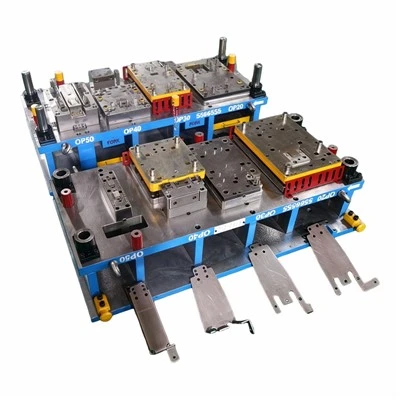
If you’re dealing with cracking stamping parts for fridges, washers, dishwashers, or any other home appliance, we can help. We’ve worked with 40+ appliance brands over the years, fixing their cracking issues and streamlining their stamping processes. Just reach out, tell us what parts you’re making, and we can do a free formability test and give you a custom plan to stop the cracking. No sales pitch, no hidden fees—just straight talk about how to get your parts right.
Metal Stamping Parts References:
- Davies, Gareth. Handbook of Metal Stamping Processes. Elsevier, 2020.
- ASM International. Formability of Steels for Stamping Applications. ASM International, 2018.
- Home Appliance Manufacturing Association. Guidelines for Stamping Part Quality Control. HAMA, 2021.
Dongguan Changdong Tool & Die Co., Ltd.
With abundant experience, we are one of the most reliable home appliance stamping parts manufacturers and suppliers in China. Please feel free to buy advanced home appliance stamping parts made in China here from our factory. Good service and quality products are available.
Address: No.56-B, Fumin South Road, Dalang Town, Dongguan City, Guangdong Province, China
E-mail: sales@cdstamping.com
WebSite: https://www.metalstampingdie.com/
