If you’ve ever walked onto a manufacturing floor, you know palletizing robots are basically magic for a lot of operations. They lift heavy boxes, stack them perfectly, and work 24/7 without complaining—way better than relying on human workers to do that backbreaking, repetitive stuff. As a palletizing robot supplier, I get it: every production manager wants to cut costs, fix labor shortages, and speed up order fulfillment, so slapping a new robot onto an existing line sounds like a no-brainer. But here’s the thing: it’s never as simple as unboxing the machine and plugging it in. Over the 15 years I’ve worked in this space, I’ve watched way too many teams run into messy, costly roadblocks when integrating a palletizing robot into their current lines. Today, I’m breaking down those real, often overlooked challenges—and what we do to fix them. Palletizing Robot

First up, let’s talk about line layout compatibility, and I’m not just talking about space. A lot of older production lines were built for human workers, not robots. When humans palletize, they can reach around tight corners, adjust for uneven box sizes on the fly, and shift positions if the line’s flow changes. Robots? They need a consistent, measured footprint that lines up with every other piece of equipment on the line. I remember a snack food client last year—their line had a conveyor that jutted out 6 inches further than the original blueprints said, and their existing palletizing robot arm only had a 5-foot reach. We almost had to move the entire conveyor, which would’ve shut them down for 3 days and cost them over $100k in lost production. Instead, we reconfigured the robot’s mounting bracket to extend 8 inches forward, and swapped their end-of-arm tool (EOAT) for a smaller, more precise gripper that fit the tighter space. That fix didn’t just save them downtime—it showed how generic robot specs rarely match a line’s unique quirks.
Then there’s the issue of data communication between the robot and the line’s existing machinery. Old lines often run on legacy systems—think PLCs (programmable logic controllers) that are 10+ years old, use proprietary software, or don’t have the right ports to talk to a new robot. Most modern palletizing robots use Ethernet or Wi-Fi to sync with conveyors, barcode scanners, and label printers, but legacy systems? They might run on RS-232, a serial protocol that’s about as old as flip phones. I’ve seen teams spend weeks troubleshooting why the robot would stack 10 boxes of cereal, then stop because the conveyor signal didn’t reach it, or mix up pallet positions because the barcode scanner didn’t send the right product data. One brewery client even tried to skip a professional integration step by hiring their in-house IT team to “translate” the signal between the old line and the robot. That ended up with the robot mislabeling 500 cases of beer, sending them to the wrong warehouse, and costing the company $20k in reworks. Today, we do a full line audit before installation to map out all communication points, and we use custom adapters to bridge legacy and new systems—no guesswork required.
Next, box and product variability. Humans can eyeball a box that’s slightly dented, or a bag of chips that’s a little lopsided, and adjust how they place it on the pallet. Robots? They follow programmed paths and measurements, so if a product deviates even a fraction, things go sideways. I had a cosmetic client last quarter who had 8 different product lines—each with boxes in 3 different sizes, some of which were custom-shaped. Their old line was built for a single product, so they just added the robot to handle the new lines. The robot kept dropping boxes of the specialty lip balm, which had a tapered base, because it was programmed for rectangular boxes. We solved that by adding a vision system that scans each box as it comes down the line, adjusts the gripper’s position in real time, and updates the pallet pattern on the fly. But here’s the catch: if a line has constant product changes—like a 3PL warehouse that ships 20 different items a day—the robot’s programming has to be flexible enough to switch between patterns fast. A lot of suppliers sell “one-size-fits-all” palletizing robots, but those are useless if your line is handling a mix of small bottles, heavy cases, and irregularly shaped goods.
Labor isn’t just a problem of shortages—it’s a hidden integration challenge too. I know, it sounds counterintuitive: robots are supposed to replace workers, right? But when you add a new robot, you can’t just remove the human who was palletizing—at least not at first. The new robot changes the line’s workflow, so the remaining workers have to learn a whole new set of tasks: monitoring the robot, fixing jams, swapping pallets, and troubleshooting basic errors. We had a meat processing plant client where the team was used to doing all the palletizing, so when we installed the robot, they were nervous about being replaced. Turnover spiked because workers felt unprepared for the new role, and the robot was sitting idle for 2 weeks while management scrambled to retrain the team. Now, we build in 2 days of hands-on training for every client’s team, and we assign a point person from the client’s staff to be a “robot champion” before installation. That person is the go-to for other workers, which cuts down on anxiety and downtime. We also work with clients to adjust roles—instead of full-time palletizing, workers move to quality checks or robot maintenance, so no one feels like their job is being taken away.
Jams and line downtime are another big one. Robots are fast, but a single misaligned box can stop the entire line. Humans can clear a jam in 10 seconds, but robots need programmed error codes, and if a glitch pops up that wasn’t in the manual, it can take hours to fix. I’ve seen a toy manufacturer’s line shut down for 8 hours because a box of action figures got stuck in the robot’s gripper, and the error message was too vague for their in-house team to fix. To combat that, we add real-time monitoring to every installation: our techs can access the robot’s system remotely, see when a jam is about to happen, and send a quick fix to the client without even being on the floor. We also run full jam simulations during testing before installation, so we can program the robot to handle the most common issues—like a slightly tilted box or a pallet that’s misaligned. It’s like a fire drill for the robot, so when the real thing happens, it’s no big deal.
Supply chain delays for robot parts are a wild card that most people don’t think about. If your existing line relies on a specific conveyor part that’s easy to get, but the robot’s gripper or controller is on backorder for 6 weeks, that throws the whole integration timeline off. During the pandemic, I had a retail client wait 3 months for a custom EOAT, which pushed their installation back and cost them $50k in lost holiday sales. Now, we keep a stock of the most common EOATs and controllers at our warehouse, and we work with clients to order parts 2 months in advance of the installation date. We also offer flexible leasing options for parts, so if a part is delayed, we can swap in a temporary one to keep the line running while waiting for the custom part to arrive.
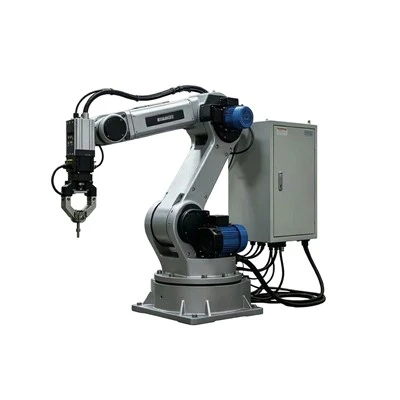
At the end of the day, integrating a palletizing robot into an existing line isn’t just about the robot itself—it’s about how it fits into everything else on the floor. As a supplier, we don’t just sell robots; we solve the headaches that come with adding them to a busy production line. We don’t do cookie-cutter installations, because every line is different. If you’re thinking about adding a palletizing robot to your operation, don’t go it alone. Reach out to us to chat through your line’s quirks, product types, and pain points—we’ll help you map out a plan that minimizes downtime, works with your existing equipment, and fits your budget. No guesswork, no costly mistakes, just a robot that works for your line, not against it.
HVAC Brackets References
- International Federation of Robotics. (2023). Industrial Robot Integration Challenges: A Global Manufacturing Analysis. Retrieved from industry reports on robotic adoption in production facilities.
- Manufacturing Extension Partnership. (2022). Legacy System Modernization for Robotics Integration. U.S. Department of Commerce, National Institute of Standards and Technology.
- Palletizing Robot Association. (2021). Best Practices for Product Compatibility in Robotic Palletizing. Annual Industry Guidelines for Warehouse and Production Automation.
Wanyuan Yuanwei Automation Equipment Co., Ltd.
With abundant experience, we are one of the most professional palletizing robot manufacturers and suppliers in China. Please feel free to wholesale high quality palletizing robot for sale here from our factory. Good service and punctual delivery are available.
Address: No. 392, Wanbai Road, Baisha Town, Wanyuan City, Dazhou City, Sichuan Province
E-mail: wanyuanyuanwei@outlook.com
WebSite: https://www.yuanweiautomation.com/
