If you’ve ever stood at the edge of a race track, watching a driver slide into their cockpit, adjust their gloves, and reach for the harness that will keep them anchored through 1.5g cornering and 4g straight-line acceleration, you might’ve wondered: are those belts off-the-shelf, or built just for that driver, that car, that style of racing? As a racing seat belts supplier who’s been in this game for 12 years, the answer is a resounding yes—but it’s not just stitching a name tag on webbing. Custom racing harnesses are the backbone of safety, and getting them right is the difference between going home after a race and a trip to the hospital. Racing Seat Belts
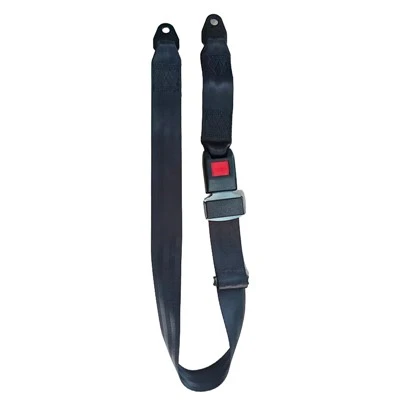
Let’s start with the basics that most casual fans (and even some amateur racers) miss: stock harnesses are designed for average builds. A standard 5-point harness fits a driver who’s 5’9”, 180 lbs, with a torso that tapers just enough to keep the shoulder straps where they belong. But what if you’re a 5’2” sprint car driver with a long torso, or a 6’4” endurance racer whose shoulders sit 3 inches higher than that average? A stock shoulder strap will ride too high on their neck, digging into the soft tissue that holds the head and spine in place during a hard stop. That’s not a small oversight. The NHTSA and FIA both list improper harness fit as a top preventable factor in racing injuries, from whiplash to rib fractures to seat belt syndrome—where loose or ill-placed straps cut off circulation or damage internal organs during impact.
Customization solves that fit issue, but it goes way beyond size. For my team, when a driver reaches out to order a custom harness, the first question we ask is: what kind of racing do you do? Drag racing is linear force, so the main load is on the lap belt. Rally racing has multiple impacts, sideways sliding, and jolts from uneven terrain, so side mounts and anti-submarine straps are non-negotiable. Endurance road racing has constant, subtle movement—drivers adjust their posture for hours, so stretch in the right places and adjusters that don’t slip mid-stint matter more than raw sturdiness, though sturdiness is always table stakes.
Then there’s the webbing itself. A lot of suppliers will push generic nylon webbing, but custom harnesses mean custom webbing specs. For short-track oval racing, we use a high-tenacity polyester webbing that’s 2 inches wide (wider than the 1.5 inch stock) to spread load across a larger torso, reducing pressure points on the chest. For open-wheelFormula Ford and Formula 4 drivers, who have narrower torsos and sit closer to the steering wheel, we offer 1.5 inch shoulder straps cut with a slight curve to fit the tapered shape of a junior racer’s upper body. Even the color isn’t just a cosmetic ask—though we get plenty of those, from team livery matching to a driver’s favorite racing green. For night race teams, we weave 3M reflective threads into the edge of the lap belt so track marshals can spot a driver during a fire or evacuation, a small customization that can save lives.
Another big customization we do is mount points. A lot of amateur racers retro-fit harnesses to factory car seats, but that’s a mistake. When a driver brings us their car model, their seat base, and their driving position (we even have them send a photo of themselves sitting in the cockpit, relaxed with their hands on the steering wheel), we design the harness mounts to attach exactly to the car’s roll cage or race seat brackets. For a drag racer running a tube-frame chassis, that means adjustable lap belt mounts that slide back 4 inches if they want to move their seating position for better weight transfer off the line. For a vintage trans-am racer keeping a 1967 Mustang’s original body, we use hidden mount points that don’t require cutting the floor pan—preserving the car’s originality while keeping the driver safe. I once worked with a NASCAR weekly series driver who had a rare spinal fusion that made standard shoulder straps impossible to fit; we built a custom 6-point harness with a fourth strap that anchored to a reinforced seat back, distributing the load so she could still drive at 110% without pain or risk.
Now, I know what some racers (and even some suppliers) will say: “A FIA-approved harness is a FIA-approved harness, right?” Sort of, but not all approved harnesses are built for every driver. FIA certification covers material strength, load capacity, and durability, but it doesn’t account for individual body geometry or specific racing loads. A harness that passes FIA tests for a 200 lb male driver might not fit a 120 lb female racer’s smaller frame, leading to improper load distribution during a crash. That’s why custom harnesses are still FIA- or SFI-approved—we don’t cut corners on material or testing, we just adjust the shape and fit to meet the driver’s unique needs.
The process isn’t as complicated as it sounds, but it’s not something you can do in an hour at the track. Here’s how it works when a driver comes to us: first, we have them fill out a detailed form with their height, weight, torso length, shoulder width, and the type of racing they do. Then, we send a quick kit with a soft measuring tape, a diagram of where to measure, and a small card to note their preferred strap tension (some drivers like a little give for comfort, others like it tight enough that they can barely twist in their seat). For drivers who are local to our shop, we offer a fitting session in our demo bay—we’ll strap them into a mock cockpit, adjust a prototype harness, and test how it feels during simulated cornering and hard stops. For out-of-state or international drivers, we have video guides that walk them through taking measurements, and we review every photo they send to make sure nothing’s off.
We don’t skip the testing step, either. Once the harness is built, every batch goes through load testing in our in-house lab—we pull the straps with force equal to 2,000 lbs (that’s the equivalent of a 100 mph crash) to make sure they don’t stretch, tear, or slip. For custom mounts, we do a virtual stress test to make sure they’re anchored to the car’s roll cage at points that can handle the load, no weak spots. It takes a little longer than shipping a stock harness from a warehouse—usually 2 to 3 weeks, depending on the customization—but the feedback we get is worth it. Last year, a driver who’d been using a stock harness for three seasons came to us with a custom set; he told us that during a crash at a dirt track last summer, his shoulder straps stayed in place and didn’t dig into his neck like the old ones, and he walked away with nothing more than a bruised ego. That’s why we do this.
Now, let’s talk about common misconceptions. Some drivers think custom harnesses are way more expensive than stock ones, and that’s not always true. A basic custom fit for a standard 5-point harness is only 10-15% more than a comparable stock harness, and when you factor in the cost of a trip to the hospital or a damaged car from an improper fit, it’s a no-brainer. We also don’t charge extra for small customizations—like a driver’s name woven into the shoulder strap, or a reflective edge on the lap belt—because those are the details that matter to racers. The only time the price goes up is for specialized materials, like heat-resistant webbing for drag racers who run nitro fuels, or carbon fiber mounts for open-wheel cars that need to save weight.
Another myth: only professional racers need custom harnesses. We’ve done sets for amateur club racers, hobbyists who race at local short tracks, even a few go-kart drivers who’ve outgrown their youth harnesses. A 10-year-old go-kart racer with a long torso can’t fit a stock junior harness, and that’s where custom fits make all the difference—keeping them safe while they learn to race. We once worked with a dad who races weekly with his son; they both ordered custom harnesses, same style, different sizes, so they could match when they go to the track together. That’s the kind of thing that makes this job fun, not just selling parts.
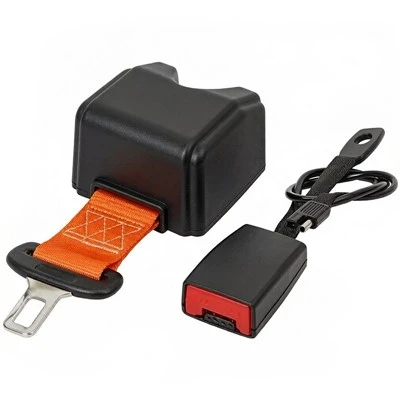
I’ll be honest, there’s a reason some big suppliers don’t offer a lot of custom harness options. It’s more work. You have to take measurements, adjust patterns, test fittings, deal with individual requests. But at the end of the day, racing is about pushing limits, but those limits shouldn’t include your own safety. A harness that fits you right, built for your car and your style of racing, isn’t a luxury—it’s a requirement.
Truck Seatbelt If you’re a racer who’s tired of stock harnesses that dig into your neck, ride too high on your hips, or slip when you hit the apex, reach out to our team to talk about custom racing seat belts. We’ll walk you through the process, answer all your questions, and make sure you leave the shop with a harness that fits like it was made just for you—because it was.
References
- Fédération Internationale de l’Automobile. (2021). Safety Equipment Regulations for Circuit Racing.
- National Highway Traffic Safety Administration. (2022). Racing Injury Prevention: Harness Fit and Load Distribution.
- Specialty Equipment Market Association. (2023). Performance Safety Equipment Best Practices for Motorsports.
- Society of Automotive Engineers. (2021). SFI 16.1 Standard for Racing Harness Assemblies.
- Motorsports Safety Group. (2022). 2021 Annual Racing Injury and Fatality Report.
Yangzhong Weian Mechanical and Electrical Co., Ltd.
As one of the most professional racing seat belts manufacturers and suppliers in China, we’re featured by quality products and good service. Please rest assured to wholesale racing seat belts in stock here and get quotation from our factory. Customized orders are welcome.
Address: Group 10, Xinhua Village, Xilaiqiao Town, Yangzhong City; West of The Bus Terminal On Yuanqu Avenue.
E-mail: hfsaml_2008@qq.com
WebSite: https://www.weianseatbelt.com/
