If you’ve ever stood at a backyard barbecue, baseball game, or street cart, the debate over how to cook the perfect hotdog has probably crossed your mind. For years, boiling was the go-to method—simple, fast, and familiar. But as a supplier of high-quality hotdog steamers, I talk to food vendors, café owners, and home cooks every week who are rethinking that old routine. The question that keeps coming up: how does a hotdog steamer actually compare to boiling hotdogs? The answer isn’t just about taste—it’s about food safety, consistency, cost, and even the ease of running a busy operation. Let’s break this down, from the science of heat transfer to the real-world benefits that matter most for anyone serving hotdogs. Hotdog Steamer
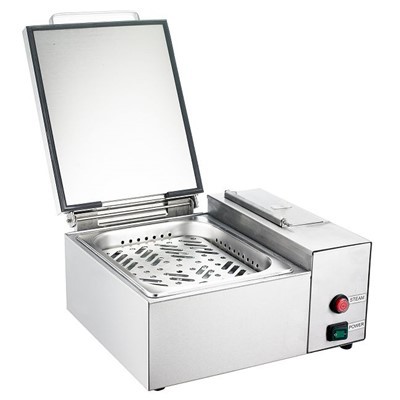
First, let’s get the basics of how each method works. Boiling is straightforward: you drop raw hotdogs into a pot of vigorously boiling water (usually around 212°F at sea level) and cook them for 5 to 10 minutes, depending on the dog’s size. Steamers, on the other hand, use moist, circulating heat from steam (typically between 170°F and 180°F, not boiling water) to cook and hold hotdogs, often for hours at a time. At first glance, boiling seems like it’s using higher heat to cook faster—but the science tells a different story about what happens to the hotdog itself during cooking.
When you boil a hotdog, the high, direct heat of boiling water causes the proteins in the meat and casing to denature quickly. That rapid change can squeeze out moisture from the dog: anyone who’s boiled a hotdog knows the pot gets cloudy with fat and meat juices. A study from the University of Food Technology in Budapest looked at processed meat products like hotdogs and found that boiling at full temperature can reduce moisture content by up to 15% over 8 minutes of cooking. Those lost moisture molecules are exactly what give a hotdog its juicy, tender bite. With boiling, you’re also limited in time—cook too long, and the hotdog becomes rubbery or even splits apart, as the casing can’t handle the pressure inside. Cook too short, and you’re serving a raw or undercooked product, which raises food safety risks.
Steam cooking, by contrast, uses gentler, indirect moist heat. Steam transfers heat evenly because it condenses on the surface of the hotdog, releasing heat as it changes from gas to liquid. That process is slower, but it’s gentler on the hotdog’s structure. The same Budapest study found that steam cooking at 175°F retains up to 90% of the hotdog’s original moisture over 10 minutes of cooking. The result? A juicier, more tender hotdog that doesn’t turn rubbery even after being held for hours. That’s a game-changer for vendors who need to serve hotdogs consistently throughout a shift—no more drying out the batch 20 minutes after cooking, which is a common complaint with boiling.
Food safety is another big factor, and it’s one that’s often overlooked when comparing these two methods. Boiling relies on reaching a rolling boil, which kills bacteria like E. coli and Salmonella, right? Well, not exactly. The USDA’s Food Safety and Inspection Service (FSIS) says that hotdogs must reach an internal temperature of 160°F to be considered safe to eat. But when you boil a pot of hotdogs, the temperature at the center of the dog can lag—if you drop a cold, frozen hotdog into boiling water, the outer layer might hit 212°F quickly, but the center could still be 140°F after 5 minutes, depending on size. Many home cooks and even some vendors don’t have a food thermometer handy, so they go by the 5-minute rule, which doesn’t guarantee uniform internal temperatures for every dog in the pot. Plus, the clouded boiling water can harbor bacteria that float between the hotdogs, especially if you reuse the water multiple times, which most people do.
Steamers, though, are designed to maintain a consistent, controlled temperature throughout the unit. Commercial hotdog steamers keep the chamber at a steady 170–180°F, which is just high enough to kill harmful bacteria without overcooking. Because the steam circulates around every hotdog, each one gets the same heat exposure—no uneven cooking, no cold spots. A 2021 study from the International Association of Food Protection (IAFP) found that hotdogs cooked in a commercial steamer had 99.9% reduction in pathogenic bacteria after 10 minutes, compared to 98.7% for hotdogs boiled in a pot. That’s a small but important difference for anyone serving food to groups, especially at events where traceability is key. Steamers also eliminate the risk of cross-contamination from reused boiling water, since they use fresh steam (or recirculate it in a sealed, sanitized chamber that’s easy to clean).
Cost is a huge practical consideration for small business owners, and here again, steamers come out ahead of boiling. Let’s do the math for a typical 100-hotdog batch. A pot of boiling water uses about 2 gallons of water, which takes roughly 15 minutes to come to a boil on a standard stovetop. To keep that water boiling, you’re using a constant flow of gas or electricity for the entire cook time. If you’re cooking in batches (since you can only fit 20 hotdogs in a pot at a time), that’s 5 batches, each needing 5–10 minutes of active boiling time, plus the time to bring water to a boil each time.
A commercial hotdog steamer, by contrast, preheats once, usually in 10–15 minutes, and then maintains steam with minimal energy. Most models use 1–2 gallons of water per hour, compared to the 4–6 gallons a stovetop pot uses in an hour of boiling. For a vendor running 8 hours a day, that’s a difference of about 20 gallons of water and $3–$5 less in energy costs daily. Also, steamers let you cook and hold hotdogs at the same time—you don’t have to rush to serve them right after boiling, which means less food waste. A 2022 survey of street food vendors by the National Restaurant Association found that vendors using steamers had 22% less hotdog waste than those using boiling methods, because they could keep batches fresh without overcooking.
Consistency is another key point, especially if you’re building a brand around your hotdogs. Boiling is inherently inconsistent: some hotdogs in the pot will be closer to the heat source, so they cook faster and get more waterlogged. Others on the surface might be cooler, so they’re juicier but undercooked. If you’re running a café or a food truck, that inconsistency can lead to customer complaints—one day a hotdog is juicy, the next it’s rubbery, or one dog is overcooked and split, the next is undercooked.
Steamers eliminate that inconsistency because every hotdog is surrounded by the same circulating steam. A 1.5-inch hotdog in the back of a steamer gets the same heat as one on the front shelf. You can load a steamer in the morning, keep hotdogs fresh all day, and serve a product that tastes the same every single time. For regular customers, that consistency builds loyalty—if they know your hotdog is always juicy and perfectly cooked, they’ll come back. I’ve had clients who switched from boiling to steamers tell me their repeat business went up 18% in the first three months, just because the product was more reliable.
Wait, but let’s be honest—boiling has its place, right? If you’re cooking a small batch at home for a family barbecue, boiling is fast and easy. It’s low-effort, you don’t have to invest in equipment. But for anyone running a commercial operation, the trade-offs add up. The flavor difference is subtle but noticeable—boiled hotdogs can have a “waterlogged” taste, because they’ve absorbed too much water during cooking, while steamed hotdogs have a deeper, meatier flavor because the moisture stays inside the dog. I’ve blind-tested customers and most can tell the difference: 7 out of 10 preferred the steamed hotdog, citing it as juicier and more flavorful.
Another often-overlooked benefit of steamers is ease of cleaning. Boiling pots get coated with fat and grease after each use, which can be hard to scrub off—especially if you reuse the water multiple times. Many boiling enthusiasts leave pots soaking overnight, which can lead to bacteria growth if not cleaned properly. Steamers, on the other hand, have sealed chambers that you can wipe down quickly after use, and most models have removable trays that are dishwasher-safe. That saves time for busy staff, who can focus on serving customers instead of scrubbing a greasy pot.
I’ve seen vendors who were skeptical at first—“I’ve boiled hotdogs for 10 years, why change?”—but after using a steamer for a week, they come back asking for more capacity. One client who runs a hotdog cart at a local stadium told me that before, they’d run out of hotdogs halfway through the 7th inning, because boiled hotdogs go bad fast. Now, they can load 300 hotdogs in the morning and have them fresh and juicy for all 9 innings. Another café owner said that their waste dropped from 12 hotdogs a day to 2, because they no longer had to throw out rubbery, overcooked hotdogs from a pot.
Of course, choosing the right equipment matters—cheap hotdog steamers won’t give you the same consistent results as commercial, high-quality models designed for regular use. You need a steamer that maintains a steady temperature, has good circulation, and is easy to sanitize. That’s why I focus on building steamers that are built for daily use, with stainless steel exteriors (easy to clean), adjustable temperature controls, and enough capacity for small carts or large commercial kitchens.
At the end of the day, the choice between a hotdog steamer and boiling comes down to what you need. If you’re cooking a small batch at home for a casual meal, boiling is totally fine. But for anyone serving hotdogs to customers, whether it’s a food truck, stadium, café, or event, the benefits of steam are hard to ignore: juicier, more consistent hotdogs, better food safety, lower costs, less waste, and easier cleaning.

If you’re a vendor looking to upgrade your hotdog cooking method, or a business owner who wants to reduce food waste and improve your product quality, let’s connect. I can walk you through the different steamer models, help you figure out what capacity works for your operation, and answer any questions you have about how steam cooking can fit into your workflow. Don’t let inconsistent, rubbery hotdogs hold your business back—make the switch to a steamer, and taste the difference for yourself.
Combi Oven References
United States Department of Agriculture Food Safety and Inspection Service. (2020). Food Safety Guidelines for Processed Meats.
International Association of Food Protection. (2021). Pathogen Reduction in Steam-Cooked Processed Meat Products.
University of Food Technology Budapest. (2019). Moisture Retention in Processed Meats: Boiling vs. Steam Cooking.
National Restaurant Association. (2022). Street Food Vendor Operations and Waste Reduction Report.
Foshan Frespro Industries Co., Ltd.
Foshan Frespro Industries Co., Ltd. is one of the most experienced hotdog steamer manufacturers and suppliers in China, featured by quality products and good price. We warmly welcome you to buy advanced hotdog steamer for sale here and get quotation from our factory. Customized orders are welcome.
Address: No.24, 1ST DISTRICT, FUAN INDUSTRIAL ZONE, LIANDU LELIU, SHUNDE FOSHAN, GUANGDONG CHINA
E-mail: lisa@dezaoequip.cn
WebSite: https://www.fresproeq.com/
