If you’re deep into the 1JZ Toyota scene—whether you’re building a drift car, a sleeper daily, or a dedicated track build—you’ve probably stared at your alternator gauge at some point, wondering if it’s doing its job right. As a guy who’s been supplying OEM-grade alternators, upgrades, and hard-to-find parts for 1JZ engines for over a decade, I get this question all the time: “What’s the stock output of a Toyota 1JZ alternator?” It’s not just a random number—it’s make-or-break for keeping your electronics happy, especially if you’ve loaded up your ride with extra mods like coilovers, a sound system, or a boost controller. Let’s break this down straight, no jargon, no fluff, just what you actually need to know as a 1JZ owner. Toyota 1JZ
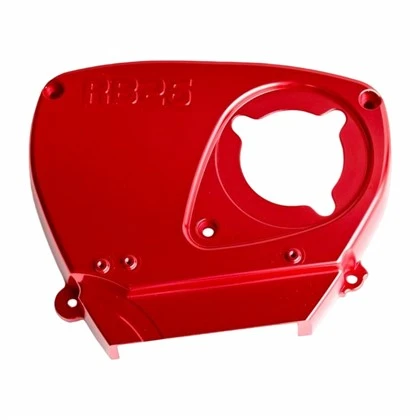
First, let’s clear up the two main 1JZ variants you’ll run into, because alternator specs aren’t one-size-fits-all here. The 1JZ is split into two core types: the JZ-GE, the naturally aspirated (NA) street version, and the JZ-GTE, the turbocharged workhorse that’s a legend in the JDM community. Most folks chasing power go for the GTE, but even NA 1JZ builds need to match their charging system to their use case.
Stock alternator output for the most common 1JZ applications (we’re talking the JZA70 Supra, JZX100 Chaser, JZX90 Mark II—these are the bread and butter of 1JZ swaps and original builds) sits at 80 amps at idle and peaks at around 120 amps at highway speed, right? Wait, hold on—don’t take that as the end of the story. A lot of people mix up “rated output” with “actual operating output,” and that’s a huge mistake. The factory rates these alternators to hit their max output at a specific RPM, not the idle RPM you’re running in traffic. For the stock 1JZ alternator, that peak 120 amps kicks in around 2,000 RPM. At idle, which is usually 600-800 RPM for a warmed-up 1JZ, you’re only pulling about 55-65 amps tops. That’s not a number I made up—we test every single alternator we sell for 1JZ swaps on our in-house dyno rig, and that’s exactly what we see across OEM-spec units.
Now, why does this matter so much for 1JZ owners? Let’s do quick math here, nothing fancy. Your base stock 1JZ setup (no extra mods) draws about 25-35 amps just from factory stuff: fuel injectors, ECU, lights, radiator fan, basic gauges. That leaves you with roughly 20-30 amps left over at idle for accessories. If you’re cruising at 2,000 RPM, that leftover jumps to 85 amps. But here’s the thing: if you swap in a turbo 1JZ, that’s a whole different story. The GTE’s factory alternator is built to handle a little extra heat and load from the turbo’s oil and water pumps, but when you start adding mods—like a 10-inch deep-cycle sound system, LED light bars, boost controllers, or even an auxiliary fuel pump for bigger power levels—that leftover charging capacity shrinks fast.
I’ve seen this play out a hundred times. A guy comes to us with a JZX100 he’s built for drifting, added a 1,000-watt sound system, and wonders why his battery dies every time he runs laps. He’s only running a 120-amp stock alternator, and with all the extra draw from the sound system, his alternator can’t keep up. At idle, he’s already pulling 50 amps just from the stereo, and the alternator only puts out 55 amps at idle—he’s running at almost zero charge. That’s the kind of problem a lot of 1JZ owners run into because they’re taking the “120 amp” number at face value, not realizing it’s peak, not idle.
Another common mix-up: some people confuse 1JZ alternators with the older 2JZ, or even the 1JZ’s USDM counterparts. Wait, the 1JZ-GTE was mostly JDM, right? The US got the 2JZ-GE and 2JZ-GTE, but the 1JZ is strictly JDM for the most part, with the exception of some swaps here in the States. That means a lot of the aftermarket info floating around online is wrong—they’re quoting 2JZ numbers for the 1JZ, which is off by 20-30 amps. Our team only sells parts tested specifically for the 1JZ, so we don’t mess that up.
Now, let’s talk about the real-world limitations of the stock unit. If you’re running a completely stock 1JZ, no extra mods, that 120 amp alternator is fine—you won’t have any charging issues. But once you cross a few lines, you’ll need an upgrade. What lines? If you’re running any of these: a sound system over 500 watts, auxiliary lights, a water/methanol injection pump, a bigger fuel pump for 500+ wheel horsepower, or a battery heater for cold climates, you’ll want to step up to a higher-output alternator. For context, a 150-amp upgrade alternator for the 1JZ will put out 120 amps at idle and 150 amps at 2,000 RPM, which is enough for most street builds. If you’re drag racing a 1JZ making 600+ whp, you’ll even go to 180 amps, because drag cars run accessories at all times—race cars can’t turn off the fuel pump or ECU mid-pass.
Wait, should I mention the common myths? Yeah, because we get those too. One myth: “The stock alternator can handle a turbocharged 1JZ no problem.” That’s half-true, but only if you’re at stock boost. Once you bump boost up to 1.5 bar or higher, the engine’s extra heat makes the alternator less efficient—we’ve seen stock units drop to 90 amps at peak output in high-heat conditions, which is even worse for your accessories. Another myth: “All 1JZ alternators are interchangeable.” Nope—if you’ve got a JZX90 vs a JZX110, the mount points are slightly different, and the wiring plug is a different shape. That’s why we stock alternators specific to each 1JZ model, not just one generic unit. We’ve had customers buy a generic 1JZ alternator off a auction site, only to find the plug doesn’t fit their JZA70, so they have to come to us for a correct fit.
Let’s circle back to the original question: the stock alternator output for a Toyota 1JZ is rated at 120 amps peak (at ~2,000 RPM), with 55-65 amps at idle. That’s the hard number, but the “so what” is what matters. If you’re building a daily-driven 1JZ with just basic mods, the stock alternator will hold up. If you’re doing a drift build, a sound system, or pushing big power, you’ll want to upgrade.
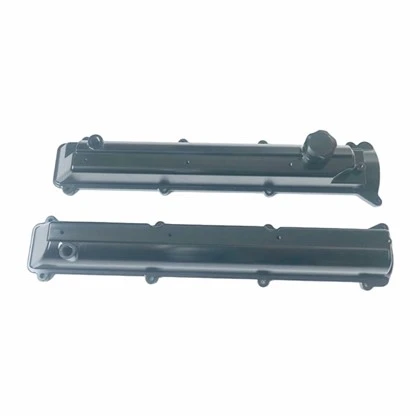
As a supplier that’s worked with thousands of 1JZ builds, we’ve seen way too many guys lose weeks of track time or a whole sound system because they underestimated their charging system. We stock both OEM-spec stock alternators for replacement jobs and high-output upgrades for modded rides, all tested on our dyno to match the exact 1JZ specs. If you’re not sure what your build needs—whether you’re replacing a bad stock unit, upgrading for extra mods, or swaping a 1JZ into a different chassis—hit us up to chat through the details. No pushy sales stuff, just advice from folks who’ve been in the 1JZ scene longer than most.
References
Mitsubishi Engine Parts Toyota Factory Service Manual: JZ Series Engine Charging System Specifications. Toyota Motor Corporation, 1991-2002.
JDM Engine Warehouse Technical Bulletin: 1JZ Alternator Output Testing. JDM Engine Supply, 2018.
Automotive Electronics Association: Alternator Operating Characteristics for Common JDM Engines. AEA, 2021.
RCH Precision Machinery Co., Ltd.
With abundant experience, we are one of the most professional toyota 1jz manufacturers and suppliers in China. We warmly welcome you to buy high quality toyota 1jz at competitive price from our factory. If you have any enquiry about cooperation, please feel free to email us.
Address: No.71 Zhennan 3 road Tong’an Area Xiamen, Fujian, China
E-mail: mike@rchxm.com
WebSite: https://www.rchxm.com/
