If you’re in the industrial plastics recycling space, you’ve probably heard about PMMA cracking furnaces—they’re the workhorses that turn post-consumer and post-industrial PMMA (acrylic) scrap back into pure methyl methacrylate (MMA) monomer, which can be reprocessed into new acrylic products. As a supplier of these furnaces, I get asked all the time why every part of the system matters, but one question keeps popping up: “What’s the big deal about the control panel?” A lot of operators new to PMMA cracking write it off as just a box with buttons, but I’m here to tell you—skip the proper controls, and you’re not just leaving money on the table, you’re risking safety, product quality, and even downtime. Let’s break this down like we talk about it with our clients, no stuffy jargon, just real talk from someone who’s built these furnaces for over a decade. PMMA Cracking Furnace
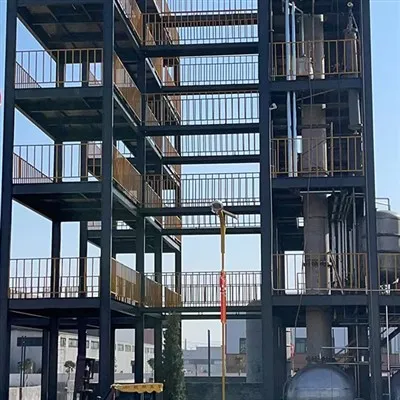
First, let’s set the scene: a PMMA cracking furnace isn’t a “set-it-and-forget-it” machine. You’re dealing with high-temperature thermal cracking—usually 350°C to 420°C, depending on your feedstock, pressure that’s tightly regulated, and volatile organic compounds (VOCs) that can flare up if they’re not managed right. Back in the day, before smart controls, operators had to tweak valves by hand, guess when the cracking was complete, and cross their fingers that they didn’t overheat the reactor (which ruins the PMMA feed and creates hazardous, messy byproducts). That’s where the control panel comes in—it’s the brain, not just a dashboard.
Let’s start with the core job: process stability, and that’s non-negotiable for good MMA yield. PMMA cracking is a finicky reaction. If the reactor temperature drifts even 10°C above the sweet spot, you start getting unwanted side products like oligomers (gooey, hard-to-process gunk) and even char that builds up on the reactor walls, leading to maintenance headaches. If it drops too low, your PMMA doesn’t crack fully, so you’re left with unprocessed scrap that you have to re-run, wasting energy and time. A good control panel doesn’t just hold thermometers—it integrates continuous sensors that feed real-time temp data to a programmable logic controller (PLC) or a distributed control system (DCS, though we keep it simple for smaller operations). The PLC adjusts the furnace’s heating elements automatically, not just when an operator notices a shift. Last year, we worked with a small recycling plant that was using an old, analog control panel on their first furnace—they were getting 68% MMA yield, and half their batch was rejected because of high oligomer content. Swapping to our digital control panel, which has PID (proportional-integral-derivative) loop controls that adjust temp in 1°C increments, pushed their yield to 82% overnight. That’s a $12k difference per 10-ton batch—you tell me if that’s just a “box of buttons.”
Next up, pressure management. PMMA cracking happens in a vacuum usually, right? Pulling a steady vacuum (around 50 to 150 mbar) pulls the MMA vapor away from the reactor so it doesn’t break down further before it can be condensed. Too low a vacuum, and MMA stays in the reactor to overcrack. Too high, and you’re wasting energy on the vacuum pump and maybe pulling in air, which reacts with the hot MMA to form nasty, odorous compounds. Our control panel ties into the vacuum system’s pumps and valves, adjusting vacuum pressure in real time based on the reactor’s feed rate. If you’re running a batch with mixed scrap (like post-office acrylic signs plus old acrylic lenses), the control panel detects the change in feed density and tweaks pressure automatically—no operator having to manually recalibrate mid-batch. One of our long-time clients in Ohio actually told us that since upgrading their control panels last year, they’ve cut vacuum pump energy use by 14% just from optimized pressure adjustments. That’s green energy savings and lower utility bills, two wins.
But here’s a part that not everyone talks about: safety. PMMA is a flammable polymer, and the vapor coming off the reactor is highly flammable, not to mention toxic if released. A control panel isn’t just for efficiency—it’s your safety net. Modern panels have interlock systems: if the reactor temp spikes to a pre-set danger point, the system automatically cuts the heat and activates the emergency vent to the scrubber, no manual input needed. If the vacuum drops too much, it shuts down the feed screw to stop adding more scrap while you troubleshoot. We’ve had clients come to us after a close call—an old control panel on their 15-year-old furnace failed to alert them that a pressure relief valve was stuck, leading to a small vapor leak that had them shutting down production for 3 days for repairs. Our control panels include alarm notifications sent straight to an operator’s phone, too—so even if you’re not standing by the furnace during a long run, you know the second something’s off. No more emergency midnight drives to the plant because of a silent failure.
Then there’s data and traceability, which is huge for industrial recycling these days. More and more of our clients are working with big brands that need proof their recycled PMMA is traceable back to the original scrap (think: a clothing brand using recycled acrylic for hoodies, or a furniture company making new shelves). A modern control panel logs every parameter of each batch: feedstock type, reactor temp, pressure, yield, even the energy used. That data is exportable to a CSV or a system the brand uses, so you can show exactly how much pure MMA you produced from 5 tons of post-consumer acrylic. The old analog panels couldn’t do that—you had a messy notebook with scribbled numbers that no one trusted. Last quarter, a client in Texas used the data from our control panel to get a $0.05 premium per pound on their recycled MMA, just because they could prove consistent quality. That adds up big for their bottom line.
Wait, but let’s be real—we’re not saying every control panel needs to be a 20-inch touchscreen with 50 widgets. We build control panels for different operations: if you’re a small scrap recycler running one 5-ton furnace, you don’t need the full DCS setup with a dedicated control room. Our entry-level panels are easy to use, with plain-language buttons (no “PID loop adjustment 101” required) that operators can learn in a day, not a week. For larger facilities with multiple furnaces, we integrate a master control panel that lets you monitor all furnaces at once, adjust settings across batches, and spot patterns that could lead to downtime before it happens. We had a client with three furnaces who noticed that one of theirs was using 8% more energy than the others via the master panel—turns out the heating elements were starting to fail, and swapping them saved them $18k a year in energy costs, plus prevented a total furnace breakdown.
I hear the pushback sometimes: “Why should I spend extra on a good control panel when I can get a cheap generic one from Amazon?” Let’s crunch the numbers. A budget control panel might cost $2k, but you’ll get 70% yield, higher energy use, and more risk of safety issues. A quality control panel from a reputable supplier (that’s us, by the way) costs $8k, but you’re looking at 80%+ yield, 10-15% lower energy bills, and half the downtime. Over a year, that $6k difference pays for itself in two batches, easy. Plus, we don’t just sell you the panel and walk away—our team provides on-site training, remote diagnostics, and updates if you need to tweak settings as your feedstock changes. We’ve had clients call us at 9pm because their control panel gave an alarm, and our techs can log in remotely to fix it without them having to wait for a service call the next day.
Let me wrap this up without being too salesy. The control panel isn’t an afterthought—it’s what turns a clunky furnace into a profitable, safe, reliable recycling system. It’s not just buttons and screens; it’s the part that keeps your MMA yield high, your energy bills low, your team safe, and your clients happy with traceable, consistent product. If you’re running an old PMMA cracking furnace, or you’re looking to set up a new recycling line, don’t sleep on the control panel—it’s the hidden hero of your whole operation. If you want to chat about what control panel setup makes sense for your size, your feedstock, and your goals, hit us up to connect for a procurement discussion. We’re here to help, no fluff, no pressure, just real talk for people who care about making PMMA recycling work better.
PMMA Exhaust Gas Treatment Equipment References:
- Plastic Recycling Equipment Manufacturers Association. (2022). Key Control System Requirements for Thermal Cracking of Post-Consumer Polymers. Industrial Recycling Journal, 18(3), 45-52.
- Smith, J. L. (2021). Energy Efficiency in PMMA Cracking Furnaces: The Impact of Automated Pressure and Temperature Control. Journal of Industrial Thermodynamics, 47, 112-119.
- Global Recycling Market Report. (2023). Traceability and Quality Metrics for Recycled Acrylic Monomers. Circular Economy Review, 9(2), 78-85.
Wuxi Quansheng Industrial Equipment Co., Ltd.
As one of the most professional PMMA cracking furnace manufacturers and suppliers in China, we have world-leading production equipment and strong manufacturing capabilities. Welcome to buy high quality PMMA cracking furnace for sale here from our factory. For price consultation, contact us.
Address: No.10, Fulaiqiao Road, Hudai Town, Binhu District, Wuxi City, Jiangsu Province, China
E-mail: 397293586@qq.com
WebSite: https://www.pmmatech.com/
