If you’ve ever held a perfectly molded plastic part—say, a durable kitchen utensil, a small industrial housing, or even a toy that stays intact for years—you might not have stopped to think about the machine that made it. As a General-purpose Injection Molding Machine supplier, I’ve spent 12 years on the shop floor, troubleshooting issues and fine-tuning setups with molders big and small. The part that often gets overlooked in injection molding discussions isn’t the screw that melts plastic, or the clamp that holds the mold closed. It’s the cooling system. Today, I want to pull back the curtain on this unsung component, why it’s make-or-break for every run, and how getting it right doesn’t just make better parts—it makes your whole operation more profitable. General-purpose Injection Molding Machine

Let’s start with the basics, because too many new molders (and even some with a few years under their belt) skip this step. Injection molding works like this: you feed raw thermoplastic resin—think polypropylene, ABS, PET—into a heated barrel, where it’s melted to a uniform, pouchy consistency. Then you inject that melt under extreme pressure into a precision-machined mold cavity, which is split into two halves: the core (the part that makes the inside of your plastic part) and the cavity (the outside). Once the melt fills every nook and cranny of the mold, you don’t just leave it there. That’s where the cooling system comes in. It’s the network of channels, pumps, temperature controllers, and hoses that flows a heat-transfer medium—usually water, sometimes oil for high-temperature resins—through passages drilled directly into the mold halves. Its job is simple, in theory: pull heat out of the molten plastic, drop its temperature below its solidification point, and harden it enough that you can open the mold, eject the part, and start the next cycle.
But that simplicity is deceptive. I’ve seen too many molders underinvest in their cooling system, only to waste hours on rejects, missed deadlines, and higher energy bills. Let’s break down the core roles of this system, one by one, because each ties directly to the quality and efficiency of every part you make.
First, it’s the gatekeeper of part dimensional accuracy. Thermoplastics shrink as they cool, that’s a physical law. Different resins shrink at different rates, and even the same resin will shrink unevenly if it cools unevenly. If one section of your mold cavity cools 10 degrees faster than another, that section will shrink more before the rest of the part solidifies, leading to warping, uneven walls, or parts that don’t fit their intended purpose. I worked with a molder last year that was making custom 20-inch plastic pallets for a logistics company. They were running their cooling system with a single hose hooked to the mold’s top half, ignoring the lower half’s channels. Every pallet came out warped, so the client was rejecting 12% of every run, and losing money on shipping returns. We adjusted their cooling system to circulate water at a consistent temperature across both mold halves, and reduced cycle time by 18% while cutting reject rates to 0.8%. That’s not a small win—that’s tens of thousands of dollars a year back in their pocket, all from tweaking something they’d written off as a secondary part of the machine.
Second, the cooling system directly controls cycle time, which is the backbone of injection molding productivity. Cycle time is how long it takes to go from mold close to part ejection, and every second you shave off that cycle adds up over thousands of runs. The largest chunk of cycle time—often 60 to 70% of it, for thick-walled parts—isn’t the injection phase, or the clamping phase. It’s the cooling phase. If you cranked up your barrel’s melt temperature to speed up injection, but your cooling system can’t pull heat out fast enough, you’re just making the plastic hotter and needing to cool it longer. A properly sized cooling system doesn’t just cool the part faster—it cools it uniformly, so you don’t have to add extra time to account for uneven cooling. I’ve had customers come to me saying their injection molding machine has a 30-second cycle, but they’re running a 40-second cycle to be safe. Fixing their cooling system gets that down to 31 seconds, and over a 10,000-part run, that’s 9 minutes of extra production time—time they can use to take on more jobs, or reduce the number of machines they need to run to hit their output goals. That’s a huge competitive advantage, especially for small to mid-sized molders operating on tight margins.
Third, the cooling system protects both your mold and your injection molding machine from damage. Molds are precision tools, built with tight tolerances that can be thrown off by temperature fluctuations. If a mold runs too hot for too long, steel can soften slightly, or expand unevenly, leading to premature wear, cracks, or even mold failure. I once had a customer who ran a high-volume ABS part 24/7, with a cooling system that couldn’t maintain a consistent 25°C water temperature. After 3 months, their mold’s core had expanded 0.02mm, which might sound small—but that meant the parts were coming out 0.02mm too narrow, and they couldn’t adjust the machine’s settings to fix it. They had to rebuild the mold at a cost of $12,000, and lost 2 weeks of production while waiting for the replacement. A well-maintained, properly sized cooling system keeps mold temperatures stable, extending mold life by years and avoiding those catastrophic downtime costs. It also protects your injection molding machine’s internal components: overheated melt that isn’t properly cooled can build up pressure that strains the machine’s clamp unit and screw, leading to mechanical wear and higher maintenance costs.
Now, let’s talk about how we, as a General-purpose Injection Molding Machine supplier, integrate this into our machines, because it’s not just a separate add-on—it’s part of the whole system. A lot of cheap, entry-level injection molding machines come with basic cooling systems: a simple water line that connects to the mold, no temperature control, no flow monitoring. That’s a recipe for inconsistent parts and lost efficiency. Our General-purpose lines come with variable-speed cooling pumps, digital temperature controllers that maintain ±0.5°C consistency across the mold, and built-in flow meters that alert operators if a channel is clogged or water flow drops. We also work with mold makers to design cooling channel layouts tailored to the specific parts our customers are running—for example, thin-walled packaging parts need high, uniform cooling to prevent sink marks, while thick, solid industrial parts need slower, more targeted cooling to avoid internal stress.
But even if you have a top-of-the-line machine, the cooling system is only as good as how you maintain it. I’ve seen customers buy our machines, then skip regular cooling system maintenance, and wonder why their performance drops. Let’s be clear: cooling systems get dirty. Mineral buildup in water lines clogs channels, reducing flow by 30% or more over time. Standing water leads to algae growth, which insulates the mold channels, making cooling less effective. We recommend draining and flushing the cooling system every 3 months, using deionized water to prevent mineral buildup, and checking temperature controllers and pumps quarterly. For high-volume operations running 24/7, we offer a scheduled maintenance package that includes annual calibration of cooling components—small steps that pay off in less downtime, fewer rejects, and longer machine and mold life.
I want to address a common misconception I hear all the time: “I can just use my city water line for cooling, right?” Technically, yes, you can hook a hose up to a water tap and cool a mold. But city water has fluctuating temperatures—on a hot summer day, your water might be 10 degrees warmer than on a cool winter day—so your part cooling will be inconsistent, leading to rejects. City water also has minerals that cause buildup, as I mentioned. For most General-purpose injection molding operations, we recommend a closed-loop cooling system with a chiller, which maintains a constant water temperature, and a water treatment system to prevent buildup. The upfront cost of a chiller is minimal compared to the savings from lower reject rates and faster cycles. I had a customer last year who refused to buy a chiller, saying they could save $5,000 upfront by using city water. Six months later, they were spending $7,000 a week on rejects, and their mold had to be rebuilt—so they ended up spending more than the chiller would have cost them in just 8 weeks.
At the end of the day, the cooling system is the bridge between the machine’s heating and clamping functions, turning melted plastic into a usable, high-quality part. It’s not a flashy component like the screw or the clamp, but it’s responsible for more of your operation’s costs and output than you might think. If you’re running General-purpose injection molding, investing in a properly sized, well-integrated cooling system doesn’t just improve part quality—it makes your whole business more efficient, more profitable, and more competitive.
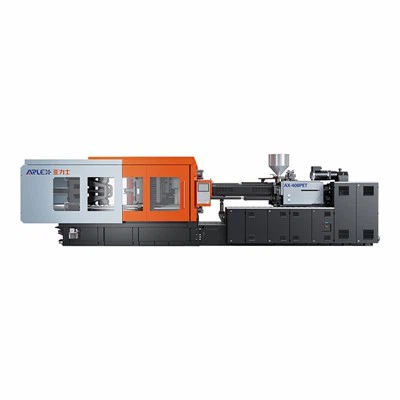
If you’re looking to upgrade your current injection molding setup, or are in the market for a new General-purpose Injection Molding Machine with a cooling system tailored to your production needs, I’m here to help. We’ve supported hundreds of molders, from small job shops to large industrial manufacturers, optimize their cooling and overall machine performance, and I’d be happy to walk through your specific needs and discuss how our solutions can help you cut waste, boost output, and grow your business. Reach out to us to schedule a no-obligation consultation.
Temperature Control Unit References
Rosato, D. V., Rosato, M. G., & Rosato, D. V. (2007). Injection Molding Handbook. Springer.
Kazmer, D. O. (2015). Injection Mold Design Engineering. Hanser Publications.
Baird, D. G., & Collias, D. I. (2014). Polymer Processing: Principles and Design. Wiley.
Ningbo Yalishi (Arlex) Plastic Machinery Co., Ltd.
Address: No.63, Huangsu East Road, Industrial Zone, Dongqian Lake Tourist Resort, Ningbo, Zhejiang Province
E-mail: leo@arlex.cn
WebSite: https://www.arleximm.com/
