When I first started my vacuum flask supply business back in 2012, most of the questions I got from retail customers were about insulation performance—how long would a flask keep coffee hot, or iced tea cold. It wasn’t until 2015 that a regular B2B client, a local outdoor gear shop, asked something that made me dig deeper into a gap in the market: “Do you carry vacuum flasks with a carrying strap?” At the time, my inventory was split between basic stainless steel flasks and insulated water bottles, none of which had straps. That question didn’t just lead me to adjust my product line; it taught me how a simple accessory can turn a functional item into a versatile, portable solution for dozens of daily and adventure scenarios. Vacuum Flask
Let’s start with the basics to set the record straight: yes, vacuum flasks absolutely come with carrying straps—and they’re not just an afterthought. To understand why straps matter, you have to remember how a vacuum flask works. The core design relies on two nested metal walls, sealed with a vacuum between them to eliminate conductive and convective heat transfer. That same design makes them heavier than regular plastic bottles, especially when filled with hot soup or cold lemonade for a day hike. A basic flask can weigh twice as much as a 1-liter plastic bottle, and carrying it by its narrow neck or small side handle for hours is uncomfortable at best, impossible at worst. Straps solve that by distributing weight across your shoulder or torso, leaving your hands free for climbing, carrying a backpack, or holding a kid’s hand at a picnic.
Early strap designs in the industry were pretty utilitarian, to the point that many people thought they were just a cheap add-on. Back in the 2000s, most straps were made from thin nylon webbing, stitched directly to the flask’s lid or body, with little to no padding. They would dig into shoulders, stretch out after a few uses, and sometimes even pull free if the flask was overfilled. That changed around 2018, when consumer demand shifted toward lifestyle and adventure products. Outdoor brands started testing padded neoprene straps with adjustable lengths, quick-release buckles, and even detachable clips that could attach to backpacks, bike racks, or camping chairs. As a flask supplier, I noticed a 40% jump in requests for strap-equipped models between 2019 and 2021, driven by two big trends: remote work and outdoor recreation.
Wait—remote work? That might sound odd, but think about it. Pre-pandemic, many office workers relied on desk-side flasks, carrying them back and forth between home and the office. Without a strap, they had to tuck the flask under their arm or stuff it in a bag, where it could leak condensation or get knocked around. A padded strap turned the flask into a crossbody item, so someone could walk to a coffee shop, run errands, and still have their beverage insulated for hours. For remote workers setting up at co-working spaces or coffee shops, a strap lets you grab your flask and go without stopping to find a bag or a cup carrier. That’s a use case no one saw coming a decade ago, and it’s one reason straps are now a standard feature in many mid-range to premium vacuum flask lines.
Not all straps are created equal, though. As a supplier, I’ve tested nearly every strap design on the market to figure out what works and what doesn’t. Let’s break down the key features that make a strap useful, not just decorative. First, adjustability is non-negotiable. A strap that’s fixed length only works for one use case—say, carrying a 1-liter flask on a hike. A strap that can extend from 20 inches (for crossbody use) to 40 inches (for over-the-shoulder hiking) is far more versatile. Second, material matters. Neoprene is great for padding, but it can trap moisture if you’re carrying a filled flask in the rain. Nylon webbing with a quick-dry coating works better for outdoor use, while padded polyester is soft enough for daily commutes. Third, attachment points. The best straps have durable, metal D-rings or clips that won’t pull free, even if you’re swinging a loaded flask over a rock on a trail. Plastic clips often break after a few months of regular use, so I only source straps with heavy-duty metal hardware for my commercial inventory.
There’s also a common misconception that adding a strap to a vacuum flask compromises insulation. That’s simply not true, as long as the strap is attached correctly. The vacuum insulation is in the walls of the flask body, not the lid or the attachment points. As long as the lid is sealed properly and the flask is free of dents (which can break the vacuum seal), the insulation stays intact. In fact, some manufacturers design strap-equipped flasks with lids that double as cups, making them even more functional. I’ve worked with a few flask brands that attach straps to the cup instead of the flask body, which means you can use the flask lid for pouring without removing the strap. That’s a small detail, but it makes a big difference for campers who don’t want to set their flask down on dirty ground.
Let’s talk about the different types of straps available, because there’s a design for every use case. The first is the basic fixed shoulder strap, found on many entry-level flasks. These are usually thin nylon, stitched to the lid, and ideal for budget-friendly models sold in grocery stores or drugstores. They’re light, but not the most comfortable for long carries. Then there’s the adjustable padded crossbody strap, which is the most popular for daily use. These are wide enough to avoid digging, adjustable for different body types, and often detachable so you can remove the strap if you prefer carrying the flask by hand for a formal event or a meeting.
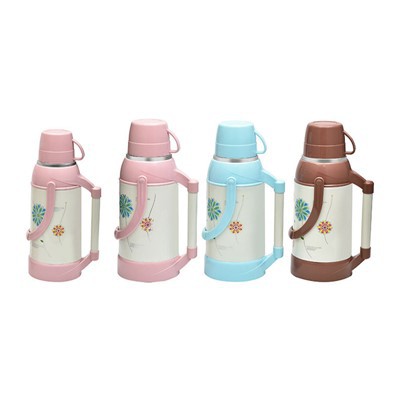
For outdoor and adventure use, there are two more specialized designs. The first is a dual-strap system: a short handle for carrying by hand and a longer shoulder strap for hiking. This is perfect for day trips, where you might want to switch between carrying the flask in your hand when you’re walking around a park, and slinging it over your shoulder when you’re climbing a trail. The second is a clip-on strap, which doesn’t attach directly to the flask at all. These are designed to clip to the handle of a backpack, so you can hook your flask to the outside and easily reach it without rummaging through your bag. I’ve had campers tell me these are a game-changer for morning coffee at a campsite—you don’t have to dig through your pack, and you won’t spill it on your sleeping bag when you pull it out.
As a supplier, I’ve also seen how customers adapt straps to their own needs, which has led us to add custom options to our inventory. Some clients, like school districts, want straps that can be printed with school logos for fundraisers or field trips. Others, like food service companies, want extra-long straps that let their delivery staff carry flasks of hot soup while riding a bike. A few outdoor retailers even asked for waterproof straps that can be fully submerged, for use on fishing boats or whitewater kayaking trips. The key here is that straps aren’t just an accessory—they’re a customizable feature that turns a standard vacuum flask into a branded, use-specific item.
There’s one downside to consider, though, and that’s cost. Adding a quality strap—especially a padded, adjustable one with metal hardware—increases the production cost of a vacuum flask by about 15 to 20%. That means entry-level flasks without straps can sell for $10 to $15, while comparable models with a good strap start at $20. For many budget shoppers, that extra cost is worth it for the convenience, but it’s a barrier for some. That’s why we keep both strap and non-strap models in our inventory, so clients can choose what fits their customer base. We’ve also worked with manufacturers to develop a detachable strap accessory, so customers can add a strap to a flask they already own, which has become a popular add-on for people who don’t want to buy a whole new flask just to get a strap.
Looking ahead, I see straps becoming even more integrated into vacuum flask design. I’m already seeing prototype models with straps that have built-in insulation for the lid, so you don’t have to worry about your coffee cooling while you walk. Some brands are testing solar-powered straps that can charge a phone or a portable speaker, turning a flask into a multi-use adventure gadget. Even for daily use, there’s demand for anti-theft straps with locking clips, so commuters don’t have to worry about their flask being stolen from their bike or desk. For a supplier that started out only offering basic flasks, that evolution is exciting—it means we’re not just selling a container for hot and cold beverages, we’re selling a solution for people who want to stay comfortable, connected, and prepared, no matter where their day takes them.
If you’re a retailer, event organizer, or business looking to add or expand your vacuum flask line, the right strap-equipped models can help you meet a wide range of customer needs. Whether you’re catering to office workers needing a daily carry, campers needing a heavy-duty hiking option, or schools needing branded items for activities, there’s a strap design that fits. Reach out to our team to discuss your specific requirements, from custom printing to bulk ordering, and we can help you find the right vacuum flask products to grow your business.
Thermos Flask Glass Refill References:
- National Kitchen and Bath Association. (2022). Insulated Beverage Container Accessory Trends.
- Outdoor Industry Association. (2023. Outdoor Gear and Accessory Usage Report.
- Packaging Digest. (2021. Portable Food and Beverage Packaging Innovation.
- Journal of Design and Manufacture. (2020. Ergonomic Design of Carrying Accessories for Portable Thermal Containers.
- U.S. Consumer Product Safety Commission. (2022. Product Safety Guidelines for Vacuum Flask Accessories.
Kairun International Co., Ltd.
With abundant experience, we are one of the most professional vacuum flask suppliers in China. Please feel free to wholesale customized vacuum flask made in China here from our factory. For more cheap products, contact us now.
Address: NO. 60 JIAZHAI,NANSHI DISTRICT,DONGYANG CITY,ZHEJIANG PROVINCE, CHINA
E-mail: lanzhou301@126.com
WebSite: https://www.kairun-houseware.com/
