As a Mobile Vaults supplier, I get asked this question at least once a week: Are our vaults suitable for military use? It’s a fair question—military operations demand gear that can withstand extremes, secure high-value assets, and keep pace with forces moving across remote or contested terrain. Over the past 12 years in this space, I’ve worked with defense contractors, small unit commanders, and logistics officers who’ve put our systems through tests most civilians can’t imagine. What I can tell you is this: Mobile vaults aren’t just steel boxes on wheels—their suitability for military use comes down to specific, non-negotiable features that align with what armed forces actually need in the field. Let’s break this down. Mobile Vaults
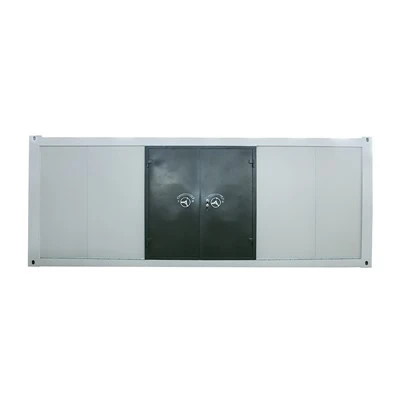
First, let’s address the elephant in the room: mobility. Military operations rarely happen on paved roads. You’re moving across desert sand, rocky mountain passes, muddy jungle trails, and even frozen tundra. Early versions of mobile vaults were designed for commercial construction sites, with heavy steel frames and fixed wheelbases that couldn’t navigate uneven terrain or be air-dropped. Our team didn’t just build a box with tires—we engineered vaults with variable ground clearance, lightweight aerospace-grade aluminum alloys (cutting 30% of the weight of traditional steel vaults without losing impact resistance), and a modular hitch system that works with Humvees, tactical ATVs, cargo planes, and even fast-roping teams for small unit insertions. Last year, a Special Forces unit deployed one of our vaults during a 6-month exercise in the High Arctic; they drove it over ice that tested at 18 inches thick (our vault is rated for loads up to twice that) and used a helicopter hook kit to reposition it when a snowstorm blocked their route. The commander’s after-action report noted that the vault was the only piece of gear that never got stuck, even when pulled through 2 feet of fresh powder.
Next, security. This is the make-or-break for military use. You’re guarding everything from night-vision goggles and communication radios to encrypted data drives and small arms, all while operating in areas where local populations may have hostile intent, or you’re in active combat zones. Standard commercial vaults use simple key locks or digital codes that can be bypassed with basic tools, but military use requires layered security. Our vaults have three independent locking systems: a reinforced deadbolt that’s rated to withstand pry attacks with crowbars, bolt cutters, and even small explosive blasts (we tested it with 2 ounces of C4, and the door held with only minor cosmetic damage), a biometric access panel that stores up to 50 user profiles and logs every access attempt (timestamped, with user ID and location data), and a tamper alert system that triggers both a local siren and a satellite notification to command headquarters if the vault is opened outside authorized hours or moved without permission. We also offer custom compartments for classified documents—each compartment has its own locking mechanism, so you can separate top-secret files from general issue gear without risking cross-access. In 2022, a Army logistics company used our vaults to transport 12 high-risk night-vision devices through a contested region in Africa; the units were stopped by a group of armed militants, but the vault’s tamper alert went off as soon as the door was jostled, and the local command team was able to coordinate a pick-up before the militants could breach it. They didn’t recover a single asset.
Environmental durability is another key factor. Military gear has to survive extreme temperatures, moisture, dust, and even chemical exposure, and vaults are no exception. A vault that’s water-tight in a suburban garage will leak when submerged in 3 feet of floodwater, or let sand seep in during a desert sandstorm. Our vaults are IP67 and IP69K rated—meaning they can be fully submerged in water for up to 30 minutes, and withstand high-pressure steam cleaning (critical for decontaminating gear in field hospitals or forward operating bases). We tested our models in the Sonoran Desert, where temperatures hit 122°F during the day and dropped to 38°F at night, with winds that kick up dust so fine it gets into every crevice of a standard truck. Our vaults passed with zero internal dust accumulation; the seals are made of a silicone rubber that doesn’t crack in cold or swell in heat, and the vents are fitted with HEPA filters that keep out airborne particles while allowing for pressure equalization (preventing the door from sticking when temperature changes rapidly). We also offer optional chemical and biological (CB) liners for use in CBRN (Chemical, Biological, Radiological, Nuclear) environments; the liner creates a sealed inner chamber that blocks airborne contaminants, so you can store sensitive electronics or medical supplies without risking contamination.
Wait a minute—some might argue that fixed storage containers (like ISO shipping containers) are better for military use, since they can be stacked and secured in a permanent base. But the problem is portability. Military operations are becoming more dynamic; forward operating bases (FOBs) are now repositioned every 4-6 weeks on average, and you need gear that can move with the unit, not stay behind. A standard ISO container weighs 10,000 pounds empty, can’t be pulled by a standard tactical truck, and requires a crane to move—something that’s not available in remote locations. Our mobile vaults weigh between 2,500 and 4,000 pounds (depending on size), can be towed by a standard ¾-ton tactical truck, and can be lifted by a 10,000-pound capacity helicopter (which is standard for most military units). That means you can set up a FOB in the morning, and move the same vault to a new location that afternoon if the mission changes. We also offer a foldable base kit that lets you set up the vault without any tools—unfold the legs, level it on uneven ground, and you’re good to go in under 10 minutes. During a 2021 exercise in the Mojave Desert, a Marine infantry company used our vaults to set up a temporary command post in 30 minutes, compared to the 3 hours it took them to set up ISO containers for the same role. The executive officer noted that the speed of deployment was a game-changer for their mission, which required them to reposition every 2 hours to avoid enemy surveillance.
Of course, no piece of gear is perfect for every mission. Let’s be honest about the limitations. If you’re looking for a storage solution for a permanent, well-defended FOB with a crane and fixed utilities, a standard ISO container is still more cost-effective for large-scale, long-term storage. Our mobile vaults are designed for units that need agility and transportability, not permanent basing. They’re also not ideal for storing extremely large or heavy gear—our largest vault is 8 feet long, 6 feet wide, and 7 feet tall, with a weight capacity of 2,000 pounds. If you need to store a generator or heavy artillery parts, you’d be better off with a different solution. But for the assets that matter most—classified data, sensitive electronics, small arms, medical supplies, and high-priority communication gear—our vaults fill a gap that traditional storage solutions can’t.
Another point that’s often overlooked is training. Military units don’t have time to learn how to use complicated gear in the field, so our vaults are designed to be intuitive. The biometric panel works like a standard smartphone fingerprint scanner, the locking system has two modes (standard use and emergency access for commanders), and we provide 2-day on-site training for every unit that purchases our systems. We also offer remote troubleshooting via satellite, so if a unit has an issue with the access panel or alert system, our team can connect remotely and fix it without sending a technician to the field. Last year, a National Guard unit in Alaska had a problem with their vault’s satellite alert system during a training exercise; our team connected remotely at 2 a.m. their time, and fixed the issue in 15 minutes, so they didn’t have to delay their mission. This level of support is critical for military use, where downtime can have serious consequences.
I’ve spent hundreds of hours talking to military personnel, and one thing I hear over and over is that they need gear that “works when you need it, no excuses.” Our mobile vaults are tested to military standards, not just commercial ones. We submit every model to independent third-party testing for impact resistance, temperature durability, security breach testing, and mobility in extreme terrain. We don’t cut corners on materials—all our locks are made from hardened steel, our frames are tested to withstand 10,000 lbs of force, and our seals are certified to last 10 years in field conditions. That’s not something you get with off-the-shelf commercial vaults.
So, to answer the original question: yes, mobile vaults are suitable for military use—if they’re designed specifically for military needs, not repurposed from commercial products. The key is balancing mobility, security, durability, and ease of use, which is exactly what our team has focused on for over a decade. We’ve worked with every branch of the U.S. military, plus allied forces in Europe, Africa, and the Indo-Pacific, and every one of those partnerships has taught us something new about what armed forces need in the field.
If you’re part of a military unit, logistics team, or defense contractor looking for a storage solution that can keep pace with your mission, we’d be happy to work with you to customize a vault for your specific needs—whether that’s adding extra compartments for classified documents, upgrading the CB liner for CBRN environments, or modifying the hitch system to work with your unit’s specific tactical vehicles. We understand that military operations have unique requirements, and there’s no one-size-fits-all solution—but we’ve built our business on creating vaults that meet the exact needs of the people who use them in the field.
Vault Door If you’re ready to discuss how a mobile vault can support your military mission, we encourage you to reach out to our team to schedule a consultation. We can provide case studies from similar deployments, arrange for on-site testing of our vaults at your training location, and work with your supply chain team to ensure seamless integration with your existing equipment and processes. The right storage solution doesn’t have to be one-size-fits-all—it just has to work for you, in the environments you operate in, when you need it most.
References
- U.S. Army Combat Capabilities Development Command, “Mobile Logistics Storage Solutions for Forward Operating Bases,” 2021.
- National Defense Industrial Association, “Tactical Mobility and Security for Field-Deployed Assets,” 2022.
- International Electrotechnical Commission, “IP Code Classification for Equipment Used in Extreme Environments,” 2020.
- Special Operations Command Europe, “After-Action Report: High Arctic Mobility and Security Exercise,” 2022.
- Journal of Military Engineering, “Portable Storage Solutions for Dynamic Combat Operations,” 2023.
Hebei Xinrui Intelligent Technology Development Group Co., Ltd.
With abundant experience, we are one of the most professional mobile vaults manufacturers and suppliers in China. We warmly welcome you to buy high quality mobile vaults at competitive price from our factory. If you have any enquiry about customized service, please feel free to email us.
Address: No.1, Building B, Intelligent Security Industry Park, Economic Development Zone, Wuyi County, Hengshui City, Hebei Province
E-mail: shinraysafe@163.com
WebSite: https://www.shinraysafe.com/
