If you’ve ever spent time in a manufacturing plant, a construction site, or even a busy car body shop, you’ve likely encountered compressed air systems humming in the background. Those systems power everything from pneumatic tools and spray paint guns to production line conveyor belts and industrial cooling equipment. But here’s a fact many people don’t know: that compressed air, straight from the compressor itself, is full of moisture, oil, and contaminants that can turn a routine job into a costly mess. That’s where an air dryer comes in. As someone who’s spent over a decade supplying air dryers to businesses across industries, I’ve seen firsthand how skipping this piece of equipment can lead to ruined products, broken tools, and thousands in unnecessary repair costs. Today, I’m breaking down exactly what an air dryer is, how it works, and why it’s non-negotiable for anyone relying on compressed air. Air Dryer
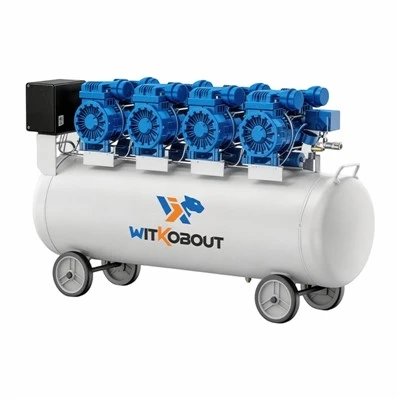
Let’s start with the basics: compressed air is generated when a compressor takes in atmospheric air and squeezes it into a smaller volume. Atmospheric air isn’t just empty space—it’s a mix of nitrogen, oxygen, and water vapor. When you compress that air, the water vapor’s volume shrinks right along with the rest, and its temperature spikes. As the compressed air travels through miles of pipes from the compressor to your end tool or machine, it starts to cool down. Cool air can’t hold as much water as warm air, so that excess water vapor condenses into liquid water. Add to that the tiny oil mist present in most compressor lubrication systems, plus dust and rust from aging pipes, and you’ve got a contaminated mixture that’s far from the dry, clean air you need for reliable operations.
An air dryer is the piece of equipment designed to remove almost all of that moisture, oil, and particulate contaminants from compressed air before it reaches your applications. Its core job is to reduce the pressure dew point (PDP) of the compressed air. Dew point is the temperature at which water vapor in air condenses into liquid. A lower pressure dew point means the air can be cooled much further before it starts to form liquid water—critical because if the air’s temperature drops below its PDP anywhere in your system, condensation will return, no matter how hard the compressor works. Most industrial compressed air applications require a pressure dew point between 3°C (37°F) and -40°C (-40°F), depending on the industry. For example, food and beverage processing needs a very low PDP to avoid bacterial growth, while automotive paint booths require dry air to prevent paint defects like runs or blisters.
Now, how do air dryers actually work? There are several main types on the market, each designed for specific needs, budgets, and operating environments. As a supplier, I often help customers choose between the most common designs: refrigerated air dryers, desiccant air dryers, and membrane air dryers. Let’s walk through each one so you can understand which might be right for your business.
First up, refrigerated air dryers—this is the workhorse for most light to medium industrial applications, and it’s the most common type you’ll find in warehouses, small manufacturing plants, and general workshops. The process here is straightforward, no complicated chemistry required. Let’s break it down step by step. Compressed hot, moist air first enters the dryer’s primary heat exchanger, where it meets two streams: the hot incoming air on one side, and the cooled, dry air that’s already been processed on the other. This heat exchange pre-cools the incoming air, saving energy because you don’t have to work as hard to cool it further. Next, the pre-cooled air moves into the refrigeration system’s evaporator, where it’s chilled to a temperature between 2°C (35°F) and 10°C (50°F). At that temperature, almost all the water vapor in the compressed air condenses into liquid droplets. Those droplets are then separated from the air using a mechanical separator, and drained out of the system automatically via a condensate trap (no manual emptying needed, which cuts down on labor). Finally, the now-dry air is reheated back to near its original temperature using the pre-heat exchanger, so it doesn’t cause temperature swings in your downstream piping that could lead to condensation later.
Refrigerated air dryers are a great choice for most applications because they’re energy-efficient, low-maintenance, and cost-effective upfront. That said, their PDP tops out at around 2°C (35°F) at most—so if you need a lower dew point, like for food processing or electronics manufacturing, they won’t cut it. That’s where desiccant air dryers come in. Desiccant dryers use a porous material called a desiccant, which literally absorbs water vapor from compressed air, like a sponge absorbs water. Common desiccants are silica gel, activated alumina, or molecular sieves—each with different pore sizes and absorption rates, so we match the desiccant to your specific needs.
There are two main types of desiccant dryers: heatless (also called pressure-swing) and heated. Let’s start with heatless desiccant dryers, which are popular for small, low-volume applications or areas with very dry ambient air. Here’s how they work: most heatless models have two vertical desiccant columns, since desiccants can only hold so much moisture before they become saturated and stop working. When compressed air enters the first column, the desiccant absorbs the water vapor, and dry air exits the top. After a set period of time (usually a few minutes), the first column is saturated, so the system switches over to the second column to start drying. To dry the first column again, a small portion (about 10-15%) of the already dried, low-pressure air is diverted, expanded, and passed through the saturated desiccant. This lower-pressure air has a very low dew point, so it pulls the moisture out of the desiccant and carries it away as waste. No heat is needed here, which is why it’s called heatless. The downside? That 10-15% of compressed air is wasted, so heatless dryers aren’t ideal for high-volume operations where every cubic foot of air counts.
That’s where heated desiccant dryers come in, which are more common in large industrial settings. Instead of using wasted dried air to regenerate the desiccant, these dryers use a small electric heater to warm the desiccant, which requires less airflow to pull out moisture. Some heated models use external heat, and some even capture waste heat from the compressor to cut energy costs further. Heated desiccant dryers can achieve PDPs as low as -40°C (-40°F), and even -70°C (-94°F) for ultra-dry applications like pharmaceutical manufacturing or compressed air for aerospace parts. They use less air for regeneration than heatless models, so they’re more energy-efficient for high-volume operations, though they do have higher upfront costs.
The third main type is membrane air dryers, which are a more modern option for small to medium applications, especially for point-of-use drying—meaning you don’t need to dry air for your entire system, just for one specific tool or machine. Membrane dryers use hollow, semi-permeable membrane fibers that look like tiny straws. Compressed air is forced through the inside of these fibers. Water vapor, oil, and other small contaminants can pass through the membrane walls into a separate stream of air that’s vented to the atmosphere, while the dry, clean air stays inside the fibers and exits to your tool. Membrane dryers have no moving parts, so they’re extremely low-maintenance, lightweight, and portable. They’re perfect for applications like small paint spray guns, pneumatic instrumentation, or small lab equipment, but they’re not designed for high-volume systems—their flow rate tops out at around 100 cubic feet per minute (CFM), which is enough for a single workstation but not an entire factory.
Beyond the type of dryer, there are a few key factors that determine which air dryer is right for your operation. First is your system’s CFM (cubic feet per minute) rating—how much compressed air your system uses at peak demand. If you buy an air dryer that’s too small, it’ll be overwhelmed and let too much moisture through; if it’s too big, you’re wasting energy on capacity you don’t need. Next is your required dew point, which ties to your industry. As I mentioned earlier, food and beverage needs a PDP of at least 3°C (37°F) to prevent bacterial growth, while electronics manufacturing might need a -40°C (-40°F) dew point to stop condensation on sensitive circuit boards. Ambient conditions matter too: if you’re operating in a hot, humid environment (like a sawmill in the Southern U.S.), you’ll need a larger or more powerful dryer than someone working in a dry, cold climate.
I’ve seen way too many businesses make the mistake of cutting corners on air dryers, and the results are never good. Last year, a small automotive body shop reached out to me because their paint jobs had been coming out with tiny bubbles and uneven finishes. They’d skipped the air dryer to save a few dollars, so the compressed air feeding their spray guns had a moisture content of over 100 parts per million (ppm). That moisture mixed with the paint, creating defects that required them to rework 20% of their jobs—costing them thousands in lost revenue and customer trust. We installed a compact refrigerated air dryer designed for their system, and within a week, their paint defect rate dropped to less than 1%. That’s the kind of tangible, cost-saving result an air dryer delivers.
Another common mistake is ignoring condensate management. Even the best air dryer produces liquid water, which needs to be disposed of properly. Improperly drained condensate can back up into your air system, undoing all the work the dryer did. That’s why all our air dryers come with automatic condensate traps, and we always include guidance on regular filter and trap maintenance to keep the system running at peak efficiency.
If you’re in the market for an air dryer, don’t hesitate to reach out to discuss your specific needs. We work with businesses of all sizes, from small workshops to large manufacturing facilities, to recommend the right type, size, and configuration that fits your budget and operational requirements. Whether you need a compact membrane dryer for a single workstation, a refrigerated model for general industrial use, or a heated desiccant dryer for high-demand, ultra-dry applications, we have the expertise to help you make the right choice.
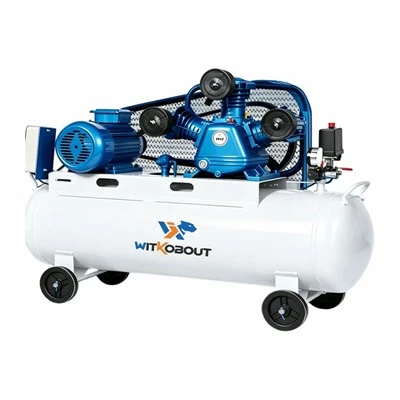
When you’re ready to move forward and learn more about how an air dryer can benefit your operations, feel free to contact our team to discuss your needs and arrange for a custom quote tailored to your compressed air system.
Piston Air Compressor References
- Compressed Air and Gas Institute (CAGI). “Compressed Air Treatment: Dryers and Filters.” CAGI Guidelines for Industrial Compressed Air Systems, 2022.
- Global Industry Analysts. “Industrial Air Dryers Market: Global Demand Analysis & Opportunity Outlook 2027.” GAI Industry Reports, 2021.
- Pneumatics and Hydraulics Industry Association (PHIA). “Best Practices for Compressed Air Moisture Control.” PHIA Technical Bulletin, 2020.
- American Society of Heating, Refrigerating and Air-Conditioning Engineers (ASHRAE). “Compressed Air Systems for Industrial Applications.” ASHRAE Handbook: HVAC Applications, 2023.
Hangzhou Witkobout Technology Co., Ltd.
Hangzhou Witkobout Technology Co., Ltd. is one of the most professional air dryer manufacturers and suppliers in China, featured by quality products and good service. Please rest assured to wholesale CE approved air dryer in stock here and get quotation from our factory. We also accept customized orders.
Address: Room 1211, Huaxia Center, Cangqian Street, Yuhang District, Hangzhou City, Zhejiang Province
E-mail: hzzhikongbao@163.com
WebSite: https://www.witkobout.com/
