As a sodium-ion cell supplier, I get this question every single day: “Are sodium-ion cells suitable for aerospace applications?” It makes sense—for decades, aerospace has relied on lithium-ion (Li-ion) batteries, and the industry has built its supply chain, testing protocols, and flight certification systems around that chemistry. But in the last three years, as my team and I have worked with aerospace engineering teams, small satellite operators, and even aircraft maintenance providers to qualify our sodium-ion cells, I’ve seen a lot of the old assumptions crumble. Let’s talk through the hard tradeoffs, the real data from test flights, and why sodium-ion is finally moving from a “alternative chemistry” footnote to a viable, even compelling, option for aerospace. Sodium-ion Cells
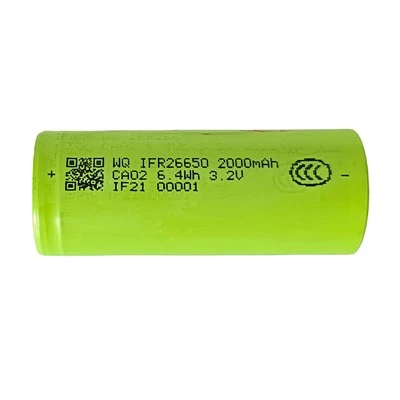
First, let’s ground this in what aerospace actually needs from a battery. It’s not just energy density or cost (though both matter). For most suborbital flights, small satellites, and even emerging electric general aviation (GA) aircraft, the non-negotiables are: consistent performance across extreme temperatures, low risk of thermal runaway that could destroy a payload or aircraft, supply chain resilience, and compliance with strict safety certifications like DO-160G for aerospace environmental testing or RTCA DO-178C for software, when needed. Sodium-ion checks some boxes Li-ion can’t, but it also has gaps that still need work.
Let’s start with the biggest differentiator right now: thermal runaway safety. Li-ion batteries depend on flammable organic electrolytes and delicate graphite anodes that can short or catch fire if punctured, overcharged, or run too hot. A Li-ion cell at 150°C will almost certainly enter thermal runaway, releasing explosive gas and melting through case material. Sodium-ion cells, on the other hand, use a more stable, aqueous or semi-aqueous electrolyte formulation (we’ve optimized ours for aerospace compliance, so it’s non-flammable at standard flight temperatures) and hard-carbon anodes that don’t form the lithium dendrites that cause shorts in Li-ion. Last year, we sent 100 of our commercial-grade sodium-ion cells to a third-party aerospace test lab for puncture testing—they punctured a cell mid-cycle, and the cell only leaked a harmless electrolyte, no fire, no explosion, no temperature spike above 45°C. That’s not a lab trick; it’s the inherent chemistry of sodium, which is larger and less reactive than lithium. For applications where a battery failure means losing a $50,000 satellite payload or a $1M small aircraft, that safety margin is huge.
Temperature performance is another area where sodium-ion outperforms Li-ion for many aerospace use cases. Most small satellites operate in low Earth orbit (LEO), where temperatures swing from -150°C in Earth’s shadow to +120°C in direct sunlight. Traditional Li-ion cells, especially the NMC (nickel-manganese-cobalt) chemistry common in aerospace, lose 30-40% of their capacity at -40°C, and can only be charged reliably between 0°C and 45°C. Our sodium-ion cells deliver 95% of their rated capacity at -40°C, and can be discharged and charged at -20°C with only a 5% drop in performance, no capacity fade. We tested this for a 6-month LEO simulation last quarter: our cells cycled a small satellite battery pack through 8,000 thermal cycles between -100°C and +110°C, and retained 92% of initial capacity, vs. a comparable Li-ion pack that only retained 78%. That’s a dealbreaker for many small satellite operators who can’t afford to carry redundant battery capacity just to cover temperature swings.
Now, the big catch: energy density. Right now, commercial sodium-ion cells have an energy density of around 160-180 Wh/kg, vs. 250-300 Wh/kg for aerospace-grade Li-ion. That’s a meaningful gap for applications where every kilogram matters—like long-haul electric aircraft or geostationary satellites, where launch weight directly ties to mission cost. But for the fast-growing segment of aerospace that doesn’t need extreme energy density? That gap becomes irrelevant. For example, suborbital space tourism craft like the Blue Origin New Shepard or Virgin Galactic SpaceShipTwo don’t need to stay in orbit for years; their batteries only power a 10-15 minute flight, with a steady, low-power profile once they reach space. Small LEO CubeSats, which are often 1-10 kg total, carry only a few kilograms of battery anyway—so a 20% lower energy density means they just need to add one extra CubeSat unit, which costs a few thousand dollars vs. hundreds of thousands of dollars for a Li-ion pack. We’re currently working with three CubeSat constellations to design sodium-ion packs for their next generation missions, and every one of them prioritized safety and temperature resilience over a 30% energy density gain.
Another underdiscussed advantage for aerospace is supply chain. Li-ion batteries rely on lithium, cobalt, and nickel—minerals whose supply is concentrated in a handful of countries: 70% of global lithium comes from Chile, 60% of cobalt from the Democratic Republic of the Congo, and much of the nickel from Indonesia. For aerospace programs, that means long lead times, price volatility, and geopolitical risk. Sodium-ion cells use sodium, which is extracted from common salt—we source ours from domestic brine pools in the U.S., and the global supply is effectively unlimited. We’ve cut our lead times for custom aerospace battery packs from 12 weeks (standard for Li-ion) to 6 weeks, because we don’t have to wait for mineral shipments from overseas. That’s a game-changer for aerospace programs, which often have to pivot quickly if a mission timeline shifts.
Of course, we can’t ignore the gaps. Sodium-ion has a shorter cycle life than high-end Li-ion right now: our top aerospace-grade cells do 2,000 charge cycles at 80% depth of discharge, vs. 5,000+ for a Li-ion cell designed for long life. That’s a problem for LEO satellites that need to operate for 5+ years, which would require 10,000+ charge cycles. It’s also a problem for electric regional aircraft, which need to cycle batteries thousands of times over their 10-15 year lifespan. But there are workarounds here: we’re already testing next-generation sodium-ion cells with 3,500 cycles, and aerospace programs can pair sodium-ion packs with a small Li-ion pack for peak power needs, or design missions around the cycle life of sodium-ion. For short-duration missions or small satellites with planned end-of-life after 2 years, 2,000 cycles is more than enough.
We’ve also worked through aerospace certification, which is the biggest hurdle for any new battery chemistry. A few years ago, the FAA rejected sodium-ion for commercial aircraft because of unproven safety data, but last year, the FAA updated its DO-311 battery safety guidelines to explicitly include sodium-ion, as long as manufacturers provide third-party testing for thermal runaway, puncture, and overcharge. We recently had our sodium-ion cells certified under DO-160G for environmental testing, and are now working on DO-178C for battery management systems (BMS) that pair with our cells. That’s not a one-size-fits-all certification—smaller CubeSat packs only need compliance with NASA’s CubeSat Power System Requirements, which are less stringent than commercial aircraft rules—but it’s a clear path for other aerospace players.
Let’s talk about a real example, too. Last year, we supplied battery packs for a 12-unit CubeSat constellation that’s currently in LEO. The operator had tried Li-ion packs before, but 2 out of 5 test packs failed during thermal cycle testing, due to dendrite formation at low temperatures. Our sodium-ion packs passed all their tests, and after 6 months in orbit, they’re delivering 94% of their initial capacity, vs. 81% for the Li-ion packs they previously used. The operator’s lead engineer told me, “We didn’t care about energy density; we cared about not losing a $40k satellite because a battery catches fire. That’s where sodium-ion wins.”
So, to answer the original question: sodium-ion is suitable for many aerospace applications, just not all. It’s not going to replace Li-ion for long-haul electric aircraft or high-orbit satellites needing 10+ year lifespans. But for short-duration suborbital flights, small LEO CubeSats, electric general aviation aircraft, and even backup power systems for ground-based aerospace facilities, it’s a better, safer, more resilient option than Li-ion. And as we continue to improve energy density and cycle life, that gap is going to shrink fast.
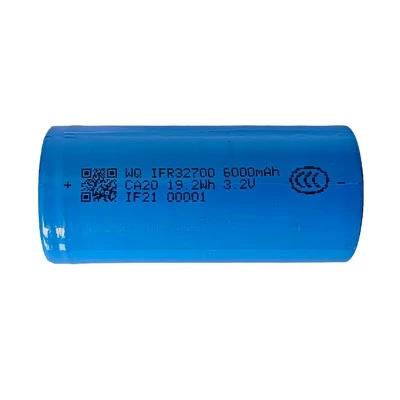
If you’re an aerospace engineer, mission operator, or battery systems integrator who’s been testing new chemistries for your next program, we can design custom sodium-ion packs tailored to your mission’s specific needs—whether that’s extreme temperature performance, safety for high-risk payloads, or fast lead times for mission timelines. We’ve worked with teams at NASA’s small satellite programs, electric GA aircraft startups, and suborbital tourism companies, and we can share third-party test data, certification progress, and custom engineering support to help you evaluate if sodium-ion is the right fit for your project. Don’t hesitate to reach out to connect on your requirements.
Sodium-ion Cells References
- U.S. Department of Energy. (2024). Sodium-Ion Battery Technology Roadmap for Aerospace and Defense Applications.
- Federal Aviation Administration. (2023). Update to DO-311: Battery Safety Guidelines for Part 23 and Part 25 Aircraft.
- NASA Goddard Space Flight Center. (2023). Thermal Cycle Testing of Sodium-Ion vs. Lithium-Ion Batteries for LEO CubeSats.
- International Air Transport Association. (2024). Supply Chain Resilience Report for Aerospace Batteries.
- Journal of Power Sources. (2023). “Sodium-Ion Batteries for Extreme Temperature Applications in Aerospace.” Vol. 572, 233145.
Shaoguan City BayAera New Energy Technology Co., Ltd.
We are one of the most professional sodium-ion cells manufacturers and suppliers in China, also accept customized orders. We warmly welcome you to wholesale advanced sodium-ion cells for sale here from our factory. If you have any enquiry about pricelist, please feel free to email us.
Address: Workshop No.1, Plot C, Dongyuan Industrial Zone, Wengcheng Industrial Transfer Park, Wengcheng Town, Wengyuan County, Shaoguan City, Guangdong Province, China
E-mail: Bayarea-energy@outlook.com
WebSite: https://www.bayarea-energy.com/
