When I first started traveling on commercial fishing vessels with my dad back in the 90s, I noticed something that stuck with me: every time we’d hit that rough stretch of open water, the little battery-powered lights in the fish hold would flicker, and the GPS would cut out for whole minutes. The captain would bang on the power panel with a wrench and mutter about “that flimsy shore-side gear they tried to pass off for marine use.” Back then, I had no idea that the solution to those mid-ocean headaches would end up being the core of what my company now supplies every single day—marine power boxes. Power Box
Let’s cut through the marketing fluff right away. A marine power box isn’t just another metal box with wires inside. It’s the beating heart of a vessel’s entire electrical system, engineered from the ground up to survive conditions that would make a land-based power supply shatter. When you’re 100 miles from shore, salt spray stinging every surface, temperatures swinging from sweltering midday heat to freezing night chills, and constant vibration from engines churning through waves, every part of your power setup has to earn its keep.
First, let’s break down what makes a marine power box different from the stuff you’d plug your lawnmower into or run a garage off. Shore-side power systems are designed for controlled, predictable environments. If a little moisture gets in, a circuit breaker trips, and you just reset it. But on a boat? That same moisture can corrode terminals in hours. Vibration from the engine bay can loosen wires in a matter of days if the box isn’t built to handle it. Temperature extremes can warp plastic enclosures or cause batteries to fail prematurely. The best marine power boxes address all of that with three core design pillars: durability, redundancy, and compliance.
Durability starts with the physical build. The enclosure is almost always heavy-gauge marine-grade aluminum or stainless steel—no flimsy galvanized steel that rusts in salt air. Some of our models even have powder-coat finishes that we test for 1,000 hours in salt spray chambers before they leave our facility. The internal components aren’t generic automotive parts either. We use commercial-grade circuit breakers that are rated for marine shock and vibration, not the cheap ones you pick up at a hardware store that trip if you look at them wrong. Terminals are tinned to resist corrosion, and every wire is routed with strain reliefs so the constant rocking of the boat doesn’t fray connections over time.
Redundancy is non-negotiable for marine power boxes. A commercial vessel’s electrical system can’t afford a single point of failure. If your main power box goes out mid-voyage, you’re not just losing a TV for the crew’s downtime—you’re losing navigation, communication, life support, and critical systems that keep the boat and everyone on it safe. That’s why most of our power boxes are designed with built-in secondary circuits, or the option to add a parallel backup, so if one section fails, the other kicks in automatically without anyone having to shut down operations. Last year, a fishing trawler out of Gloucester had a main power box circuit trip during a storm; their secondary backup kicked on in less than a second, and they didn’t miss a single sonar ping or GPS fix. That’s the kind of reliability we build for.
Compliance is the third piece, and it’s not just a box-ticking exercise. Every marine power box we supply meets international standards set by organizations like the International Maritime Organization (IMO) and classification societies such as ABS, DNV, and Bureau Veritas. These standards exist because lives depend on it. For example, IMO’s SOLAS (Safety of Life at Sea) regulations require that all critical power systems have clear isolation switches, so technicians can work on the box without risking electrocution in wet conditions. We don’t cut corners on that—every one of our boxes has large, clearly labeled switches that are sealed to keep water out, so even someone wearing rubber gloves in a rainstorm can operate them safely.
Now, what do marine power boxes actually power? Let’s get specific, because it’s not just “all the things on a boat.” There are two main categories: primary power boxes and auxiliary power boxes. Primary power boxes are tied directly to the vessel’s main engine or generators, supplying power to high-demand, critical systems: navigation gear (GPS, chartplotters, radar), communication systems (VHF radios, EPIRBs that send distress signals), bilge pumps that keep the boat from sinking, and lighting for the bridge and living quarters. A lot of commercial vessels also use primary power boxes to run fish processing equipment, which has to be consistent even when the boat is bouncing.
Auxiliary power boxes are the ones that handle the rest. Those little LED lights in the crew’s quarters? The deep freezer that keeps your catch from spoiling? The Wi-Fi router (yes, even fishing crews want to check in with family at night)? Those run through auxiliary power boxes, which are often wired to solar panels or batteries for when the main generators are off, or when you’re at anchor and don’t want to burn fuel idling. Some auxiliary boxes also have built-in chargers for the boat’s house batteries, so you don’t have to run the main engine all night just to keep your fridge going.
I know what some of you are thinking: “Why not just use an inverter connected to the main battery bank?” I get it—for small boats or weekend cruisers, that might work for a short trip. But here’s the thing: inverters aren’t designed for continuous, high-load use, and they don’t have the same protection features that marine power boxes have. Over time, an inverter that runs non-stop on a fishing boat will overheat, or its connections will corrode, and you’ll be stuck. Marine power boxes are built for 24/7 operation in harsh environments. We’ve had customers tell us our power boxes are still running after 12 years on the water, with only basic maintenance—no replacing the whole system every few years like they did with cheaper setups.
Let me talk about a recent project that really drove this home. A team of research scientists out of Woods Hole approached us last year. They were outfitting a small research vessel to study coral reefs in the Caribbean, and their old power system kept failing in the warm, humid conditions. They needed a power box that could run their underwater cameras, water testing sensors, and navigation gear for weeks at a time, without any chance of downtime. We customized a compact marine power box for them, with corrosion-resistant aluminum, sealed terminals, and a redundant circuit for their sensor systems. Three months later, they sent us a photo of the box, covered in salt spray, with a note that it had run flawlessly through a tropical storm and a two-week research mission. That’s exactly why I do this—seeing our gear help people get the job done, even when the conditions are tough.
Maintenance is a big part of keeping a marine power box working, and it’s simpler than you might think. You don’t need an electrical engineer on board every week—just basic checks. We give every customer a maintenance guide that outlines simple steps: wiping down the enclosure to remove salt residue every port call, checking that terminals are tight and free of corrosion, testing the secondary backup circuit once a month, and inspecting wires for fraying after rough voyages. We also offer remote support, so if a captain notices something off, they can shoot us a photo, and our technical team can walk them through a quick fix over the radio or phone. Last winter, a captain out of Seattle had a minor issue with his power box before a long trip to Alaska—our team talked him through tightening a loose terminal in 10 minutes, and he was on his way without having to delay his departure.
I know that when you’re out on the water, every piece of gear matters. You can’t afford to cut corners on something that keeps you safe, keeps your catch fresh, or lets you get home to your family. A marine power box isn’t just a component—it’s a investment in reliability, in safety, in not having to stress about whether your power will cut out when you need it most.
If you’re a vessel owner, operator, or someone outfitting a new boat, and you’re tired of dealing with power systems that fail at the worst possible time, I’d love to talk. We customize power boxes for all types of marine use: commercial fishing, research vessels, passenger ferries, yachts, and more. We don’t believe in one-size-fits-all solutions—every boat has unique needs, and we build our power boxes to match those needs.
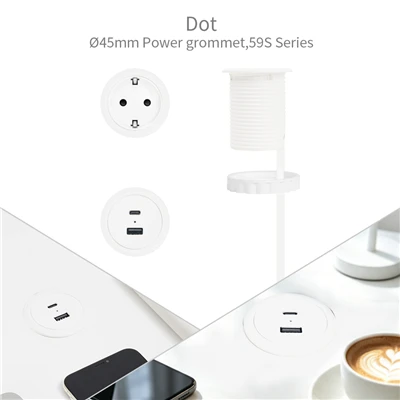
45mm Power Grommet Ready to find a power box that works as hard as you do? Reach out to our team to discuss your requirements, get a custom quote, or ask any questions you have about marine power systems. We’re here to help, because we’re mariners too—we know what it’s like to rely on gear that doesn’t let you down.
References
- International Maritime Organization. (2022). SOLAS Consolidated Edition. IMO Publishing.
- American Bureau of Shipping. (2023). Guidance Notes for Electrical and Electronic Systems on Marine Vessels. ABS.
- Det Norske Veritas. (2022). Rules for Classification of Marine Equipment and Systems. DNV.
- National Marine Manufacturers Association. (2021). Marine Electrical Systems Best Practices. NMMA.
Cixi Mingye Communication & Electronic Co., Ltd.
Cixi Mingye Communication & Electronic Co., Ltd. is one of the most professional power box manufacturers and suppliers in China, featured by quality products and good service. Please rest assured to wholesale durable power box at competitive price from our factory. Welcome to contact us for custom service and ODM service.
Address: West Industrial District,Guanhaiwei Town,Cixi city,Zhejiang Province,China
E-mail: enquiry@officelink.com.cn
WebSite: https://www.officelinkelectric.com/
