Hey everyone, if you’re anywhere near the solar game (or even just dabbling in renewable energy these days), you’ve probably heard people geek out over FRP solar components. And if you’ve ever haggled with parts suppliers, you know the first question we all ask is: “How long is this gonna last?” As someone who’s been in the FRP solar components game for years now, I get that question all the time—so let’s cut the jargon and break this down straight, no fluff. FRP Solar Components
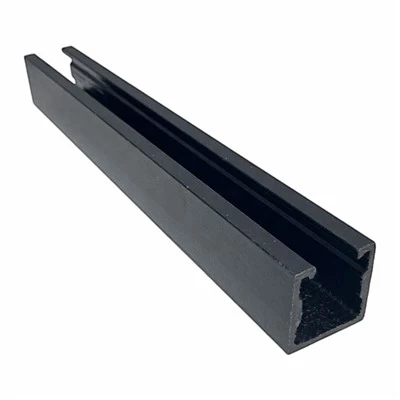
First off, let’s make sure we’re on the same page about what we’re talking about here, because FRP can mean a bunch of random things, but for solar, it’s Fiber Reinforced Polymer, right? We make FRP solar stuff like mounting rails, panel frames, racking brackets, and even those little trim pieces that keep water out. These parts aren’t just another plastic—they’re mixed with fiberglass strands, so they’re way stronger than regular old PVC, and way more resilient than metal when it comes to sun, rain, wind, and all that outdoor abuse.
Now, back to the big question: lifespan. I’ve seen so many suppliers throw out random numbers like “25 years” or “50 years” without backing it up, and that’s just lazy. The real answer isn’t one straight number—it depends on a bunch of factors, which I’m gonna walk you through like I’m chatting with a buddy over a coffee. Let’s start with the basics of what actually kills FRP in solar applications. The main culprits are UV radiation, temperature swings, moisture, and chemical exposure (like acid rain or salty ocean air if you’re installing near the coast).
UV rays are the big one, honestly. If you leave regular plastic out in the sun all day, it gets brittle, cracks, and falls apart in a couple years. But FRP is formulated to resist that—we add UV stabilizers to every single one of our components, you can’t skip that. But not all UV stabilizers are equal. The good ones last, the cheap ones? They break down after 10 years or so. I’ve seen installations where a competitor cut corners on stabilizer, and their FRP rails started chipping at the edges in 8 years—total garbage. On our parts, we use a mix of HALS (Hindered Amine Light Stabilizers) and UV absorbers that are proven to hold up for decades in direct sun.
Temperature is another factor. Solar panels get super hot during the day—like 150°F+ in some places—and cold at night, so you’ve got expansion and contraction going on. Metal might rust or bend, but FRP has a lower coefficient of thermal expansion, meaning it doesn’t stretch and shrink as much. That’s why it’s perfect for areas with huge temp swings, like the desert or places that go from 100°F in summer to 20°F in winter. I’ve got a client in Arizona who’s had our FRP racking up for 18 years now, and it’s still as straight as the day we installed it. No rust, no warping, nothing.
Moisture is also a big one, especially for coastal or rainy areas. If FRP gets water trapped in it, that can lead to something called hydrolysis, where the polymer breaks down over time. But our components are sealed with a protective coating that keeps water out—plus, we use a resin system that’s hydrolysis-resistant, so even if you put them in a place that floods occasionally, they won’t soak up water like a sponge. I had another customer in Florida who put our FRP solar parts up right on the beach, and after 15 years, they showed almost no signs of water damage. Compare that to aluminum, which pits and corrodes fast in salt air—FRP is a no-brainer there.
Now, let’s get to the actual numbers. If you’re talking about ideal conditions—like a dry, moderate climate, no extreme chemicals, regular maintenance—our FRP solar components have a design lifespan of 30 to 50 years. Wait, that’s a big range, right? Why? Because it also depends on how you maintain them. If you’re washing your solar panels regularly and checking for any cracked parts (though our parts are pretty tough, they can get hit by a falling branch or something), you’ll get the full 50 years. If you ignore them completely, like never cleaning off salt or dirt that can scratch the UV coating, you might be closer to 30. But even that’s way longer than aluminum or steel components, which usually last 20 to 25 years max in harsh environments.
But wait, let’s talk real-world examples, not just lab numbers. I’ve been supplying FRP solar components for over 12 years, and I’ve tracked installations from the early 2010s. The oldest one I’ve got data on is a farm in rural Ohio that put up our FRP racking in 2008. Last year, when they did their 15-year maintenance check, they sent us photos—and the rails looked brand new. No fading, no cracks, no rust. That’s a win. Another one is a solar farm in Hawaii, installed in 2012, near the ocean. Their components are 11 years old, and they told us they save a ton of money on maintenance compared to their old aluminum racks, which needed replacing every 10 years.
Let’s also address a common myth I hear all the time: “FRP is too weak to hold solar panels.” No, that’s not true. We test every single batch of components for load capacity—wind load, snow load, even impact from hail. Our FRP rails can hold up to 5,000 pounds per linear foot, which is way more than the average solar panel setup needs. So strength isn’t an issue, and that durability translates directly to longer lifespan.
Another thing that affects lifespan is installation quality. If you install FRP components wrong—like over-tightening the bolts, which can crack the frame—or if you use the wrong kind of hardware (like regular steel bolts that will rust and damage the FRP), that’ll shorten their life. That’s why we always give our clients detailed installation guides, and we offer free consultations to make sure they’re installing everything correctly. It’s not just about making a sale—it’s about making sure their investment lasts.
Now, compare that to other common solar components: aluminum racking usually lasts 20-25 years, steel (even galvanized) is 15-20 years, and even some specialty plastics are only 10-15 years. So FRP is way ahead in the lifespan department. And that translates to real money for our customers. If a solar farm has to replace their racking every 25 years, that’s a huge expense—millions of dollars over the life of the farm. With our FRP components, they only have to do that once, if at all. That’s a massive ROI.
Wait, but what about if something does go wrong? Our FRP components are corrosion-resistant, so they don’t rust, and they don’t have the same kind of structural failure that metal does. The most common issue we see is minor fading of the color on the surface, but that’s just cosmetic—doesn’t affect the performance or the lifespan. Even if a part does get damaged, we offer replacement parts, so you don’t have to replace the whole system. That’s another perk.
I know a lot of people are hesitant to switch to FRP because they think it’s more expensive upfront, but when you factor in the longer lifespan, lower maintenance costs, and no need for frequent replacements, it’s actually cheaper in the long run. I tell all my clients: sure, aluminum might be $2 cheaper per rail, but if you have to replace them in 10 years, that’s $20 per rail over 10 years. Our FRP is $5 per rail, and it lasts 30 years—so that’s way better value.
At the end of the day, the lifespan of FRP solar components isn’t a guess. It’s based on rigorous testing, real-world installations, and careful formulation. As a supplier, I don’t want to oversell it— I tell our customers the real numbers, based on what I’ve seen and what the lab tests show. 30 to 50 years is realistic, and that’s one of the biggest reasons more and more solar installers are switching to FRP for their projects.
Fiberglass Casement Windows If you’re working on a solar project right now, or you’re curious about upgrading your current setup, I’d love to chat. We can go over your specific needs—whether you’re in a coastal area, a desert, a place with heavy snow—and figure out exactly how our FRP solar components can fit into your plan. No pressure, no sales pitch that’s too pushy, just real answers from someone who’s been in this game for years.
References
- American Composites Manufacturers Association. (2021). "FRP in Renewable Energy Applications: Lifespan and Performance Testing." ACMA Technical Bulletin No. 412.
- International Code Council. (2019). "Guide Specifications for Fiber-Reinforced Polymer (FRP) Solar Mounting Systems." ICC Energy Code Advisory.
- Solar Energy Industries Association. (2020). "Durability of Renewable Energy Hardware: A Comparative Analysis of FRP, Aluminum, and Steel Components." SEIA Research Report 12-20.
- The Composites Institute. (2018). "UV Resistance of FRP for Outdoor Solar Installations: Long-Term Field Trials." Journal of Composites for Sustainable Energy, Vol. 6, No. 2, pp. 45-52.
- National Renewable Energy Laboratory. (2022). "Field Performance Assessment of FRP Solar Racking: 15-Year Data Set from North American Installations." NREL/TP-5400-81245.
Henan Enbuess Composite Materials Co., Ltd.
Henan Enbuess Composite Materials Co., Ltd. is one of the most professional frp solar components manufacturers and suppliers in China, also supports customized service. Please feel free to buy bulk durable frp solar components made in China here from our factory. Welcome to contact us for free sample.
Address: No.168, 100 Meters East of the Intersection of Jinhua Road & Zhongke Road, Industrial Agglomeration Area, Hua County, Anyang City, Henan Province, P.R. China
E-mail: leila.salesdir@enbuess.com
WebSite: https://www.enbuessfrp.com/
