Hey there, if you’ve ever hung around a scrap yard, metal recycling plant, or any place that’s churning out tons of compressed scrap metal (like steel, aluminum, copper, all that good stuff that’s meant to be reborn as new products), you’ve probably seen those big, intimidating metal baler machines. These things look like they’re built to be tough, and let’s be real—they are—but what most people don’t talk about is how much thought goes into keeping the people running them, working around them, and the machines themselves safe. Metal Baler
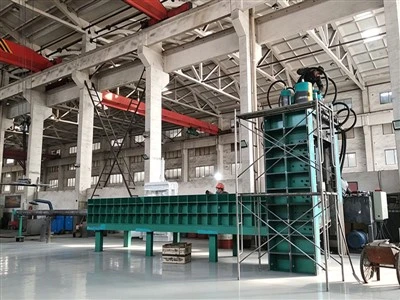
I’m from a metal baler supply company, and every single day, I get questions from scrap yard owners, facility managers, and even new operators asking, “Wait, these things have safety features? I just thought they squish metal into bales.” Dude, that’s the mistake so many people make—they see the heavy-duty frame and the massive compressing arm and assume it’s all brute force, no thought for safety. But over the 15+ years I’ve been in this game, we’ve learned that safety isn’t an afterthought; it’s the backbone of every baler we design and build. Let me break down the key safety features our balers have, not just because we’re required to, but because no one should ever get hurt working with one of these machines.
First off, let’s start with the most obvious, but also most critical: guardrails and physical barrier systems. I don’t care how experienced an operator is—they can get distracted, or a piece of metal can slip and fly when the compressing arm moves. That’s why every single one of our balers has heavy, reinforced steel guards around all the moving parts. The compaction chamber, the hydraulic cylinder, the pressing ram—all of that is enclosed so you can’t stick your hand, your arm, or even a tool in there when the machine is running. And not just any guards, either—these aren’t thin sheets of metal that’ll bend if you bump ‘em. We use ½-inch or thicker steel for the main barriers, and they’re bolted on with heavy-grade bolts, not the tiny ones you’d find on a lawnmower. The best part? These guards aren’t permanent obstacles, either. We build them with quick-release latches so when you need to do maintenance on the compaction chamber, you don’t have to spend an hour unscrewing bolts. You just flip the latch, swing the guard open, and get to work. That’s a balance we’ve had to nail—keeping people safe while not making their jobs way harder.
Next up, interlock safety switches. This is the real unsung hero of baler safety. Let’s say an operator needs to reach into the feed hopper to pull out a piece of metal that got stuck. If there were no interlock switches, they could just flip the machine on and reach right in—disaster waiting to happen. But our balers have interlocks on every single access point: the feed door, the guard on the compaction chamber, the hydraulic panel, even the hopper side panels. If any of those doors or guards are open or not securely latched, the machine won’t turn on. It’s a simple fail-safe, but it works. I’ve seen way too many horror stories from operators who tried to bypass interlocks to save time, and that never ends well. So we design our interlocks so you can’t bypass them easily—they’re wired directly into the machine’s control system, not just a flimsy magnetic switch that can be tripped. If someone tries to pry open a guard while the machine is running, the interlock triggers an immediate shutoff, no ifs, ands, or buts.
Then there’s pressure relief valves and overload protection. Hydraulics are the heart of a metal baler—they generate thousands of pounds of force to crush metal into tight, dense bales. But if there’s a blockage in the compaction chamber, or if someone accidentally puts something extra heavy in there (like a solid steel I-beam that’s way too big for the baler), the hydraulic system can overpressure, which can blow hoses, damage the machine, or even send a piece of metal flying. That’s why every one of our balers has multiple pressure relief valves set at the exact maximum pressure the machine is rated for. If the pressure gets too high, the valve opens automatically and releases excess pressure so the system doesn’t get damaged. We also have overload protection built into the control panel—if the machine senses that it’s working harder than it should, it will pause automatically instead of pushing through and causing damage. Last year, we had a new operator at a scrap yard accidentally feed a 4-foot steel pipe into our baler, and the overload protection kicked in before the hydraulic pressure spiked. He told me later that he would have tried to muscle it through with a different machine, but ours stopped him before anything bad happened. That’s the kind of feature that makes our clients come back.
Wait, let’s not forget about emergency stop buttons—everyone knows what those are, but not all emergency stops are created equal. Our balers have not just one, but multiple emergency stops strategically placed all over the machine: near the control panel, on the feed side, on the hydraulic panel, even on the side of the compaction chamber for operators working on the back end. And these aren’t the wimpy little buttons you’d find on a coffee machine—they’re big, bright red, mushroom-shaped buttons that are easy to spot even if the area is covered in scrap, and you don’t have to be delicate to press ‘em. When you hit an emergency stop, it immediately cuts power to every moving part of the machine—hydraulics, motors, everything. No slow shutdown, no waiting for the ram to lower—just instant stop. We also test these buttons every time we finish building a baler; if an E-Stop doesn’t trigger a full shutdown, the machine doesn’t leave our warehouse. That’s non-negotiable for us.
Another feature that a lot of people overlook is overload floor protection and machine stability. Metal balers are heavy—some of our largest models weigh 20+ tons. If you set one up on a flimsy concrete slab, it can shift, especially when it’s compressing metal and vibrating from all that force. That’s why we design our balers with reinforced, heavy-duty frames that are bolted to the ground with anchor points built right into the base. We also include floor protection pads that go under the base, so if there’s any minor shifting, it doesn’t crack the concrete. Plus, the frames are balanced so they don’t tip even if you load an unbalanced pile of scrap into the hopper. I’ve had a client tell me that their old baler from a different manufacturer shifted so bad that it made their warehouse walls crack, and since they switched to ours, they haven’t had a single issue with stability. That’s a big one—if a baler isn’t stable, all the other safety features don’t matter.
Oh, and let’s talk about operator control systems. Our balers have modern, user-friendly control panels that are designed with safety in mind, not just convenience. For starters, they’re locked with a key—only trained operators with the key can turn the machine on, which keeps untrained people from messing around with it. The control panel also has clear, big buttons with labels, not tiny symbols that no one can read from across the room. We also include a feature called “hold-to-run” for the compaction cycle—instead of just pressing a button once and letting the machine run, the operator has to hold down the button the entire time the ram is moving. That way, if something goes wrong while the ram is down, they can let go of the button to stop it immediately. No more scenarios where the machine is running without anyone paying attention. We also have a visual alert system—bright LED lights that turn green when the machine is safe to run, yellow when it’s in operation, and red if there’s an error or an emergency. That way, anyone working around the baler can tell at a glance what’s happening, even from a distance.
Wait, should I mention something about dust and fume safety? Because let’s be real, when you’re compressing metal, you get metal dust, tiny shavings, and sometimes fumes from coated metals like aluminum with paint or steel with rust. Those can be a health hazard for operators, especially if they’re breathing that stuff all day. Our balers have integrated dust extraction ports built right into the compaction chamber, so you can hook up a vacuum system to suck up all the dust and shavings before they escape. We also include fume filters in the hydraulic system and around the motor, so no toxic fumes get released into the work area. A lot of manufacturers skip this because it adds a little cost, but we think operator health is just as important as physical safety.
And let’s not forget about routine maintenance safety features. No machine lasts forever, and maintenance is a big part of keeping it safe. Our balers have built-in lockout/tagout (LOTO) points. For those who don’t know, LOTO is when you lock a machine’s power source so no one can turn it on while you’re working on it. We have dedicated lockout points on every power line, hydraulic line, and control panel, so maintenance workers can easily lock the machine out and secure it while they do repairs. That’s OSHA-mandated, but we go a step further by making the LOTO points clearly labeled and easy to access, so no one has to hunt around for them in the middle of a repair. We also include a full set of safety decals on every part of the machine—labels that tell you which parts are moving, which parts are under pressure, and what to do in an emergency. We’ve had operators tell us that those decals saved them from a few mistakes when they first started using our balers, and that’s exactly why we put ‘em everywhere.
I know a lot of people reading this might be thinking, “Yeah, but these features make the baler more expensive.” Let me be honest with you—they do cost a little more upfront. But here’s the thing: what’s the cost of an operator getting hurt? Medical bills, worker’s comp, downtime while the machine is fixed, maybe even lawsuits? It’s way more than the extra cost of a baler with proper safety features. We’ve seen clients who tried to cut corners with cheap, unsafe balers end up paying tens of thousands of dollars in fines, downtime, and medical costs. Our balers aren’t the cheapest on the market, but when you add up the savings from no accidents, no downtime, and longer machine life, they’re actually a better deal in the long run.
At the end of the day, every safety feature we build into our metal balers is there for one reason: we care about the people using them. This isn’t just machinery we’re selling—this is equipment that keeps scrap yards running, keeps recycling rates up, and keeps the supply of metal for new products moving. No one should have to worry about getting hurt while doing their job, and that’s the standard we set for every single baler we manufacture.
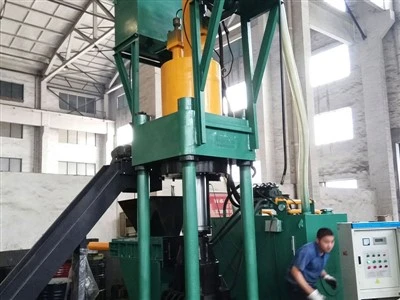
If you’re in the market for a new metal baler, or you want to upgrade your current one to add better safety features, hit us up to talk through your needs. We can walk you through all the options, answer any questions you have, and make sure you get a machine that’s not only efficient for your operations, but safe for everyone who works with it.
Metal Baler Machine References
- Occupational Safety and Health Administration (OSHA). (2022). Machine Guarding Standards for Industrial Machinery. U.S. Department of Labor.
- Institute of Scrap Recycling Industries (ISRI). (2021). Safety Guidelines for Metal Recycling Equipment. ISRI Inc.
- American Society of Mechanical Engineers (ASME). (2020). Safety Standards for Hydraulic Industrial Machinery. ASME International.
Jiangyin Hangli Technology Co., Ltd.
Jiangyin Hangli Technology Co., Ltd. is one of the most professional metal baler manufacturers and suppliers in China. We are committed to providing high quality custom service and OEM service with low price. We warmly welcome you to buy high-performance metal baler for sale here from our factory. Also, pricelist is available.
Address: No. 11, Louxia Road, Zhouxi Village, Zhouzhuang Town, Jiangyin City, Wuxi City, Jiangsu Province, China
E-mail: sherry@hanglimachinery.com
WebSite: https://www.hanglirecycling.com/
