If you’ve ever walked the floor of a manufacturing plant—say, a car assembly line where a six-axis robot welds door panels with pinpoint precision, or a packaging cell that stacks hundreds of boxes an hour—you’ve probably glanced at those bulky silver machines and wondered: how long do these industrial workhorses actually last? As an industrial robot supplier who’s worked with fleets from Detroit to Shenzhen over the past 18 years, I get that question all the time. The answer isn’t a simple number, like 10 or 20 years. It’s a formula that depends on how you treat the machine, what you use it for, and how well you keep up with routine maintenance. Industrial Robot
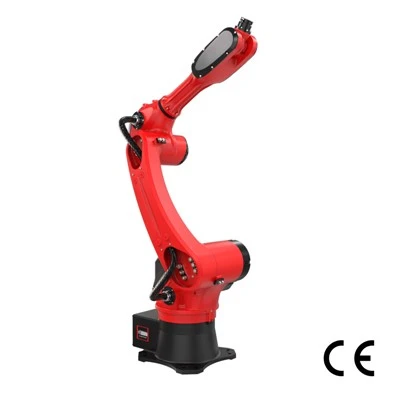
Let’s start with the baseline. Most industrial robots built today, for tasks like arc welding, material handling, or pick-and-place, come designed with a nominal service life of 80,000 to 100,000 operating hours. That’s not a random number. The International Organization for Standardization (ISO) and leading robot manufacturers like ours test for durability under standard conditions: consistent load, moderate speed, a controlled factory environment free from extreme dust, moisture, or temperature swings. Translate that to a typical two-shift operation, 22 days a month, 11 months a year, and you’re looking at roughly 10 to 15 years of active use. But here’s the catch: that’s the expected lifespan if the robot stays in the role it was designed for.
I once had a customer in a heavy equipment fabrication shop who ran a 10-year-old material handling robot 24 hours a day, seven days a week, lifting 1,200-pound engine blocks—double its rated capacity. After five years, the gearbox started showing signs of wear. We had to rebuild it, and the robot ended up totaled at 12 years, instead of the projected 15. On the flip side, a pharmaceutical client uses identical models for picking small vials, running only one shift a day, and keeping the cell clean, dust-free, and calibrated monthly. That same 100,000-hour robot just hit its 18th year, and it’s still delivering 98% uptime.
The biggest factors that shape a robot’s longevity fall into two categories: operational use and maintenance. Let’s break operational use down first. Rated load, or the payload a robot handles, is non-negotiable. Every robot has a maximum payload spec, and running it above that puts extra stress on joints, gearboxes, and motors. A 50-kilogram payload robot used for 40 kilograms is fine, but overloading it by 20 or 30 kilos cuts wear and tear drastically. Speed matters too: high-speed tasks like rapid pick-and-place cycles generate more heat and vibration, which degrade components faster than slower, more deliberate movement. Even the robot’s application plays a role: arc welding robots are exposed to spatter, heat, and fumes that don’t bother a palletizing robot in a dry warehouse, so their components hold up differently. Dust, humidity, and temperature extremes also wear on enclosures, wiring, and seals—robots in a climate-controlled electronics plant last 20% longer on average than those in a steel mill where temperatures swing 50 degrees daily and metal particles coat every surface.
Then there’s maintenance, the single biggest variable most factory teams overlook. Too many plants buy robots and treat them like “set-it-and-forget-it” tools, only calling a technician when something breaks. The truth is, industrial robots are precision equipment, and small, routine checks can prevent major failures that end a robot’s life years early. Let’s walk through a standard maintenance schedule we recommend to all our clients: daily checks for loose bolts, excessive vibration, or unusual noises; monthly inspections of wiring, seals, and air filters; and annual calibration of arm accuracy, joint lubrication, and encoder sensors. Every 5,000 operating hours, or roughly every 12 months for most two-shift operations, we suggest a full service: replacing gearbox grease, checking motor brushes, and updating control software.
I’ve seen robots that skipped these steps fail at 7 years, when a simple grease change and calibration would have kept them running for another decade. Conversely, I’ve helped a small appliance manufacturer extend a 12-year-old robot’s life by 5 more years with one targeted gearbox rebuild and a quarterly maintenance plan. Even software updates matter. Older robots, particularly models built before 2010, can develop compatibility issues if their control systems aren’t updated to work with new peripheral tools, like vision systems or collaborative safety features. Updating software might not seem like a longevity play, but it prevents factories from retiring perfectly good robots just because they can’t integrate new tasks, which effectively cuts their useful life short.
Collaborative robots, or cobots, which have grown popular in small-to-medium businesses over the past decade, follow similar rules but with a twist. Designed for lighter payloads (under 10 kilograms) and slower speeds, their nominal service life is often around 50,000 to 70,000 hours, which translates to 7 to 10 years for typical use. But because cobots are often used in less harsh environments—many work next to human workers in clean, small assembly spaces—their lifespan can be even longer if maintained properly. I once worked with a craft brewery that used a small cobot to move kegs for 12 years, running 10 hours a day, and only replaced it when they expanded their operation and needed a higher payload model.
Another myth I hear a lot is that once a robot hits its nominal service life, it’s useless. That’s not true either. Many older robots can be repurposed for lower-stakes tasks, like palletizing simple boxes or moving raw materials, where the precision and speed that made them ideal for welding aren’t required. We have customers who buy reconditioned robots from us at half the cost of new ones, and they run those for another 5 to 8 years in auxiliary roles. Retrofitting old robots with new controllers, grippers, or safety features also extends their life. A 15-year-old welding robot can be upgraded with a new power source and vision system, turning it into a reliable material handling machine that lasts another 7 years.
So where does this leave a factory calculating the cost of new equipment vs. extending the life of existing robots? For most operations, a well-maintained industrial robot will deliver 10 to 15 years of productive use, sometimes more, if matched to the right task and cared for consistently. The biggest mistakes that shorten lifespan are overloading, neglecting maintenance, and using robots for tasks they weren’t designed for.
If you’re managing a fleet of industrial robots and want to maximize their lifespan, or are looking for a reliable new or reconditioned robot for your operation, I’m here to help. We work with factories of all sizes, from small job shops to large automotive plants, to assess robot condition, create custom maintenance plans, and source the right equipment to match your tasks. Reach out to our team to discuss your specific needs and find the solution that works for you.
Pick and Place Robot References:
- International Organization for Standardization (ISO) 10218-1:2011, Robots for Industrial Environments – Safety Requirements – Part 1: Robot and Robot System.
- Robotic Industries Association (RIA), "Industrial Robot Service Life and Maintenance Guidelines", 2020.
- International Federation of Robotics (IFR), "World Robotics 2021: Industrial Robots Service Life Analysis", 2021.
- Fanuc Corporation, "Industrial Robot Durability and Lifespan Technical Manual", 2019.
- Yaskawa Motoman, "Maintenance Best Practices for Extending Industrial Robot Service Life", 2022.
Robotic Technology (GD) Co., Ltd.
As one of the most professional industrial robot manufacturers and suppliers in China, we have world-leading production equipment and strong manufacturing capabilities. Please feel free to buy durable industrial robot for sale here from our factory. Also, custom service is available.
Address: Room 102, No.30, Hengfeng 2nd Road, Daguo, Changping Town, Dongguan City, Guangdong, China
E-mail: admin@iroboticplus.com
WebSite: https://www.rbtic-tech.com/
