If you’ve ever walked through a factory floor, you’ve probably spotted those tall, stackable towers of colored lights glowing or flashing above machines—those are RS485 stack lights, and they’re one of the most reliable tools for visual status communication in industrial settings. As a supplier who’s worked with these devices for over a decade, I get asked one question more than any other: “Are RS485 stack lights compatible with Modbus protocol?” It’s a fair question, too, because integrating devices across a plant is all about making sure they talk to each other without glitches. Let’s break this down, based on what I’ve seen in the field, tested in our lab, and explained by the engineers I work with every day. RS485 Stack Light
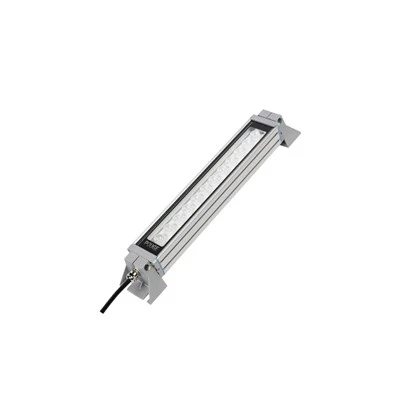
First, let’s get clear on what each term means, because mixing them up is where a lot of confusion starts. RS485 isn’t a protocol—it’s a physical layer, the wiring and signal standard that lets devices communicate over long distances in noisy industrial environments. Think of it as the road: it’s the path data travels, built to handle rough conditions like electromagnetic interference from motors or heavy machinery. Modbus, on the other hand, is a communication protocol, a set of rules for formatting data so devices understand each other. That’s the destination: the rules tell everyone what language to speak, where to send data, and how to respond.
So at their core, RS485 stack lights and Modbus are not opposites—they’re built to work together. Here’s how that works: Modbus runs over several physical layers, including RS232, Ethernet, and yes, RS485. That means if you have an RS485 stack light, it can be programmed to speak Modbus, as long as it’s designed to do so. Early RS485 stack lights from, say, 15 years ago were basic: they were wired straight to a machine’s I/O pins, so you’d flip a switch on the PLC to turn the red light on. Those didn’t support Modbus—they were purely discrete, on-off devices. But as plants started adding more automation and needed to track statuses without running 10 separate wires for each light, stack light manufacturers (including us) started building Modbus support into RS485 models.
Let’s talk about why pairing RS485 and Modbus is a game-changer for industrial operations, based on the jobs our customers use our lights for. A food and beverage plant might use a stack light to signal if a filling line is running, stopped for a jam, or in need of cleaning. With a discrete light, you need three wires (for red, yellow, green) plus ground, running all the way from the light to the PLC, which is 50 or 100 feet away. If a wire frays, you have to trace it through a ceiling or wall. With an RS485 Modbus stack light, you run one twisted pair of RS485 cable (Cat5 works great) along the whole line, daisy-chaining 10 or 15 lights off that same cable. The PLC sends a Modbus message like “set light 3 to red” over that single wire, and every light on the chain checks the message’s address to see if it’s for them. That cuts installation time by 70% in most cases—we’ve had a beer brewery customer tell us they installed 12 stack lights in a shift instead of two, compared to their old discrete wiring setup.
But not all RS485 stack lights are Modbus-compatible, and that’s where people get frustrated. A lot of budget models still only support basic I/O control, no protocol. How do you tell the difference? Look for two key features: first, does the light have a terminal block for Modbus signal wires (A and B, the standard RS485 pair) as well as power wires? Basic lights only have power and ground. Second, does the documentation mention Modbus RTU or Modbus TCP/IP? Modbus RTU is the most common for RS485, because it’s lightweight and works well for short, frequent messages like status updates. Some higher-end models might do Modbus TCP over Ethernet, but for most stack light uses, Modbus RTU over RS485 is the sweet spot.
Let’s get into the technical side a little, because if you’re an engineer trying to set this up, this matters. Modbus RTU uses a master-slave architecture: one device (usually a PLC, HMI, or a small industrial controller) is the master, and all RS485 stack lights are slaves. Each slave has a unique address, from 1 to 247, so the master can send a message to light 5 without affecting light 7. The message has a function code, a register address, and a value. For example, a common function code for controlling outputs is 05, which is “write single coil.” If the master sends a message with function code 05, address 5, and value FF00, the light at address 5 turns on its red LED; 0000 turns it off. You can also get fancy with more advanced function codes: some lights have built-in buzzers, so you can turn that on or off too, or set flash rates via Modbus registers.
We test every one of our Modbus-compatible RS485 stack lights in our lab to make sure they play nice with common PLCs—Siemens, Allen-Bradley, Mitsubishi, and even smaller controllers like Raspberry Pi or Arduino for custom setups. Last year, a custom machine shop came to us because they were using a Raspberry Pi to control their machine tools, and they wanted stack lights that could connect without a dedicated PLC. We set them up with our RS485 Modbus stack lights, and they wrote a simple Python script that sends Modbus commands over an RS485-to-USB adapter. Now when a tool needs maintenance, the light flashes yellow, and when it’s running, it’s green. They saved over $2,000 they would have spent on a small PLC, just by pairing our lights with a low-cost controller.
But there are common pitfalls even when you have a compatible light, so I want to share what we see customers mess up all the time. First, RS485 networks need termination resistors. The last device on the RS485 chain needs a 120-ohm resistor between the A and B wires to prevent signal reflection, which causes garbled messages. A lot of people forget to add that, and the lights will flicker randomly or not respond to commands. Second, baud rate and parity have to match between the master and the light. Most Modbus RS485 lights default to 9600 baud, 8 data bits, no parity, but some can be programmed to higher baud rates like 19200 or 38400 for faster communication. If the light isn’t responding, that’s the first thing to check—9 times out of 10, the baud rate is mismatched.
Another point: not all RS485 stack lights support the same Modbus registers. Cheaper models might only let you control all LEDs at once, while more robust models let you control each light independently, set flash patterns, adjust buzzer volume, and even read status back (like if a light’s LED is burned out, the slave can send a Modbus message saying “fault detected”). That’s important for predictive maintenance—if your light sends a message when it’s broken, you can replace it before the machine goes down. Our stack lights have 16 customizable Modbus registers, so users can do everything from basic control to advanced diagnostics.
Let’s address a common myth I hear: “If it’s RS485, it can work with any Modbus device.” That’s not true. Modbus is an open protocol, which means anyone can use it, but manufacturers can implement it differently. For example, one brand’s RS485 light might use Modbus function code 15 for multiple lights at once, while another uses function code 16. Our lights follow the standard Modbus specification, so they work with any master that adheres to Modbus RTU, but we also provide sample code and a Modbus register map for every product, so customers don’t have to guess. We’ve had customers switch from another brand’s lights that didn’t follow the standard, and they saved weeks of programming time because our lights just worked with their existing PLCs.
What about use cases where Modbus RS485 stack lights are the best choice? Let’s say you have a production line with 20 machines, each needing a stack light. If you use discrete wiring, you’re looking at 60 wires (3 per light) running to a central panel, plus lots of I/O points on the PLC, which adds cost and takes up space. With Modbus RS485, you run two wires (A and B) for all 20 lights, plus a power wire, and you only need one Modbus port on the PLC. That reduces hardware cost by up to 50% in large installations. We worked with a pharmaceutical plant last year that had 25 machines, and they switched to our Modbus stack lights, saving over $12,000 in PLC I/O modules and wiring.
Are there cases where an RS485 stack light won’t work with Modbus? Sure. If you buy a basic, low-cost light that only has discrete inputs, no Modbus support, that’s one. If you’re running a very long RS485 cable (over 1,200 meters, which is the maximum for standard RS485) and you don’t use a repeater, you might get signal loss, even with compatible Modbus lights. Or if you try to run too many lights on one RS485 chain—you can have up to 32 devices on a standard network, so if you have 40 lights, you need two chains. But those are setup issues, not compatibility issues.
As a supplier, I can tell you that the demand for Modbus-compatible RS485 stack lights has exploded in the last 8 years. Before 2015, only about 30% of the stack lights we sold had Modbus support; now it’s over 90%, because every customer wants to integrate their visual status system with their factory’s overall automation network. It’s no longer just a nice-to-have—it’s a requirement for most new industrial builds.
If you’re in the market for stack lights and want to make sure they work with Modbus, here’s what to ask: First, “Does this model support Modbus RTU over RS485?” (Avoid any that only mention Modbus TCP unless you specifically need Ethernet.) Second, “Do you provide a Modbus register map and sample code for common PLCs?” Third, “What’s the maximum number of lights I can run on one RS485 chain?” A good supplier will have all that information ready, and will even help you test the setup if you’re not sure.

If you’re planning an automation project, upgrading your machine status system, or just tired of messy discrete wiring that’s hard to troubleshoot, RS485 stack lights that work with Modbus are a reliable, cost-effective solution. Don’t hesitate to reach out to discuss your specific application, whether you need a small set for a single machine or a full network for an entire production line.
LED Work Light References
- Modbus Organization. Modbus Application Protocol Specification V1.1b.
- TIA/EIA-485-A. Electrical Characteristics of Generators and Receivers for Use in Balanced Digital Multipoint Systems.
- Industrial Technology Association. Industrial Communication Protocols for Factory Automation.
- RS485.net. RS485 Network Design and Best Practices.
Suzhou Pouge Lighting Electrical Appliance Co., Ltd.
As one of the most professional rs485 stack light manufacturers and suppliers in China, we also support customized service. Please feel free to wholesale advanced rs485 stack light made in China here and get quotation from our factory. For price consultation, contact us.
Address: Building 6-501, No.1330, Jinfeng South Road, Mudu Town, Wuzhong District, Suzhou City, China
E-mail: xduanlyy@126.com
WebSite: https://www.pouge-light.com/
