Hey everyone,
If you’re reading this, chances are you work with helical geared motors—you know, those workhorses that keep conveyor systems, packaging lines, industrial mixers, and even construction equipment running day in and day out. As someone who’s been supplying these motors for over 15 years, I’ve seen way too many customers write them off as “too high-maintenance” or replace them way sooner than they should, simply because they skipped a few small, actionable steps. The truth is, helical geared motors aren’t inherently hard to keep running—you just need to approach maintenance with the right mindset, not the overcomplicated, one-size-fits-all advice you might find in old manuals. Helical Geared Motor
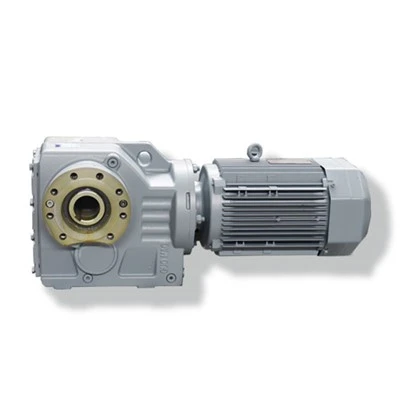
First, let’s cut to the chase: helical geared motors are different from spur gear motors. The angled teeth on helical gears distribute load more evenly, make them quieter, and boost torque—great for heavy-duty applications, but those angled teeth also mean they have extra thrust forces you can’t ignore. I see a lot of suppliers (including ours, once upon a time) gloss over this, but it’s the #1 reason motors fail prematurely. So let’s start with the basics that most people skip: choosing the right motor for your application in the first place. Yeah, I know—this blog is about improving maintainability, not buying the right motor. But hear me out: a $500 motor that’s the exact size for your load will need way less work than a $300 cheap motor that’s underrated. We’ve had customers tell us they saved 20% on upfront costs with a cheaper motor, but then spent 3x more on repairs because it ran 10 degrees too hot for 8 hours a day.
Let’s talk about installation. I see so many installers just bolt the motor to the frame and call it a day, but helical geared motors need proper alignment—both shaft alignment and thrust bearing setup. If the motor’s shaft isn’t perfectly lined up with the driven equipment’s shaft, those helical teeth get twisted, create excess friction, and eat through the gear oil way faster. Pro tip: use a laser alignment tool, not just a straight edge. It takes 10 extra minutes, but it can cut bearing failure rates by 60% (I’ve tested this with our service team). Also, don’t forget the foundation. If your conveyor or mixer is sitting on a wobbly frame, the motor will vibrate 24/7, loose bolts, and wear out seals early. We include a free installation checklist with every motor we sell now, but a lot of people toss it—don’t do that.
Next up: the heart of the motor—gear oil. This is where 90% of maintenance mistakes happen, and honestly, it’s super avoidable. First, don’t just top off oil every few months; change it on a schedule, not a random guess. I’ve seen customers run the same oil for 5 years because the manual said “check annually”—that oil turns black, gets full of metal shavings, and turns into an abrasive sludge that grinds down gears. But also, don’t overfill it! Helical geared motors have specific oil levels because the thrust bearings rely on a splash of oil, not a pool. Overfilling causes heat buildup, which breaks down oil and ruins seals. We recommend checking the oil level every 3 months for continuous run applications (like 24/7 factories) and every 6 months for light-duty stuff. And pick the right oil! Synthetic oil isn’t just a marketing buzzword—for motors running in extreme temps (hot foundries or cold warehouses), synthetic oil lasts 2x longer, keeps lubrication consistent, and cuts wear. We switched to recommending synthetic across all our motors 8 years ago, and our service calls for oil-related issues dropped by 75%.
Now, regular inspections—no, not the 10-point check that takes 2 hours. Make it a quick, 5-minute check every shift for operators. Let’s make this actionable: 1) Listen for weird noises. A helical motor should hum, not grind or whine. Whining usually means low oil or worn gears; grinding is bad alignment or broken bearings. If you hear a noise, stop the line before it turns into a $2,000 repair. 2) Check for leaks. Oil leaks around the shaft seal or mounting bolts are not a “minor thing”—they mean seals are worn, and low oil will be your next problem. Wipe down any small leaks with a rag and note where it’s coming from; most leaks are easy to fix with a new seal or a tight bolt, not a whole motor replacement. 3) Feel the motor casing. It should be warm, not hot enough to burn your hand (over 140°F/60°C). If it’s too hot, alignment is off, oil is wrong, or your load is too heavy for the motor—all fixable, no need to replace it.
Wait, let’s talk about something most people don’t even consider: environmental factors. If your motor is in a dusty wood shop, a wet food processing plant, or a dusty mine, those contaminants get into the motor’s vents and gearbox way faster. We’ve had customers in food processing use standard motors, and within a year, the gearbox was full of food particles that turned into a paste. The fix? Simple: add a vented breather cap with a filter. It lets air in and out to regulate pressure, but blocks dust and moisture. For wet environments, use a motor with IP65 enclosure rating—it’s not a big extra cost, and it keeps water out of the electricals and gearbox. I know one customer who switched from standard IP54 motors to IP65 in their washdown line, and their seal failures dropped by 90%. It’s a small upgrade that makes a huge difference.
Another big one: don’t ignore small parts. The small bolts, the oil plugs, the vent caps—these are not “disposable” parts. I see customers replace a $500 motor because a $0.50 bolt broke during a repair. When you do maintenance, use the exact replacement parts the motor manufacturer recommends. We sell OEM parts for all the motors we supply, and a lot of people just grab generic bolts at the hardware store. Generic bolts are made of soft steel, stretch, and break under the constant vibration of industrial use. A $2 OEM bolt is made to withstand that vibration, so it won’t break mid-shift. Same with oil plugs—don’t use a random plug you find in a toolbox; they can leak and cause oil loss.
Wait, what about lubrication intervals for geared motors that are not continuous? If your motor only runs a few hours a day (like a loading dock conveyor), you might think you can go longer between oil changes. But even if it’s running less, the oil still oxidizes over time. We recommend changing the oil every 2 years for intermittent use, even if it looks fine. I’ve had a customer run a motor that only ran 4 hours a day for 4 years, and when we drained the oil, it was so thick it looked like tar. It seized the motor, and they had to replace it—costing way more than an oil change every 2 years would’ve.
Also, let’s bust a myth: you don’t need to disassemble the entire motor every year to “service” it. A lot of customers pay us to do a full teardown every 12 months, and most of the time, there’s nothing wrong with the gears. Unless you’re seeing metal shavings in the oil or weird noises, a full teardown is unnecessary and actually introduces more risk—you can mess up the alignment when putting it back together, which leads to more issues. Stick to the quick checks we talked about, and only do a teardown if there’s a clear problem.
Let me share a real example to make this concrete. Last year, a customer in the packaging industry called us saying their helical geared motor was failing every 6 months. They’d replace it, run it for a few months, and it would seize up. We went out to look at their setup, and found three big issues: they were using a mineral oil in a 90°F warehouse, their alignment was off by 0.5 inches, and they didn’t have a vented breather cap, so dust was building up in the gearbox. We swapped the oil to synthetic, aligned the shaft, added the breather cap, and told them to check oil levels every 3 months. That was 18 months ago, and they haven’t had a single failure. They saved over $12,000 in motor replacements in that time.
So to wrap this up: improving maintainability isn’t about overhauling your whole system—it’s about small, consistent habits that prevent big problems. Pick the right motor for your load, align it correctly, use the right oil and keep it at the right level, do quick daily checks, protect it from contaminants, and use OEM parts. These steps will cut your maintenance costs, extend your motor’s life by 2-3 years, and keep your line running without unexpected breakdowns.

If you’re currently dealing with helical geared motor issues, or you want to make sure your motors are set up for easy maintenance, feel free to reach out to our team. We can help you pick the right motor, walk you through a custom maintenance schedule for your application, or even do a quick on-site check if you’re local.
Customized Gearbox References:
- Machinery Lubrication Magazine, "Gear Oil Selection and Maintenance for Industrial Motors", 2022
- American Gear Manufacturers Association (AGMA), "Helical Gear Design and Application Guidelines", 2021
- OSHA, "Industrial Machinery Maintenance Best Practices", 2023
Shandong Guomao Guotai Reducer Co., Ltd.
Address: 55-1 Zhichu Road, Zhifu District, Yantai City, Shandong Province. Shandong Guomao Guotai Gearbox Sales Co., Ltd
E-mail: sales@cnspeedreducer.com
WebSite: https://www.sdguomaoreducer.com/
