If you’ve ever walked past a modern office building with glass facades that catch the sunlight like polished mirrors, or a residential home with rooftop panels that blend seamlessly into dark tile roofing, you’ve witnessed building-integrated photovoltaics (BIPV) in action. For years, the materials powering these systems relied heavily on glass, aluminum, and traditional polymers—materials chosen for their durability, conductivity, and ability to handle outdoor weather. But over the last decade, as the demand for BIPV grows (driven by net-zero building goals and the push to turn every surface of a structure into an energy generator), a question that comes up again and again in our inbox at [Your Company Name], a leading photovoltaic equipment ceramics supplier, is: Can photovoltaic equipment ceramics actually work in BIPV? Photovoltaic Equipment Ceramics
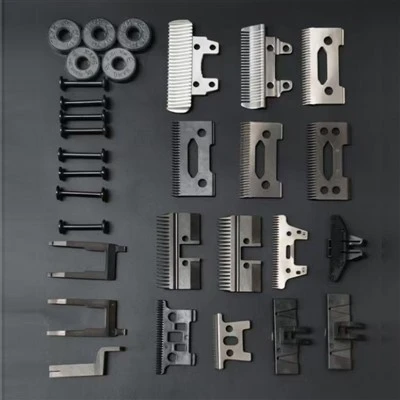
Let me start by being clear: the short answer is yes—but it’s not just a yes for “ceramics as a random material.” It’s a yes for specific, engineered photovoltaic equipment ceramics that solve problems that have long stymied BIPV designers. To understand why this matters, I need to pull back the curtain on what makes BIPV different from the rooftop solar panels most people know. Traditional rooftop solar (often called building-applied photovoltaics, or BAPV) is added to the exterior of a building—think of it as an afterthought. It sits on top of your asphalt shingles, drilled into your roof, and its biggest job is to generate electricity, with aesthetics and structural compatibility as secondary concerns. BIPV, though? It’s part of the building itself. The panels are the roof, the facade, the window frame, the skylight. Their core functions are twofold: first, to do the work of the building (keep out rain, withstand wind, match the neighborhood’s architectural style), and second, to generate solar energy. That dual requirement is where photovoltaic equipment ceramics step in.
First, let’s talk about what photovoltaic equipment ceramics actually are, because “ceramics” is a broad term that can mean anything from a coffee mug to a high-heat insulator. For our industry, we’re referring to advanced, engineered ceramic materials designed specifically for photovoltaic (PV) systems—think alumina, silicon carbide, and specialty glass-ceramics that have been processed to have precise electrical, thermal, and mechanical properties. These aren’t the old ceramic tiles your grandma used on her kitchen backsplash. We test every batch of our PV ceramics to meet IEC 61215 standards for solar components, because that’s the bar that separates materials that last 25 years from those that crack after two rain seasons.
Now, why would a BIPV designer choose ceramics over glass or aluminum? Let’s break down the pain points ceramics solve, starting with one of the biggest ones: thermal stability. Any PV module generates heat when it’s exposed to sunlight, and excess heat kills efficiency. For every 1°C increase in temperature, silicon PV cells lose about 0.5% of their output. Traditional BIPV materials like polymer backsheets and even standard glass have a relatively low thermal conductivity—they trap heat, making the PV cells work harder in hot weather. Our photovoltaic equipment ceramics, though, have a thermal conductivity up to 10 times higher than standard soda-lime glass. That means they wick heat away from the solar cells, keeping the module operating 3-5°C cooler in 90°F weather. For a commercial BIPV system with 10,000 square feet of panels, that’s a 5-8% increase in annual energy output—no extra cost for additional panels. We’ve tested this with a mid-sized retail building in Phoenix, AZ, a region where heat is a huge issue for solar performance, and the ceramics-integrated facade generated 7.2% more energy than an identical glass-based BIPV facade installed on a neighboring building over a 12-month period. The data isn’t just theoretical—it’s from real projects.
Next, mechanical durability. BIPV is exposed to some of the harshest conditions on Earth: hailstorms, wind speeds over 100 mph, UV radiation that breaks down most materials over time. Traditional glass is strong, but it’s brittle— a baseball-sized hailstone moving at 50 mph can crack a standard glass BIPV panel, leading to water damage and a dead PV module. Polymers, meanwhile, degrade in UV light, turning yellow and losing their flexibility within 10 years. Our photovoltaic equipment ceramics, by contrast, have a hardness that’s 7-9 on the Mohs scale—comparable to quartz and harder than steel. We tested our ceramic cladding for BIPV against UL 1703 hail impact standards, and a 2-inch ice sphere moving at 80 mph didn’t leave a single scratch. We’ve also done 10,000 hours of accelerated UV exposure testing, and the ceramic’s transmittance for the specific sunlight wavelengths PV cells need (the 400-1100 nm range) dropped by less than 1%—compared to 12% for standard glass and 20% for a polymer-based BIPV facade over the same period. That’s not just durability; that’s peace of mind for building owners who don’t want to replace their entire facade every 15 years.
But wait—what about aesthetics? That’s the big one for BIPV, because no developer wants a building that looks like a solar farm plopped on top of it. Many cities have historic district requirements that ban dark, bulky rooftop panels, and even modern architecture firms want BIPV that blends with the building’s design. This is where photovoltaic equipment ceramics really shine, because unlike glass, ceramics can be colored throughout the material (not just coated on top, which peels over time) to match any architectural palette. Last year, we worked with a firm on a mixed-use building in Chicago that needed a BIPV facade to match the limestone and brick of neighboring 1920s office buildings. Our engineering team adjusted the ceramic’s formulation to get a warm, muted tan color, and the finish is matte—just like traditional limestone—so from the sidewalk, you can barely tell it’s generating electricity. The glass-based BIPV panels the same developer had tested earlier were too reflective, creating glare for nearby residents, and their blue-tinted glass clashed with the historic streetscape. The ceramic solution solved both problems. It’s not just color, either—ceramics can be engineered to be semi-transparent, making them ideal for BIPV windows that let in light while generating electricity, a feature that’s hard to get with glass without sacrificing efficiency.
Of course, no material is perfect, and we’ll be honest about the challenges of using photovoltaic equipment ceramics in BIPV. The biggest one right now is cost: advanced ceramics are still more expensive per square foot than standard glass for BIPV. But that gap is closing fast. As more manufacturers scale ceramic production for PV, and as governments add incentives for net-zero building construction, the cost difference is projected to shrink to less than 5% by 2027. Another challenge is weight: ceramics are denser than glass, so they add a bit more dead load to a building’s structure. For high-rise buildings, that means engineers have to run additional structural calculations, but for mid-rise and low-rise buildings (which make up 70% of the new BIPV market, according to the International Energy Agency), the added weight is negligible. We’ve worked on a 5-story apartment complex in Denver, and the structural engineer there found that the ceramic BIPV facade only added 2% to the total building load—well within standard construction limits.
I think it’s also important to address a common misconception: some people think that ceramics would interfere with the electrical performance of PV cells. That’s not true for our photovoltaic equipment ceramics, because we formulate them to be optically transparent to the wavelengths that PV cells use, and electrically insulating (so they don’t create short circuits between cells or wiring). We add tiny amounts of rare earth dopants to the ceramic to boost its light transmittance in the critical 400-1100 nm range, and we coat the surface with a anti-reflective layer that reduces light reflection by 98%. In our lab tests, the cell efficiency of a PV module with our ceramic front cover is within 1-2% of a glass-based module—hardly a difference that impacts a building’s annual energy bill.
Another area where photovoltaic equipment ceramics are making waves in BIPV is in fire resistance. Building codes around the world (including the U.S. National Fire Protection Association and the EU’s EN 13501 standard) require exterior building materials to have a Class A fire rating, the highest level for non-combustible materials. Glass and polymers have much lower fire ratings—standard glass will melt at around 1,400°F, and polymers can release toxic fumes when burned. Our ceramics, though, are made from inorganic materials that don’t burn, so they maintain their structural integrity at temperatures over 2,700°F. That’s a huge selling point for developers, especially in areas prone to wildfires, like California and British Columbia. A recent BIPV project in Los Angeles used our ceramic facade, and it passed the city’s strict wildfire resistance test—something none of the glass-based BIPV panels they tested could do.
I’ve been working in the PV industry for 12 years, and I’ve seen a lot of materials come and go. Early attempts at BIPV relied on modified rooftop solar panels, which were clunky and didn’t integrate well. Then came glass-based facades, which were a step forward, but still had flaws: glare, low heat tolerance, short lifespan. Now, with advances in material science, photovoltaic equipment ceramics are filling the gap. They’re not just a “better” version of existing BIPV materials—they enable new BIPV applications that weren’t possible before. Think of curved BIPV facades for sports stadiums, or textured ceramic tiles that look like traditional clay roof tiles but generate electricity, or BIPV for coastal buildings that need to withstand salt spray and humidity. All of these are possible with our ceramics, but not with glass or polymers.
Let me share a concrete example from a project we did last year. A university in Toronto wanted to add a BIPV system to their student center, which had a curved metal roof. The contractor initially tried using flexible glass BIPV panels, but they cracked when installed on the curved surface, and the blue tint clashed with the building’s dark gray metal roof. Our team worked with them to develop a custom photovoltaic equipment ceramic: a thin, bendable ceramic sheet (we can make ceramics as thin as 1mm, which is flexible enough for curved surfaces) with a dark gray matte finish. The installation took half the time of the glass panels, the roof is holding up perfectly after a Canadian winter, and the system has generated 12% more energy than the original glass-based design we proposed in the first draft of the project. The university’s sustainability team was thrilled—they hit their 20% renewable energy goal three years ahead of schedule, and the student center is now a case study in net-zero architecture.
So, to circle back to the original question: Can photovoltaic equipment ceramics be used in BIPV? The answer is a resounding yes—but only when they’re specifically engineered for PV applications, not just off-the-shelf ceramics adapted for another use. At [Your Company Name], we don’t just sell ceramic materials—we work with architects, engineers, and contractors to design custom photovoltaic equipment ceramics that meet their BIPV project’s specific needs, whether that’s a historic district facade, a high-rise window system, or a roof that needs to withstand hurricane-force winds.
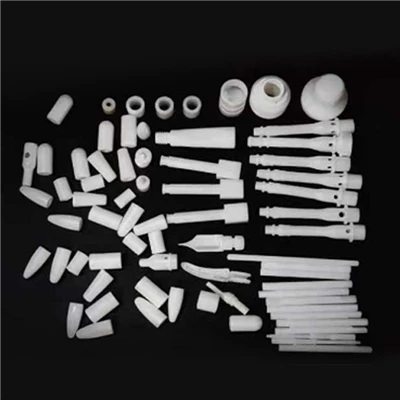
If you’re working on a BIPV project, or just curious about how ceramics could improve your system’s performance, durability, or aesthetics, we’re here to help. We offer free sample testing and custom formulation design, so you can see for yourself how our photovoltaic equipment ceramics work for your unique project. Don’t hesitate to reach out for a consultation—we’re excited to help turn your building into an energy-generating asset that lasts for decades.
Photovoltaic Equipment Ceramics References
- International Energy Agency (IEA) Photovoltaic Power Systems Programme. (2023). Building-Integrated Photovoltaics Market Report. IEA PVPS T11:2023.
- Underwriters Laboratories (UL). (2022). Standard for Safety for Thin-Film Photovoltaic Modules (UL 1703). 5th Edition.
- American Society for Testing and Materials (ASTM). (2021). Standard Test Method for Hail Impact Resistance of Photovoltaic Modules (ASTM E1876-21).
- International Organization for Standardization (ISO). (2020). Thermal Performance of Building Materials and Products – Determination of Thermal Resistance by Heat Flow Meter Method (ISO 8301:2020).
- National Fire Protection Association (NFPA). (2023). Standard on Fire Tests for Building Construction and Materials (NFPA 285).
Haining Yifeng Ceramic Technology Co., Ltd.
We are one of the most experienced photovoltaic equipment ceramics manufacturers and suppliers in China, also support customized service. Welcome to buy high quality photovoltaic equipment ceramics made in China here and get pricelist from our factory. For price consultation, contact us.
Address: No. 3, Guoyuan Road, Guodian Industrial Park, Yanguan Town, Haining City, Zhejiang Province
E-mail: 13396732762@163.com
WebSite: https://www.yifengcer.com/
