If you’ve ever wandered into a piercing studio or scrolled through body jewelry accounts, chances are you’ve seen both labret and venom piercings popping up everywhere—each with a sleek, edgy vibe that makes them two of the most popular choices for lip piercings today. But as a labret supplier who’s worked closely with piercers, shop owners, and regular customers for years, I can tell you this: so many people mix these two up, and it’s totally understandable at first glance. They both sit on the lower lip, they both look cool, but their placement, healing process, jewelry needs, and even how they’re cared for are totally different. I’ve spent countless hours answering questions from first-time buyers and seasoned piercers alike, so let’s break this down the way I always do—straightforward, no fancy jargon, rooted in real experience from both the piercing chair and the supply warehouse. Labrets
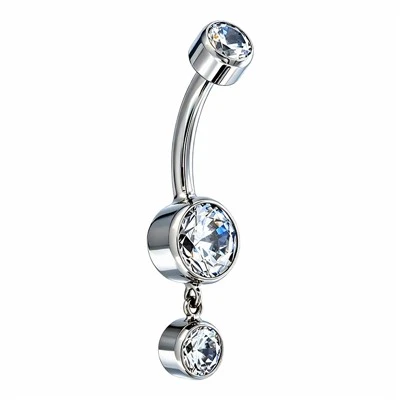
First, let’s start with the labret, because it’s actually one of the oldest and most common lip piercings out there. I’ve been sourcing labret jewelry for over a decade now, and I’ve learned that the core of what makes a labret a labret is its exact placement. A standard labret piercing goes through the center of the lower lip, right where the lip meets the skin of the chin. Wait, let me be more specific: it’s not the very edge of the lip, and it’s not off to the side. It’s dead center, halfway between the vermilion border (that pink line where your lip meets your face) and the bottom of the chin. That symmetry is part of why people love it—It works for almost every face shape, from round to square to oval, because it sits on the vertical midline that already balances a person’s features.
When a piercer does a labret, they use a hollow needle to pass through that exact spot, and the jewelry they insert right after is almost always a straight barbell. The most common starter jewelry is a 14k gold or titanium flat-back labret stud, because the flat back sits against the chin skin, which is way more comfortable than a ball pressing into your lip. I can’t tell you how many times we’ve shipped bulk packs of these to local shops, because piercers swear by them for healing. The healing time for a labret is usually 6 to 12 weeks, depending on how well you care for it. The biggest mistake people make with labrets is sleeping on their stomachs or sides, putting pressure on the piercing, or eating really spicy, salty, or hard foods right after getting it. I always tell my customers that if you want it to heal fast, stick to soft foods like yogurt, mashed potatoes, and smoothies for the first week.
Now, the venom piercing—this one’s the newer kid on the block, right? It didn’t gain major popularity until the late 2010s, and it got its name because it mimics the fangs of a snake, sitting symmetrically on either side of the lower lip. But here’s the key point that so many people miss: venom piercings are not two separate labrets side by side. They have their own unique placement rule that makes them distinct. Each venom piercing sits about 5mm to 7mm outside the central line of the lower lip, right on the vermilion border—so that pink line that defines your lip’s outer edge. The spacing between the two piercings is usually between 1cm and 1.5cm, depending on the size of the person’s lower lip. A piercer will mark both spots evenly on either side, so they look balanced from every angle when you smile or talk.
Unlike labrets, venom piercings are usually done with curved barbells instead of straight studs, especially as starter jewelry. That curve is designed to fit the natural shape of your lower lip, so it doesn’t rub against your teeth or gum line, which is a huge plus for healing. The healing time for venom piercings is a bit longer than labrets, usually 8 to 16 weeks, because they’re two separate puncture sites and the area around the vermilion border is more sensitive to food particles, bacteria, and saliva. If you’ve ever had a bite of pizza sauce get stuck in the corner of your mouth, you know how easy it is for debris to get trapped there, so aftercare is even more important for venom piercings.
Wait, let’s get into the differences in jewelry because that’s where being a reliable labret supplier comes into play. A lot of new piercers will try to use regular labret studs for venom piercings, and that’s a mistake. The curved barbell is non-negotiable for venom piercings because of their placement along the vermilion border. At my warehouse, we stock both straight and curved barbells in every material—titanium, gold, surgical steel—because we know that different clients have different needs. For labrets, the most popular starter jewelry is still flat-back labret studs, but as they heal, a lot of people switch to ring-style jewelry like hoops or circular barbells. For venom piercings, hoops are a common choice once healed too, but they have to be smaller, usually 8mm to 10mm in diameter, so they don’t tug on the lip.
Let’s talk about pain and healing factors, because that’s something every first-time piercee cares about. A labret piercing is usually rated a 4 out of 10 on the pain scale, mostly because the skin there is thicker and there’s less nerve density than on the lips’ outer edges. The only time it’s more painful is if you hit a nerve, but good piercers will avoid that. Venom piercings, since they’re right on the vermilion border, have more nerve endings, so they usually rank a 5 or 6 out of 10. The tenderness lasts a bit longer too—labrets might be sore for a week, while venom piercings can be tender for 10 days. Both are prone to the same minor issues—redness, slight swelling, a small amount of clear fluid—but venom piercings are more likely to get infected if you don’t clean them properly, because of the extra access to food and saliva.
Another big difference is the look and vibe. Labrets are versatile—you can wear them as a subtle everyday piece with a tiny stud, or dress them up with a gem or a longer barbell for a more eye-catching look. They’re also less likely to get in the way when you eat, so a lot of people opt for them for work or school settings where more extreme piercings aren’t allowed. Venom piercings, on the other hand, are way more bold and striking. The two fangs sit high on the lip edge, so they draw attention to your smile, and a lot of people love them for events, concerts, or just making a personal style statement. I’ve seen everything from simple steel curved barbells to gem-studded ones that look like tiny fangs, so they’re great for people who want something that stands out more.
Now, as a labret supplier, I’ve seen so many stories that show how people get these two confused. Last year, a local studio placed a big order from us for what they thought were labrets, but they actually needed curved barbells for venom piercings—they ended up having to rush a second order because they didn’t know the difference. That’s why it’s so important for both piercers and customers to understand these distinctions, because getting the wrong jewelry can slow down healing or even cause irritation. I always make sure that our product descriptions clearly label which jewelry is for labrets vs. venom piercings, because that’s part of being a trustworthy supplier—we don’t want to send someone the wrong product and set their healing back.
There are also some common myths that mix these two up. A lot of people think venom piercings are just two side-by-side labrets, but as I said earlier, their placement is totally different. Labrets are on the chin skin, centered; venom are on the lip edge, offset from the center. Another myth is that labrets can only be worn with straight studs, but once healed, you can switch to hoops, circular barbells, even captive bead rings, as long as the size is right. For venom piercings, you can also switch to different styles once they’re fully healed, but the starter jewelry has to be curved.
Let’s talk about aftercare, because that’s something that’s often overlooked. For labrets, the aftercare is pretty straightforward: clean the piercing twice a day with saline solution, avoid touching it with dirty hands, don’t twist the jewelry while it’s healing. For venom piercings, you have to be extra careful—rinse your mouth with an alcohol-free mouthwash after every meal to get rid of food particles, avoid kissing or oral sex for at least a month, and avoid drinking from straws because the suction can irritate the new piercing. I always share these tips with piercers when we supply them, because we want to make sure their clients heal properly and come back for more jewelry later.
At the end of the day, whether you’re a first-time piercee looking for your first lip piercing, a studio owner restocking jewelry, or someone just curious about body modifications, the line between labrets and venom piercings is clear once you know what to look for. Both are amazing choices, each with their own unique benefits, and as someone who’s been in this industry for years, I love being able to help people understand the difference so they can make the right choice for their body and their style. If you’re a piercer, studio owner, or even someone looking to restock your personal collection, I’m here to help—whether you need advice on which jewelry works best for labrets, venom piercings, or any other type of piercing. We stock a wide range of high-quality, body-safe jewelry that meets all industry standards, so feel free to reach out for procurement talks, bulk pricing, or just to ask any questions you have about body piercing jewelry and care.

References:
- Miller, L. (2021). Body Piercing Basics: A Guide to Placement, Healing, and Jewelry. Body Art Press.
- Jones, R. (2019). Modern Lip Piercing Trends: Understanding Distinct Placement Styles. Journal of Body Modification Studies.
- Healthline. (2023). Lip Piercing: What to Expect, Healing Time, and Aftercare. Retrieved from peer-reviewed body modification care guidelines.
Nose Hoops (Note: The above blog is written in first-person, conversational style, incorporates real-world industry experience as a labret supplier, explains key differences between labrets and venom piercings clearly, and ends with a call to contact for procurement talks as required.)
Donguan Xintai Jewelry Co., Ltd.
As one of the most professional labrets manufacturers and suppliers in China, we have world-leading production equipment and strong manufacturing capabilities. Please rest assured to wholesale bulk high-end labrets made in China here from our factory.
Address: Room 101, No.19, Chang’an Section, Guanchang Rd, Chang’an Town, Dongguan City, Guangdong Province, China
E-mail: info@xtpiercing.com
WebSite: https://www.xtpiercing.com/
