If you’ve ever stood next to a delivery truck idling outside a café on a cold morning, or lingered at a busy highway rest stop in winter, you’ve felt exhaust heat—thick, invisible, and wasted. As a supplier of exhaust heat recovery (EHR) systems, I’ve spent the last decade talking to fleet managers, trucking company owners, and even small business operators who tell me the same thing: they want to cut costs and shrink their carbon footprint, but they don’t always believe the hype around “green” tech. One question I get asked more than any other cuts to the core of why we do what we do: Can exhaust heat recovery systems actually reduce emissions? The short answer is yes—but only when they’re designed to work with the specific needs of the equipment they’re paired with, not just bolted on as an afterthought. Let me break this down, straight from the perspective of someone who’s installed, troubleshooted, and refined these systems for real-world use cases, not just lab tests. Exhaust Heat Recovery System

First, let’s ground this in basic science, because that’s where the conversation gets muddy. Internal combustion engines—whether they run on diesel, gasoline, natural gas, or even the newer high-efficiency ones used in power generators—only convert about 30 to 40 percent of the fuel’s energy into actual work. The other 60 to 70 percent is lost as heat: roughly half goes out the exhaust pipe, and the other half is dissipated through the engine’s radiator, oil cooling, and other components. That exhaust heat isn’t just warm air—it’s high-grade thermal energy, with temperatures often hitting 500 to 600 degrees Fahrenheit (and sometimes much higher) in heavy-duty vehicles and stationary generators. When you capture that energy instead of letting it escape, you reduce the amount of fuel the engine needs to do the same job—and burning less fuel directly reduces emissions. It sounds simple, but the math checks out. A 2022 study from the International Council on Clean Transportation (ICCT) found that medium- and heavy-duty trucks equipped with modular EHR systems cut fuel consumption by 4 to 8 percent on average, with corresponding reductions in carbon dioxide, nitrogen oxides (NOx), and particulate matter (PM). For a long-haul truck that logs 100,000 miles a year, that’s tens of thousands of dollars in fuel savings and thousands of tons of avoided CO2 emissions annually—per truck.
But here’s the part most marketing materials skip: not all EHR systems are created equal. Early attempts at exhaust heat recovery in the 1970s and 80s relied on simple heat exchangers to warm cab interiors, and they barely moved the needle on emissions. Those systems only harvested a tiny fraction of available heat, and they added enough weight to hurt fuel efficiency in highway applications. Today’s EHR tech is far more advanced, and the systems we design for our clients go beyond basic cab heating. For long-haul trucks, for example, we integrate EHR systems that use organic Rankine cycles (ORC) to convert exhaust heat into electricity. That electricity powers the truck’s hotel loads—things like refrigeration units for perishable cargo, cab climate control, and auxiliary power for drivers resting during off hours—without idling the main engine. Idling is a huge emissions culprit: the EPA estimates that heavy-duty trucks idle for 1 to 2 billion hours a year in the U.S. alone, releasing 11 million tons of CO2 and 200,000 tons of NOx annually. By eliminating idling with EHR-generated electricity, our clients typically cut idling-related emissions by 70 to 90 percent, depending on their routes. That’s not a hypothetical number; it’s data from more than 200 trucking fleets we’ve worked with over the past five years.
We also tailor systems for stationary applications, like industrial generators for manufacturing plants and data centers. These generators run 24/7, and their exhaust heat is often vented straight into the atmosphere. Our EHR systems for these sites capture that heat and use it to preheat boiler water, warm facility spaces, or power additional generators—all while reducing the load on the main engine. For a food processing plant in the Midwest that installed our system two years ago, that translated to a 12 percent reduction in NOx emissions and a 10 percent drop in overall fuel use. The plant’s operations manager told us the payback period was just over three years, which is far shorter than the lifecycle of most industrial equipment. That’s the kind of tangible result that turns skeptics into long-term clients.
Of course, there are real challenges to EHR systems that keep some operators from adopting them, and I won’t pretend otherwise. The biggest hurdle is upfront cost. A good EHR system for a long-haul truck can run between $5,000 and $10,000, and for stationary generators, it’s even higher. Many small fleets and manufacturing companies operate on thin margins, and they’re hesitant to invest in new tech unless they can see immediate returns. But that’s where fuel savings come in. For a truck that gets 6 miles per gallon and logs 100,000 miles a year, a 5 percent improvement in fuel efficiency is 833 more gallons of fuel saved annually—worth roughly $3,500 at current diesel prices. Add in the savings from eliminating idling, and that $7,000 system pays for itself in less than two years. For our small business clients, we also offer flexible financing and retrofit options, so they don’t have to replace their entire engine or buy new equipment to add our EHR systems.
Another challenge is integration. EHR systems don’t work well if they’re forced into a design that doesn’t account for the engine’s unique exhaust flow, temperature range, and duty cycle. I’ve seen systems that were poorly installed, causing backpressure in the exhaust pipe that actually hurt engine efficiency and increased emissions. That’s why we work closely with each client to audit their specific operation before we design anything. For a delivery van that spends most of its time in stop-and-go city traffic, we’ll size our EHR system to handle variable exhaust flows, capturing heat during acceleration and deceleration rather than just steady highway runs. For a long-haul truck that drives 10 hours a day on interstates, we prioritize ORC power generation for hotel loads. One of our first clients, a regional delivery fleet with 50 vans, tried a generic EHR system from a competitor a few years ago, and it ended up reducing their fuel efficiency by 2 percent because of incorrect backpressure. When we replaced it with our custom-designed system, they saw a 6 percent fuel improvement and a 7 percent drop in NOx emissions within six months. That’s the difference between off-the-shelf tech and a system built for your needs.
I also want to address a common misconception: EHR systems don’t just cut carbon dioxide. While reducing fuel use directly lowers CO2, the reductions in other pollutants are just as important, especially for operators in areas with strict air quality regulations. NOx and PM from heavy-duty engines are linked to asthma, heart disease, and other health issues, especially for communities near highways and industrial sites. Our EHR systems reduce these pollutants in two ways: first, by cutting overall fuel use, and second, by reducing the need for the engine to run in inefficient low-load conditions, which is where most NOx and PM are produced. The ICCT study I mentioned earlier also found that EHR systems reduce NOx by an average of 6 to 10 percent, with some heavy-duty models seeing reductions as high as 15 percent. For fleets operating in California or the Northeast, where the EPA’s Clean Air Act and state-level regulations impose strict emissions limits, that means avoiding costly fines or having to invest in additional after-treatment tech like diesel particulate filters. EHR systems work alongside those technologies to make them even more effective, because they reduce the load on the entire engine system.
As the energy transition moves forward, a lot of focus is on electric vehicles (EVs), and it’s true that EVs produce zero tailpipe emissions. But the reality is that internal combustion engines will still be the primary power source for long-haul trucking, heavy equipment, and stationary power generation for the next 20 to 30 years. Building a new generation of zero-emission infrastructure will take time and massive investment, and many operators can’t wait that long to reduce their environmental impact. EHR systems are a bridge technology—they make today’s engines cleaner and more efficient, while we invest in tomorrow’s fuel sources. That’s why we’ve seen so much growth in EHR adoption over the last decade, and why we’re continuing to refine our systems to work with alternative fuels like biodiesel and natural gas.
I’ve spent 12 years in this industry, and I’ve worked with operators who were once skeptical that heat recovery could make a real difference. The ones who have adopted our systems don’t just tell us about the emissions cuts—they tell us about how their bottom line has improved, how they’ve been able to win new contracts by advertising their lower environmental footprint, and how they’re contributing to cleaner air for their communities. Last month, I met with a fleet manager in Texas who had installed our systems on 30 long-haul trucks. He said that in the first year, his fleet cut 1,200 tons of CO2 emissions, saved $120,000 in fuel costs, and was recently awarded a contract with a major grocery chain that required a 5 percent emissions reduction. That’s the impact we’re talking about.
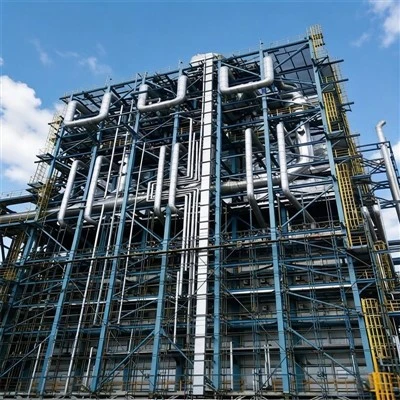
If you’re an operator who’s been on the fence about EHR systems, I get it. New tech can feel overwhelming, and upfront costs are always a concern. But the data is clear, the results are real, and the payback period is often shorter than you think. We’ve built our business on working with clients of all sizes, from small delivery fleets to multinational manufacturing companies, and we customize every system to fit their specific needs, not a one-size-fits-all model. If you’re ready to explore how exhaust heat recovery can reduce your emissions and lower your operating costs, we’re here to help.
Furnace Tube References
International Council on Clean Transportation. (2022). Exhaust Heat Recovery for Medium and Heavy-Duty Trucks: Emissions and Fuel Efficiency Impacts.
U.S. Environmental Protection Agency. (2021). Idling Reduction Strategies for Heavy-Duty Vehicles.
Department of Energy. (2023). Organic Rankine Cycle Systems for Industrial Waste Heat Recovery.
Jiangsu Dongfang Whole-Set Equipment Manufacturing Group Co., Ltd.
We are one of the most professional exhaust heat recovery system manufacturers and suppliers in China, also support customized service. With abundant experience, we warmly welcome you to buy durable exhaust heat recovery system from our factory. If you have any enquiry about pricelist, please feel free to email us.
Address: No. 9, Industrial Park, Xinqiao Town, Jingjiang City, Jiangsu Province
E-mail: dfctwm@163.com
WebSite: https://www.dongfangequip.com/
