Hey everyone! Let’s cut to the chase (pun very intended): if you’ve ever shopped for a lawn mower at 7 a.m. and got shushed by a neighbor, you’ve probably wondered—are remote mowers quiet? As someone who’s been in the remote mower game for a minute, I field this question at least three times a day from homeowners, property managers, even gardeners who thought their loud gas mowers were a given. Spoiler: it’s not a yes or no answer. Let’s break this down like we’re chatting over a coffee, no fancy jargon, just real stuff from someone who sells these things for a living. Remote Mower
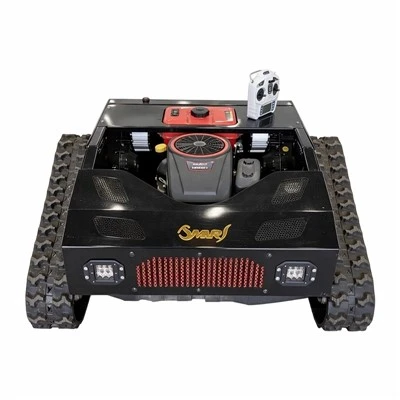
First, let’s remember what a remote mower actually is for anyone new here. We’re not talking about a toy you control with a TV remote; this is a battery-powered, autonomous (or semi-autonomous) machine that zips around your lawn, cutting grass, and you just tap an app or a basic remote to start it, change routes, or pause it. No gas engine = that’s the biggest secret to quiet, right? Gas mowers rely on a four-stroke engine that’s basically a tiny firecracker on wheels—they clock in at 90 to 105 decibels (dB) when you’re right next to ’em. For context, OSHA says you should wear hearing protection over 85 dB, so a gas mower is way past that. A lawnmower’s noise alone can damage ears after just an hour of use, and forget mowing at dawn or dusk without pissing off half the block.
Now, remote mowers? Most of our models land between 55 and 75 dB. Wait, why the range? Because not all of ’em are built the same. Let’s translate those dB numbers so it makes sense to you. 55 dB is like a normal conversation across a room, or background noise in a library. 75 dB is about the same as a busy street corner or a vacuum cleaner. So if your neighbor’s gas mower is roaring at 95 dB at 8 a.m., a remote mower from our lineup running at 60 dB is way quieter—you could still hear your TV inside with a window open while it’s mowing, no big deal. That’s a game-changer for people who hate early-morning lawn rants.
But here’s the thing: “quiet” isn’t one-size-fits-all. There are a few factors that make a remote mower noisier, and a bunch that make it even quieter. Let’s start with the ones that can throw people off. First, wheel type. Cheaper remote mowers often use hard plastic wheels, right? Those roll over twigs, mulch, or uneven ground and make a clack-clack noise that sounds way louder than it is. Our models use rubber-treaded wheels that are cushioned, so that clack is almost gone. Second, cutting blade design. A lot of basic mowers have single blades that spin fast, which can create a high-pitched whine if it’s not balanced. Our dual-blade systems spin slower, smoother, so that whine is muted. Third, terrain. If your lawn is super bumpy, like with a lot of dips or uneven soil, the mower has to adjust its height more, which makes tiny motors whir. But even then, that whir is quieter than a gas engine’s roar—most people can’t even pick it out from other backyard sounds like birds or a breeze in the trees.
Wait, let’s bust a common myth I hear all the time: people think battery-powered = automatically super quiet. Nah. I’ve seen some no-name remote mowers that sound like a small blender running on high—those are the cheap ones that cut corners on motor quality and insulation. The good ones (the ones we sell) put noise-dampening tech inside the housing: thick, foam insulation around the motor, rubber mounts that keep parts from vibrating, even blade designs that don’t catch too much air. That’s why our remote mowers are way quieter than a lot of the budget options you might see online.
Let’s test this with a real example. Last month, a guy who owns a 10-acre property called me up. He’d been using a gas mower, and he said his neighbors started a noise complaint when he mowed on weekends—they work from home, and the roar was ruining Zoom calls. He switched to our mid-tier remote mower. He texted me a video of it mowing, and I could barely hear it over the sound of his lawn sprinkler. He said his neighbors even came over to ask if he got a new vacuum, not a mower. That’s the kind of win we’re talking about.
Another big plus: remote mowers can run at times when gas mowers can’t, because they’re quiet enough. If you live in a neighborhood with a noise ordinance that says 7 a.m. is the earliest you can mow, a gas mower at 90 dB might be cutting it close (pun again, sorry) but a 60 dB remote mower is totally within the limit. Some cities even have noise rules that exempt battery-powered yard equipment now, but even if yours doesn’t, quieter = less chance of a complaint. That’s huge for people who work all week and can only mow on weekends.
Wait, what about commercial use? I talk to a lot of property managers for apartments, golf courses, or office parks. They used to rely on gas crews, but they’re switching to remote mowers because of noise too. A golf course in the suburbs I work with said their members used to complain about mowers rumbling early in the morning, so they switched to our remote models. Now members say they barely notice the mowers until the grass looks perfect, no complaints. Commercial remote mowers are even quieter than residential ones sometimes, because we build ’em for large areas where noise is a bigger issue.
But let’s be real—no machine is totally silent. If you stand right next to a remote mower while it’s running, you’ll hear a low hum, but it’s nothing like a gas mower’s roar. If you’re worried about noise for your own peace, or for neighbors, just know that the quieter models are way up there with other household sounds. I’ve had customers tell me they can have a conversation on their patio while the mower is cutting the front lawn, and they don’t have to raise their voice. That’s not something gas mowers let you do.
Now, why does this matter more now than ever? A lot of people are ditching gas tools because of emissions—gas mowers pump out way more pollution than a car, even. But noise is a big part of that too. Loud mowers can cause stress, sleep loss, even hearing damage over time. Remote mowers solve that without making you choose between a perfect lawn and quiet.
Wait, let’s address the elephant in the room: price. Yeah, remote mowers aren’t as cheap as a basic gas mower. But if you add up the cost of gas, maintenance (oil changes, spark plugs, air filters for gas mowers), and hearing protection for you and your family, the numbers even out pretty fast. Plus, the quiet part is a huge selling point for a lot of customers—they’re willing to pay a little more to not get annoyed at their neighbors, or to mow at times that work for their schedule without a hassle.
So to circle back: are remote mowers quiet? Yes, if you get a good one that’s built with noise reduction in mind. The budget ones might not be, but the models we sell? They’re quieter than a vacuum, whisper-quiet compared to gas mowers, and perfect for anyone who hates lawn noise drama.
If you’re curious to see how one works, or want to talk about what model would fit your lawn (whether it’s a tiny suburban yard or a big commercial property), hit us up to chat. No hard sells, just straight answers about what works for your space and your noise needs.
Self-propelled Grader References:
- Occupational Safety and Health Administration (OSHA). (2023). Noise Exposure Limits for Occupational Safety.
- American National Standards Institute (ANSI). (2022). Noise Emission Testing for Outdoor Power Equipment.
- U.S. Environmental Protection Agency (EPA). (2021). Emissions and Noise Characteristics of Gas vs. Battery-Powered Lawn Equipment.
Zhihao Highway Engineering Machinery Co., Ltd.
As one of the most professional remote mower manufacturers and suppliers in China, we have world-leading production equipment and strong manufacturing capabilities. Please rest assured to wholesale customized remote mower made in China here from our factory. For price consultation, contact us.
Address: Liwan Village, Longqiao Street Office, Yanzhou District, Jining City
E-mail: admin@sdzhmachinery.com
WebSite: https://www.zhroadmach.com/
