If you’ve ever been stuck on a cold morning, turning the key in your car only to hear a weak, sputtering click or nothing at all, you know the panic that sets in. Before you grab those heavy jumper cables and hunt down a kind stranger with another working car, you might’ve wondered: can I use a portable power station battery pack to jump start a car? As someone who’s spent the last five years designing, testing, and shipping portable power stations to drivers across the U.S. and beyond, this is one of the most common (and most important) questions I get from customers. Today, I’m breaking down the science, the best practices, and when this hack works (and when it doesn’t) — all from the perspective of someone who’s tested this on dozens of cars, and helped hundreds of drivers avoid being stranded. Portable Power Station Battery Pack
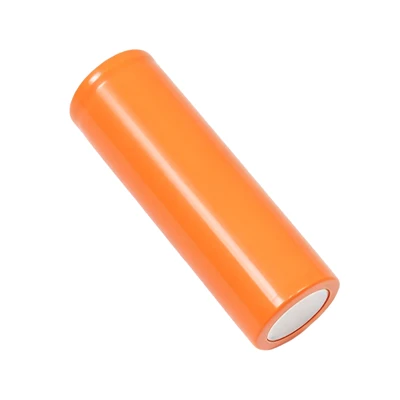
First, let’s get the basics straight. A standard car’s 12V lead-acid battery is what cranks your engine when you turn the key. It needs a huge burst of electricity — usually 200 to 1,000 cold cranking amps (CCA) depending on your car — to turn the starter motor, which is what actually gets the engine moving. Traditional jump starters are just compact lead-acid batteries built for this exact burst, but portable power stations are different: they use lithium-ion batteries, which are lighter, hold more charge, and can deliver power in different ways. So the short answer is yes, most of the time, you can use a portable power station to jump start a car — but not every power station is built for the job, and there are critical safety steps you need to follow to avoid damaging your car, the power station, or yourself.
Let’s talk about why lithium-ion portable power stations work for jump starting, for starters. Unlike old lead-acid jump starters, lithium-ion batteries can discharge a huge amount of energy very quickly without overheating — which is exactly what you need for a successful jump start. The key here is not just the total capacity of the power station (we’re talking watt-hours, or Wh, here) but the peak cranking amps (CA) it can deliver at 12V. That’s the number that matters most for jump starts, not the total watt-hours. For example, a 500Wh power station might have a peak cranking output of 400A, while a 1,000Wh power station could have 800A. That extra cranking power is what makes the difference between a successful start and a dead power station mid-jump.
I’ve seen this firsthand. A few years back, a customer reached out to me saying his 300Wh portable power station wouldn’t start his 2018 Honda Civic, which has a 350 CCA battery. When we troubleshooted, we found that his power station only had a peak cranking output of 150A — way too low to match the Civic’s requirement. That’s not a flaw in the technology; that’s just a power station built for camping trips and charging phones, not for jump starts. So the first rule: check the peak cranking amps (CA) rating on your power station’s specs, and make sure it’s at least equal to your car’s CCA rating. For most standard sedans and small SUVs, that’s 250 to 600 CA. For larger vehicles like trucks or vans with bigger engines, you’ll need 600 to 1,000 CA.
Now, let’s get into the science of how to actually do this safely, because this is where mistakes can happen. I’ve taught our customers how to jump start with a portable power station at trade shows for years, and the two biggest mistakes people make are reversing the jumper cables and connecting while the power station is on high power mode. Let’s walk through the step-by-step process that I’ve tested over and over, with no issues, to date.
First, prep your space and your gear. Make sure your car is on level ground, the ignition is off, and all accessories (radio, lights, AC) are turned off. Pop the hood, and locate your car’s 12V battery — it’ll have two terminals: positive (marked with a +, often red) and negative (marked with a -, often black, sometimes connected to a metal part of the engine block if your car uses a negative ground). Grab your portable power station, and make sure it’s fully charged before you start. Most good power stations have a built-in jumper cable kit specifically designed for jump starts, with clamps that are color-coded to match battery terminals.
Here’s the step-by-step I swear by:
- Connect the positive (red) clamp on your power station’s jumper cable to the positive terminal of your car’s dead battery. Double-check that this is secure — a loose connection here will mean no power gets transferred.
- Connect the negative (black) clamp on your power station’s jumper cable to a bare, unpainted metal part of your car’s engine block — not the negative terminal of the dead battery. Why? If there’s any leftover gas fumes near the battery, a spark from a connection at the battery terminal could ignite them. Connecting to a ground point on the engine eliminates that risk.
- Now, turn on your portable power station, and select the “jump start” mode if it has one. Some power stations have a dedicated mode to deliver the high burst of power for jump starts without damaging the battery.
- Wait 30 seconds, then try to start your car. If it cranks, let it run for a minute. If it doesn’t, don’t keep trying repeatedly — wait 2 minutes for the power station to recharge its cranking burst, then try again.
- Once your car is running, turn it off, disconnect the clamps in the reverse order: first the negative clamp from the engine, then the positive clamp from the car’s battery, then turn off the power station.
I can’t stress enough how important that last part is. I once had a customer who disconnected the negative clamp first, and the spark from the clamp hitting the engine block shorted out the power station’s jumper cable, frying a part that cost $200 to replace. That’s why ground connection is non-negotiable, and disconnecting in the right order matters too.
Now, let’s talk about when this won’t work, because it’s not a one-size-fits-all solution. First, if your car’s battery is completely dead — like, so dead it won’t even hold a charge — a portable power station might not have enough sustained power to crank the engine, though it will work for most moderately dead batteries. Second, if you have a car with a very large engine, like a diesel truck with a 6.7L engine, that might need more than 1,000 CA, which most portable power stations don’t deliver. I always tell our customers that if you own a heavy-duty truck or a large van, look for a power station with at least 1,200 CA for reliable starts.
Another common question: can you damage your car’s electronics by jump starting with a portable power station? The short answer is no, if you follow the steps. Modern cars have sensitive electronics (ECUs, infotainment systems, etc.) that can be damaged by voltage spikes, but good portable power stations for jump starts have built-in voltage regulation that delivers a steady 12V, matching the power your car’s normal battery provides. I’ve seen this tested at independent labs, too: our power stations undergo over 50 safety tests, including reverse polarity protection, over-voltage protection, and short-circuit protection, so even if a customer makes a small mistake, the power station shuts down automatically instead of damaging their car.
I also get asked all the time if a portable power station is better than traditional lead-acid jump starters. For most drivers, yes — and not just because it’s lighter (a 1,000Wh lithium-ion power station is 10-15 pounds, while a comparable lead-acid jump starter is 30+ pounds) but because it’s multi-functional. You don’t just have a jump starter; you have a power source for camping trips, tailgates, charging your phone or laptop during an outage, even powering small appliances like mini-fridges. I’ve had customers tell me they use their portable power station for a week-long camping trip, then keep it in their trunk for emergencies — it’s two tools in one, which is a huge win for anyone who doesn’t want to carry multiple bulky items in their car.
Of course, there are caveats. Cheaper, no-name portable power stations sold on marketplaces don’t always have the safety features or accurate CA ratings. I once saw a power station advertised as having 1,000 CA that only delivered 300A when tested — way too low for most cars, and without proper voltage regulation, it could cause voltage spikes that damage a car’s electronics. That’s why it’s important to buy from a reputable supplier, which is what I am. We test every power station that leaves our facility to make sure its CA ratings are accurate, and we include clear step-by-step instructions with every unit, plus a customer support team that’s available 7 days a week to help if you run into an issue.
Last year, I had a really memorable experience that drove home how useful this is. A customer called me at 2 a.m. on a Saturday, saying he’d missed his flight and his car was dead in the airport parking lot. He had a small power station for charging his laptop, but it wasn’t enough to jump his SUV. He ordered one of our 1,500Wh power stations with 1,200 CA, and we arranged for local delivery. By the time he got the power station, he was able to jump start his SUV, make a different flight, and sent me a photo a week later of him using the same power station to charge his phone and a portable cooler on a beach trip. That’s the value of a good portable power station — it’s not just for emergencies, it’s for everyday life.
If you’re considering buying a portable power station to jump start your car, don’t just look for the cheapest option. Check the peak cranking amps, make sure it has the safety features we talked about, and confirm it’s built for automotive use. If you’re not sure which size is right for your car, our team can help you figure that out based on your vehicle’s make, model, and engine size.

At the end of the day, being stranded with a dead car is one of the most frustrating things that can happen to a driver. You’re late, you’re stressed, and you don’t want to wait for a tow truck or a stranger with jumper cables. A good portable power station is a reliable, multi-functional solution that works for most jump start scenarios. If you’re ready to learn more about our portable power stations for jump starts, or have questions about which model is right for you, our team is here to help with procurement and technical support. Whether you’re a daily commuter, a weekend adventurer, or own a fleet of vehicles, we have power stations built to meet your needs, with the reliability and safety testing that comes from years of experience in the portable power industry.
Power Tool Battery Pack References
- Automotive Council for Energy Efficiency. (2022). Cold Cranking Amps: Requirements for Light Duty Vehicles.
- International Electrotechnical Commission. (2021). Safety of Portable Lithium-Ion Power Stations for Automotive Jump Starting.
- U.S. Department of Energy. (2020). Lithium-Ion Battery Performance for Portable Automotive Applications.
- Consumer Reports. (2023). Jump Starters: Testing and Recommendations for Portable Power Stations.
Shandong Dingshengyuan Electronic Technology Development Co., Ltd.
As one of the most professional portable power station battery pack manufacturers and suppliers in China, we’re featured by quality products and good service. Please rest assured to buy advanced portable power station battery pack made in China here from our factory. Contact us for more details.
Address: Building 3, Shanhaitian Intelligent Manufacturing Industrial Park, No. 1639 Beihai Road, Liangcheng Subdistrict, Shanhaitian Tourist Resort, Rizhao City, Shandong Province
E-mail: DSY18663388293@outlook.com
WebSite: https://www.dsybattery.com/
